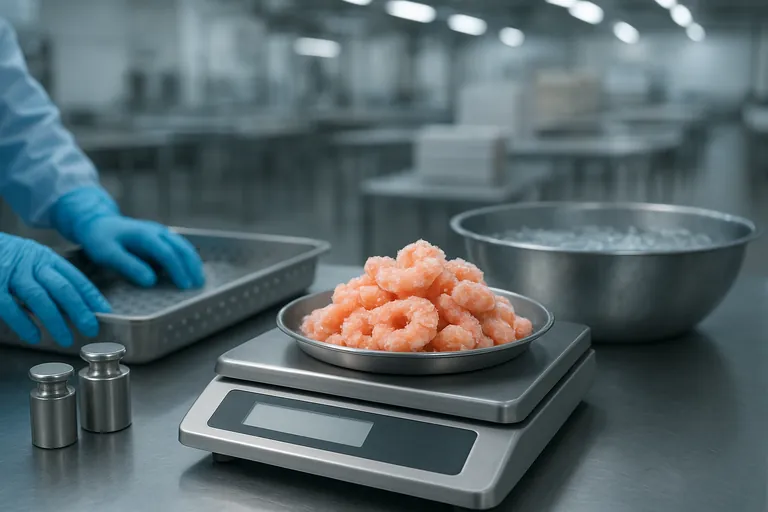
A practical, bookmarkable playbook to mix SKUs, hit factory and packaging MOQs, and ship an optimized FOB Surabaya/Jakarta reefer in 90 days—without eroding margin.
If you’re trying to build a private label seafood line out of Indonesia, the first brick wall you’ll hit is MOQ. Product MOQ. Packaging MOQ. Then the reality of reefer load plans and FOB cutoffs. We’ve lived this for years, and there’s a clean way through it.
I went from $0 to a fully loaded mixed-SKU private label container in 90 days using this exact system. Here’s the playbook we now use with buyers who want to move fast, protect margin, and avoid getting stuck with dead stock packaging.
The 3 pillars of making mixed-SKU Indonesian seafood work
-
Packaging strategy first. Finalize bag and master carton strategy before you lock SKUs. Packaging MOQs will make or break your math.
-
Production reality, not catalog fantasy. Factories count MOQ by spec and production run. Plan runs around lines, glazing, and trim yields so you don’t pay setup waste twice.
-
Container math drives margin. A right-sized, floor-loaded 40’ reefer at FOB Surabaya or Jakarta often saves 8–15% versus palletized. But your customer’s DC rules and damage tolerance matter. Choose deliberately.
Week 1–2: Market research and validation (tools + templates)
Validate which formats and grades actually move in your channel. I’ve found three retail formats cover 70% of first orders:
- 1 kg IQF retail bag whitefish (snapper, grouper, mahi). Example items: Grouper Fillet (IQF), Red Snapper Portion (WGGS / Fillet), Mahi Mahi Portion (IQF).
- 1 kg cephalopod/shrimp. Example: Loligo Squid (Whole Round / Whole Cleaned), Frozen Shrimp (Black Tiger, Vannamei & Wild Caught).
- Foodservice 10 kg master cartons (fillet/portion/steak). Example: Snapper WGGS (Red Snapper - Whole Gilled & Gutted), Kingfish Fillet (Portion Cut / IQF).
Two quick, non-obvious validation checks:
- Ask your top three customers which master carton footprint they prefer. Matching their racking lowers breakage claims and can add 150–250 extra cartons per 40’ when floor loading.
- Test one hero SKU that anchors the container. Many buyers use a premium differentiator like Yellowfin Saku (Sushi Grade) or Goldband Snapper Bites. It improves sell-through across the line.
Week 3–6: MVP creation and testing (packaging + production plan)
What are typical private-label bag and master carton MOQs in Indonesia for 2026?
- Printed polybags (gravure/flexo): 20,000–30,000 bags per size/design is common. Lead time: 3–5 weeks after artwork approval. Cylinder/plate fees: USD 600–1,200 total depending on colors. Unit cost: USD 0.07–0.14 for 1 kg bags at standard specs.
- Printed master cartons (Kraft/white): 1,000–2,000 per size. Lead time: 10–14 days. Plate fee: USD 100–250. Unit cost: USD 0.45–0.95 depending on board grade and print.
Recent trend: Film lead times have stabilized but resin prices nudged up 3–6% in the last six months. Build a 2–3% buffer into your bag cost.
Can different SKUs share the same printed packaging to reduce MOQs?
Yes, and it’s where most savings live.
- One generic whitefish bag + spec sticker per SKU. List approved species groupings on back panel and use a front SKU sticker for “Grouper Fillet 1 kg,” “Snapper Fillet 1 kg,” etc. Works well for Grouper Fillet (IQF), Snapper Fillet (Red Snapper), and Mahi Mahi Fillet.
- One master carton art across sizes if the legal panel stays consistent. Use large side stickers for net weight, cut, and glaze. This lets you order 2,000–3,000 cartons and split across three SKUs.
Caution: If you export to markets requiring precise species/FAO area on the primary pack, keep the back panel compliant and move SKU differences to stickers only. That way you still hit the bag MOQ with one print.
Need help pressure-testing your packaging plan against your spec list? If you want a second set of eyes before you place cylinder orders, Contact us on whatsapp.
Minimum production run per SKU on IQF lines in Indonesia
Processors usually count MOQ by spec, not just by product name. In our facilities and partner plants, realistic IQF run minimums are:
- Whitefish fillet/portion: 1.5–3.0 MT per spec per run to cover trim setup, glazing, and metal-detect resets.
- Steak cuts and saku: 0.8–1.5 MT per spec.
- Cephalopod/shrimp: 1.0–2.0 MT per spec depending on grading complexity.
If your spec stack gets too granular (skin-on vs skinless, multiple portion weights, three glaze levels), you’ll multiply run minimums fast. Consolidate specs where your end market won’t notice.
Week 7–12: Scale and optimize (FOB, load plan, cost)
How many cartons fit in a 20’ vs 40’ reefer from Surabaya?
Use conservative planning numbers and confirm with your processor’s carton dimensions.
- 40’HC reefer. Usable volume ~57 CBM after airflow. Typical floor-loaded counts:
- 1 kg retail outers (≈0.016–0.020 CBM): 2,700–3,400 cartons.
- 10 kg masters (≈0.028–0.034 CBM): 1,650–2,050 cartons. Net payload often 18–22 MT depending on fish density and glaze.
- 20’ reefer. Usable volume ~24 CBM. Typical floor-loaded counts:
- 1 kg retail outers: 1,100–1,350 cartons.
- 10 kg masters: 700–850 cartons.
Rule of thumb: When you mix shrimp/squid with dense tuna or kingfish, watch weight before cube. You can hit 24–26 MT in a 40’ and still leave 8–12% cube on the table. Build the load plan around the heavier SKUs first.
Palletized vs floor-loaded under FOB
- Floor-loaded saves 8–15% by maximizing cube and skipping pallet/fumigation costs. More cartons in, lower per-unit inland and ocean freight per kilo.
- Palletized simplifies destination handling and reduces crush risk for light retail outers. Expect 10–12% fewer cartons in a 40’HC. Pallet cost in Indonesia runs USD 12–18 each plus fumigation and added tare weight.
If your customer’s DC mandates pallets, use tight patterns and choose stiffer board for retail outers. Otherwise, floor-load mixed SKUs with column stacking for the best landed economics.
FOB Surabaya vs FOB Jakarta for seafood shipments
- Surabaya (Tanjung Perak) works best if you’re consolidating East/Central Java processing. Often transships via Singapore or Tanjung Pelepas. Reefer slot availability is good, but rollovers do happen on regional feeders. Plan 1–2 extra days of buffer before CY cutoff.
- Jakarta (Tanjung Priok) has denser mainline connections. If your mix includes shrimp/squid from multiple islands, Jakarta can simplify consolidation. Truck costs are higher from East Java, but schedules to North America and the EU are often a week faster door-to-door.
In the last few months, on-time reliability improved but roll risks of 5–10% remain ex-Surabaya. If timing is tight, book a week earlier or route via Jakarta when feasible.
The 5 biggest mistakes that kill private-label seafood margin
- Ordering five bag SKUs for five fish when one bag plus stickers would do. You’ll sit on 10–20k leftover bags per size.
- Over-specifying portions. Three portion weights across two trims becomes six production runs. Your cost per kilo quietly climbs.
- Ignoring carton CBM. A lovely retail outer at 0.022 CBM looks great until you realize you just lost 300 cartons per 40’. Redesign to 0.018–0.019 CBM.
- Palletizing by habit. Unless your DC demands it, that’s 250–350 retail outers gone from the load plan.
- Missing art lock dates. Film lead time plus cylinder making pushes your vessel by 2–3 weeks. Lock art in Week 3–4.
Answers to the questions we get most
Can Indonesian seafood factories let me mix SKUs to hit the MOQ?
Yes. Most will set a container-level MOQ and per-spec run minimums. A common allowance is 12–18 SKUs in a 40’ if total tonnage and run minima are met. We routinely mix whitefish, squid, and shrimp in one container when specs are clear.
Do processors count MOQ per SKU, per spec, or per production day?
Per spec. If “Grouper Fillet, skinless, 125 g, 10% glaze” is your spec, that’s one run. Change weight or trim and you’ve added another run, even if the product name stays “Grouper Fillet.” Plants will also batch by day to manage labor, so your PO should cluster similar specs.
Is it cheaper to palletize or floor-load a mixed seafood container FOB?
Floor-load is cheaper for per-unit freight. Palletize only when destination DC handling or claim risk justifies the loss of cube.
Lead time for printed polybags and master cartons in Indonesia?
Bags: 3–5 weeks after art approval. Master cartons: 10–14 days. Chinese New Year and Lebaran add 1–2 weeks. Approve art early.
What happens if I miss MOQ on private label packaging?
You’ll either pay a small-lot surcharge or sit on film you won’t use. Avoid this by using one bag per product family and stickers for spec differences. Or run first vessel in neutral bags with master carton branding, then switch to printed film on vessel two.
A simple container math example you can copy
Target: 40’HC FOB Surabaya, mixed retail and foodservice.
- 1,200 cartons of 1 kg whitefish outers at 0.018 CBM ≈ 21.6 CBM, ~1.44 MT net.
- 700 cartons of 10 kg foodservice masters at 0.032 CBM ≈ 22.4 CBM, 7.0 MT net.
- 400 cartons of 1 kg squid/shrimp outers at 0.019 CBM ≈ 7.6 CBM, ~0.40 MT net.
- 250 cartons of premium tuna saku 10 kg masters at 0.028 CBM ≈ 7.0 CBM, 2.5 MT net. Total ≈ 58.6 CBM usable, ~11.34 MT net product. Add inner bags, cartons, and glaze to estimate gross weight. Adjust upward with more 10 kg masters if you need to chase payload.
Negotiation script: asking for a lower mixed-SKU MOQ
Subject: Mixed-SKU MOQ and Packaging Plan – [Your Brand]
Hi [Supplier Name],
We’re building a 40’ FOB [Surabaya/Jakarta] with an initial target of 12–14 SKUs. To protect production efficiency, we’ll consolidate specs as follows:
- Whitefish fillets/portions: one bag design with stickers, 2 portion sizes only.
- Cephalopod/shrimp: one bag design, common grading.
- Masters: one printed design with spec stickers.
We can commit to 1.5–2.0 MT per spec on the IQF line and align runs by day. Can you confirm acceptance of a 40’ mixed container with these per-spec minima and a total of 10–12 MT? If needed, we can move one or two SKUs to neutral bags on vessel one.
Please share your preferred carton footprint and any line downtime constraints so we can finalize the run plan and artwork this week.
Thanks, [Your Name]
Resources and next steps
- Start with a product family that can share packaging art. For example, build around Goldband Snapper Portion, add Grouper Bites (Portion Cut), then round out with cephalopod/shrimp and one premium tuna item.
- Lock artwork by Week 4 and confirm carton CBM before plate orders. That’s where 3 out of 5 projects lose time.
- If you want us to review your spec stack, run a quick carton-count check, or suggest a Surabaya vs Jakarta plan based on your SKUs, Contact us on email.
We recommend bookmarking this and using it as your working checklist. When you blend packaging strategy, production reality, and container math, MOQ stops being a roadblock and becomes just another parameter you can engineer around.