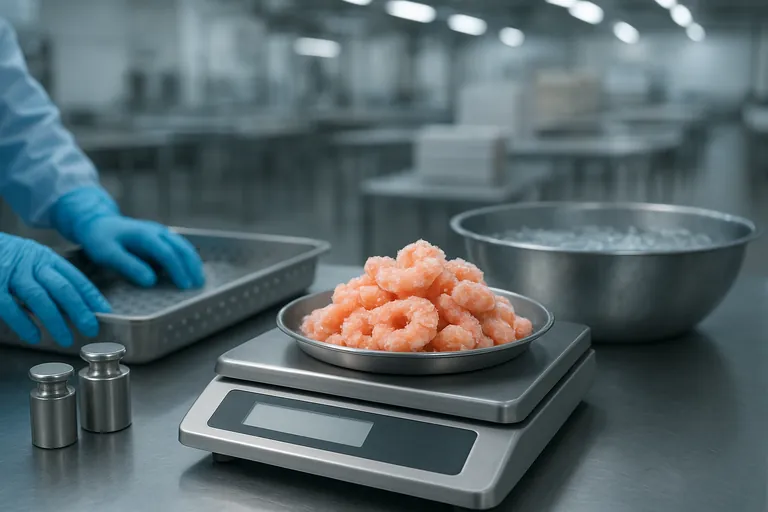
A practical, step-by-step playbook to issue a buyer- and auditor-accepted parasite freezing certificate for EU and US shipments in 2026. Includes exact fields, sample wording, and the records you need to keep under EU 853/2004 and FDA 21 CFR 123.
If you’ve ever had an EU buyer push back on a “parasite destruction letter,” you know the pain. In our experience, three of the five most common rejections come down to the same things: the statement doesn’t say “in all parts of the product,” the 24 hours were counted from loading instead of core temperature, or the probe calibration record is missing. The good news is you can fix all three with a clean, combined EU/US certificate and a lean set of supporting logs.
Here’s exactly how we draft parasite freezing certificates that pass audits and satisfy both EU Regulation (EC) No 853/2004 and US FDA seafood HACCP (21 CFR 123) in 2026.
The rule, on one page
- EU: Regulation (EC) No 853/2004, Annex III, Section VIII, Chapter III, D. If fishery products are intended to be consumed raw or almost raw, you must freeze them in all parts of the product either at -20°C for not less than 24 hours, or at -35°C for not less than 15 hours. Exemptions exist for certain aquaculture products raised under parasite-controlled conditions and for products where the hazard is otherwise controlled.
- US: 21 CFR 123 requires processors to control parasites in fish intended for raw consumption within their HACCP plan. The FDA Hazards Guide aligns with EU time–temperature options. In practice, US buyers want a supplier letter attesting to parasite destruction or a justified exemption. Records must meet 21 CFR 123.9 retention and review requirements.
Takeaway: You can use a single certificate that cites both standards, as long as it includes time–temperature, core verification, and the right data fields.
What has to be on a seafood parasite freezing certificate for EU acceptance?
We keep a consistent format that buyers recognize. Include:
- Exporter/processor name, address, and competent authority/plant approval number (EU listing) if applicable
- Buyer name and PO number
- Product details: commercial name, scientific name, cut/form, pack, and net weight
- Lot/batch number(s) linked to labels and invoice/COA
- Harvest info: wild/farmed, FAO area (wild), or farm site ID (farmed)
- Intended use: “intended to be consumed raw or almost raw” or “sushi/sashimi use”
- Freezing regime applied: “-20°C for ≥24 hours” or “-35°C for ≥15 hours” in all parts of the product
- Start/finish timestamps counted from when the slowest core reached target temperature
- Equipment ID (blast freezer/tunnel), probe ID(s), and last calibration date
- Verification method: number of core probes, probe placement approach, and review signature by HACCP-trained individual
- Regulatory references: EU 853/2004 Annex III Section VIII Chapter III D and FDA 21 CFR 123 (parasite control)
- Authorized signature, printed name, title, and date
We also add a one-line declaration on the invoice or COA to connect the dots: “Parasite destruction per EU 853/2004 Annex III Section VIII, Ch. III, D achieved for lot(s) X…Y. See attached certificate and logs.”
Do the 24 hours start at loading or after the core hits -20°C?
After the core. Always. The clock starts when the last, slowest core probe in the lot reaches the target temperature. We note both the time the load was placed and the time the slowest core hit -20°C (or -35°C). Auditors look for this.
Is an FDA parasite destruction letter still required if the species is exempt (like certain tuna)?
Often, buyers still want a written attestation. For US shipments of species FDA considers low risk for parasites when consumed raw (e.g., many Thunnus spp.), we issue a species-specific exemption statement that cites our hazard analysis and the FDA Hazards Guide rationale. EU buyers may also accept an exemption for certain farmed species raised on parasite-free feed under controlled conditions, if documented. But don’t assume. Many importers want the letter even when freezing isn’t required.
For example, our Yellowfin Saku (Sushi Grade) generally ships with an exemption attestation rather than a freeze certificate, while raw-intended reef species like Grouper Fillet (IQF) or Pinjalo Fillet (IQF) ship with a full parasite freezing certificate.
Who can sign the parasite freezing statement in an Indonesian plant?
Your food business operator’s authorized representative. In practice, that’s your QA/QC manager or HACCP team leader. For US compliance, the record review must be performed by a HACCP-trained individual per 21 CFR 123. In the EU context, the operator holds responsibility under 853/2004. We sign with name, title, and HACCP qualification noted.
Will EU buyers accept FDA-style wording, or do I need separate EU language?
Use a combined statement that explicitly references EU 853/2004 and includes “in all parts of the product.” Many buyers in both markets accept a single certificate if it carries the EU clause, cites the US regulation, and includes core verification details. When in doubt, we add a brief EU paragraph and a brief US paragraph on the same page.
What attachments should I include with the certificate?
We attach just enough to satisfy audits without drowning in paper:
- Time–temperature logs showing core probe readings for the slowest pieces, with timestamps
- Freezer ambient printout or data logger trace for the cycle
- Probe and freezer sensor calibration records (ice-point or reference standard; frequency documented)
- Brief validation note on probe placement for that product and load pattern (sketch or photo works)
- Record review and verification sign-off
Can blast freezer printouts alone satisfy parasite control documentation?
No. Ambient air data isn’t enough. You need proof of core temperature and a link between the data and the lot. We’ve seen shipments delayed because the plant only sent the freezer chart.
Sample combined EU/US parasite freezing statement (2026-ready)
Keep it short, specific, and unambiguous.
Title: Statement of Freezing for Parasite Control (EU 853/2004 and FDA 21 CFR 123)
We, [Company], EU approval no. [XXXX], certify that the following fishery products intended for raw consumption have been frozen for parasite control in all parts of the product, in accordance with:
- EU Regulation (EC) No 853/2004 Annex III Section VIII Chapter III D
- US FDA Seafood HACCP regulation 21 CFR 123 (parasite control)
Product: [Commercial name] ([Scientific name]), [cut/form, pack] Lot/Batch: [Number]; Net weight: [XX kg] Harvest: [Wild FAO Area XX / Farm site ID] Intended use: Sushi/sashimi (consumed raw or almost raw) Freezing regime: [Select one] A. -20°C for not less than 24 hours in all parts of the product, or B. -35°C for not less than 15 hours in all parts of the product
Load time: [dd/mm/yyyy hh:mm] Core reached target: [dd/mm/yyyy hh:mm] (slowest core) Cycle completed: [dd/mm/yyyy hh:mm] Equipment ID: [Freezer ID]; Probes: [Probe IDs]; Last calibration: [dd/mm/yyyy] Verification: [# of pieces probed, placement method, reviewer initials/date]
Authorized signatory: [Name, Title] HACCP-trained: [Yes]; Date: [dd/mm/yyyy]
Common mistakes we still see (and how to avoid them)
- Counting from load time. Start when the last core hits the target. Log both.
- Air temp only. Always capture core temps for the slowest pieces. Use at least two probes for mixed loads.
- Vague statements. Include “in all parts of the product,” equipment ID, probe IDs, and calibration date.
- Missing linkage. If the lot on the certificate doesn’t match labels/invoice, it won’t fly.
- One-size-fits-all validation. Validate probe placement for each product geometry. A Bigeye Loin isn’t the same as Grouper Bites (Portion Cut).
Practical floor tips that save hours
-
Pre-chill thick cuts. For loins and saku, consider the -35°C for 15 hours option to shorten the cycle. Just remember the core clock.
-
Probe the worst case. We place probes in the geometric center of the thickest pack, and in the warmest zone of the freezer (front/top) to find the slowest core.
-
Keep probes honest. Calibrate monthly, and at minimum quarterly, using an ice-point test (0.0°C ± 0.5°C). Record probe ID, date, method, and corrective action if out of tolerance.
-
Standardize load maps. Sketch where each pallet or rack sits. Re-use the map in your validation note so reviewers understand probe placement at a glance.
-
Portion sizes help. Smaller IQF portions like Mahi Mahi Portion (IQF) or Wahoo Portion (IQF / IVP / IWP) reach core temperature far faster than large blocks. Plan production accordingly when timelines are tight.
Recordkeeping you actually need under 21 CFR 123.9
- Maintain HACCP records (monitoring, corrective actions, verification, calibration) for at least 2 years for frozen products. For refrigerated products, 1 year is acceptable.
- Ensure a HACCP-trained individual reviews records within a reasonable time (we aim for 7 days, same week as production).
- Keep records on-site and readily retrievable. During remote audits, we export PDFs with legible timestamps and device IDs.
When freezing certificates apply vs. when they don’t
- Applies: Raw or almost-raw use, lightly cured, cold-smoked, or marinated products where parasites could survive. Think Pinjalo Snapper One Cut sold sashimi-style.
- May not apply: Certain tuna species intended for raw use with a valid exemption letter. Farmed fish raised on controlled feed with documented parasite prevention may be exempt in the EU with operator attestation. Always check buyer specs. We still provide a brief statement explaining the exemption and the supporting hazard analysis.
- Not applicable: Products destined solely for thorough cooking. We usually note “For cooking” on the COA to prevent confusion.
If you need a bilingual, buyer-branded template with fields that mirror your logs, we can share what’s worked for our partners. For quick help on your specific situation, you can Contact us on whatsapp. And if you’re sourcing sashimi-intended items, our tuna line, including Yellowfin Saku (Sushi Grade) and Bigeye Steak, pairs seamlessly with these certifications. You can also View our products to see cut options that freeze faster and document cleaner.
The reality is buyers don’t reject parasite letters because of the science. They reject them because the statement is vague or the proof is thin. Tighten the wording, prove the core, and show your instruments are trustworthy. Do that, and you’ll stop debating semantics and start moving product on time.