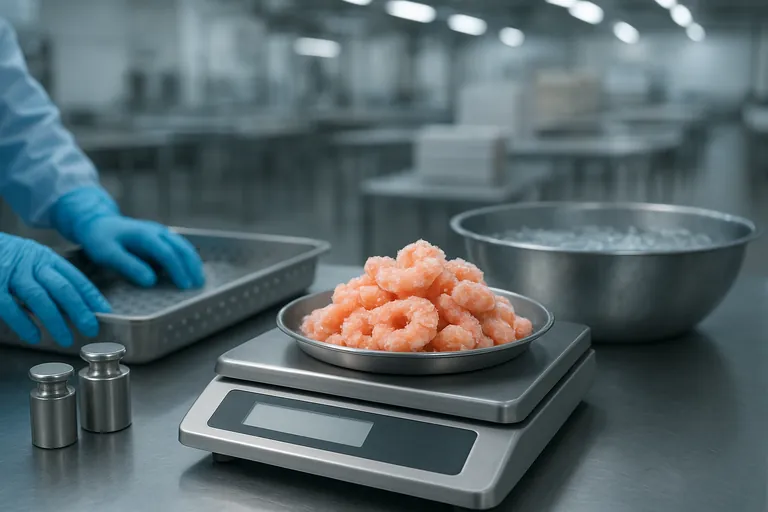
A practical, step-by-step playbook for Indonesian tuna exporters to meet the EU mercury limit in 2026. We cover sampling plans, validated test methods (ICP-MS/CV-AAS), COA wording, and how to present results in TRACES NT at EU border control.
We went from “border recheck” scares to zero RASFF hits in 90 days. Here’s the exact system we use.
We process and ship tuna every week, so we’ve felt the pressure. One ambiguous COA. One composite sample pulled from the wrong cartons. One buyer who insists on ICP-MS while your lab runs CV-AAS. And then you’re sweating at the border.
The good news. A simple, disciplined mercury control plan gets you from reactive to boringly compliant. Below is the 12-week blueprint we use for EU-bound tuna under Regulation (EU) 2023/915.
The three pillars of EU mercury compliance for tuna
-
Sourcing discipline. Size, species and fishing area drive risk. Bigeye and large yellowfin trend higher. Skipjack trends lower. We tier suppliers and set internal action limits lower than the legal maximum.
-
Sampling and validated testing. A smart sampling plan beats blind testing. Validate your lab method, LOQ and measurement uncertainty. Align on ICP-MS or CV-AAS before you quote.
-
Documentation that travels. Your COA must stand on its own at the EU border. Lot traceability, clear method, units, uncertainty and an explicit conformity statement. Then attach it correctly in TRACES NT.
This leads us to the rollout.
Weeks 1–2: Map risk and finalize your sampling plan
Here’s the thing. Most mercury problems start before production. We map risk by species, size and catch zone, then tie that to our sampling frequency.
-
Risk tiers we use in practice:
- High: Bigeye tuna, large yellowfin (>30 kg round). We see more results above 0.6 mg/kg here.
- Medium: Standard yellowfin loins/steaks and saku. Typical range 0.2–0.6 mg/kg if responsibly sourced.
- Low: Skipjack. Often <0.2 mg/kg. Great for value-added lines like Skipjack Cube (WGGS / IQF).
-
Lot definition. Define by species, cut, production date, and raw material batch (vessel/day). Don’t mix sizes or fishing areas in one lot.
-
Composite sampling that works:
- For loins/steaks/saku: Pull increments from at least 10 packs across the lot to build a ~500 g composite of the edible portion. If the lot is small or units are large, go to 5 increments minimum and document why.
- For ground meat or cubes: Take 10–15 increments across different boxes and layers to counter segregation.
- Duplicate your own in-house composite alongside the lab’s sample when risk is medium or high. It’s cheap insurance.
-
Internal action limits. Legal EU max for mercury in tuna is 1.0 mg/kg wet weight (Regulation (EU) 2023/915). We set internal limits at 0.60 mg/kg for automatic release, 0.61–0.90 mg/kg for QA review and a confirmatory test, and >0.90 mg/kg for supplier hold and root cause. That buffer saves headaches.
Takeaway. Stratify by risk. Sample composites smartly. Build a safety margin.
Weeks 3–6: Lock your method, lab and COA wording
Which method do EU buyers actually prefer: ICP-MS or CV-AAS?
In our experience, most EU buyers today prefer ICP-MS because it’s multi-element and gives a very low LOQ. That said, CV-AAS or CV-AFS are absolutely acceptable if the lab is ISO/IEC 17025 accredited, the method is validated for fish matrices, and the LOQ is comfortably below 0.01 mg/kg.
What matters most:
- Accreditation. ISO/IEC 17025 for heavy metals in fish. Ask for the scope showing “mercury in fishery products.”
- LOQ and uncertainty. LOQ ≤ 0.01 mg/kg and measurement uncertainty stated. We target MU ≤ 20% at 1.0 mg/kg.
- QC proof. Certified Reference Materials (e.g., fish tissue CRM) included in each batch. Proficiency or inter-lab results available on request.
Typical method references we see accepted by EU buyers: ICP-MS after acid digestion aligned to ISO-style methods for trace elements. For CV-AAS/CV-AFS, validated cold vapor methods with CRM recovery data. If a buyer names the method, we mirror it.
COA that passes EU border scrutiny
Over 3 out of 5 COA issues we’ve seen were formatting or omissions. Include, in this order:
- Product name and cut. Species common and scientific name (e.g., Yellowfin tuna, Thunnus albacares). Country of origin. Lot/batch ID. Production date.
- Test method and lab details. Instrument method (ICP-MS or CV-AAS/CV-AFS), digestion approach, LOQ, and measurement uncertainty. Lab name, address, ISO/IEC 17025 accreditation number/scope.
- Result. Mercury (Hg), mg/kg, wet weight basis. One value per lot sampled. If sublots were tested, list each.
- QA statement. “Result complies with maximum level for mercury (1.0 mg/kg) in tuna under Commission Regulation (EU) 2023/915.”
- Signature, name, position, date. Electronic signature acceptable if traceable.
Small but critical detail. Use “mg/kg wet weight.” If you use dry weight internally, convert before issuing the COA.
Weeks 7–12: Scale and optimize without slowing shipments
- Dynamic testing frequency. Start with 100% lot testing for high-risk suppliers and taper to 1 in 3 or 1 in 5 lots after 10–20 consecutive compliant results. Keep 100% on bigeye and very large yellowfin.
- Release rules. Mercury result must be back and reviewed before export booking on high-risk lots. For low-risk skipjack, we allow conditional release to cold storage pending result, not customs.
- Dashboard and CAPA. Track rolling averages by supplier, vessel and size grade. When we saw a cluster of 0.7–0.8 mg/kg in one fishing ground last quarter, we switched grounds and brought the mean back to ~0.35 mg/kg in two weeks.
If you need help tailoring a sampling matrix and COA pack to a particular buyer audit, Contact us on whatsapp. We’ve sat on both sides of the table.
Five mistakes that trigger mercury problems (and how to avoid them)
- Mixing raw material origins in one lot. Keep vessel-day and size grades separate. Your data becomes meaningful and defensible.
- Sampling only the outside of cartons. We rotate picks across top/middle/bottom layers and different pallets. Segregation is real.
- COA without uncertainty or LOQ. Border control now looks for these. We’ve seen holds for missing LOQ lines even when results are low.
- Assuming canning or cooking reduces mercury. It doesn’t. Mercury binds to proteins and survives thermal processing. Canned and frozen share the same limit.
- Putting mercury numbers into the wrong place in TRACES NT. More on that below.
Quick answers to what people actually ask us
What is the EU mercury limit for tuna in 2026?
1.0 mg/kg (ppm) mercury on a wet weight basis for tuna species. This is set in Regulation (EU) 2023/915 and applies to raw, frozen, and processed tuna.
Do canned and frozen tuna have the same EU mercury limit?
Yes. The 1.0 mg/kg limit applies to the edible portion as marketed. Canning, cooking or freezing doesn’t change the limit or reduce the mercury meaningfully.
How many units per lot should I sample?
For most loin/steak/saku lots, take at least 10 increments across different cartons and positions to make a composite of about 500 g edible portion. For large unit packs, 5 increments may be acceptable. Document everything. If you’re shipping higher-risk items like Bigeye Steak or Yellowfin Steak, add a duplicate composite for confirmatory testing.
Which method do buyers prefer: ICP-MS or CV-AAS?
Many EU buyers prefer ICP-MS for its sensitivity and multi-element capability. CV-AAS/CV-AFS are also accepted when ISO/IEC 17025 accredited with suitable LOQ and uncertainty. Align the method with your buyer in the specification before PO.
What must be on the mercury COA for EU-bound tuna?
Species and scientific name, product/cut, lot/batch ID, production date, test method, LOQ, measurement uncertainty, result in mg/kg wet weight, lab ISO/IEC 17025 details, and a conformity statement to EU 2023/915, signed and dated.
How do I present mercury results in TRACES NT/CHED at export or border control?
Tuna is a product of animal origin, so you use CHED-P in TRACES NT, not CHED-D. You generally don’t enter the numeric mercury value in a dedicated field. Instead, upload the COA as a supporting document along with the health certificate and commercial invoice/packing list. Some Border Control Posts request the value in the comments field or a pre-check email. Do what your BCP asks, but keep the CHED-P attachments complete and clearly named.
What happens if my tuna exceeds the EU limit at the border?
The consignment can be held and rejected, destroyed or re-dispatched. You’ll likely see a RASFF notification. Expect intensified checks on subsequent shipments from your establishment, which increases costs and delays. Our advice. Trigger an internal CAPA immediately. Re-map supplier risk, raise internal action limits temporarily, and move higher-risk raw material to non-EU programs until you stabilize.
EU vs US limits. Any difference exporters should know?
For tuna, both EU and US are effectively aligned at 1.0 mg/kg. Buyer specs can be stricter. We’ve had retailers cap at 0.5 mg/kg for kids’ products and choose lower-risk formats like Yellowfin Cube (IQF) or skipjack-based items.
Where we see this working in real life
On premium sashimi lines like Yellowfin Saku (Sushi Grade), we test every production lot with ICP-MS and keep rolling supplier means under 0.45 mg/kg. For high-risk large-format items like Bigeye Loin, we sample more aggressively and maintain the 0.60 mg/kg internal release rule. For value-added and family products, we steer buyers to naturally lower-risk species and cuts.
Need a second set of eyes on your plan or COA template before an audit? You can View our products to see how we segment by risk, or Call us if you want to talk through a specific buyer spec.
Practical takeaway. Mercury compliance isn’t about testing more. It’s about testing smarter, documenting clearly, and sourcing with intention. Do those three and EU 2026 becomes routine rather than risky.