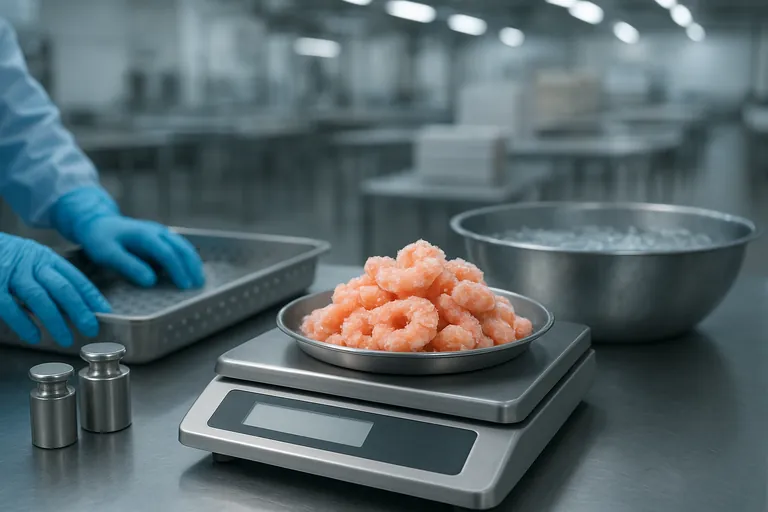
A practical, step-by-step system to normalize Indonesian mahi-mahi fillet quotes to a true net-meat cost per kg in 2026—adjusting for glaze %, IVP vs IQF, size grading, drip loss, and FOB port—so buyers can compare apples-to-apples and act.
If you’ve ever stacked three Indonesian mahi-mahi quotes side by side and still couldn’t pick a winner, you’re not alone. I’ve gone from paying “good-looking” prices to shaving a real $10,247 off a single 20-foot program in 90 days by using one simple system: normalize everything to true net-meat cost and then layer in logistics.
Here’s the playbook we use when comparing 2026 FOB quotes for frozen mahi-mahi fillets and portions from Indonesia.
The 3 pillars of an apples-to-apples mahi-mahi FOB comparison
-
Lock the spec. You can’t compare if the targets move. Nail down pack style, trim, glaze %, declared weight basis, and size grades.
-
Normalize the numbers. Convert every quote to “net-meat cost per kg” and, if needed, to CNF per edible kg. That’s where the truth hides.
-
Validate performance. Run a quick glaze and drip test on samples to confirm assumptions before you commit volume.
We produce both Mahi Mahi Fillet and Mahi Mahi Portion (IQF) in Indonesia, and the biggest wins we see for buyers come from getting those three right. Let’s break it down.
Step 1–2: Lock your 2026 spec (and request quotes on the same basis)
Ask for these details, or you’ll be comparing oranges to bananas:
- Species and form: Mahi-mahi (Coryphaena hippurus). Fillet or portion. Skin-on or skinless. Pin-boned yes/no. Trim level (bloodline removal tolerance).
- Size grades: e.g., 6–8 oz (≈170–227 g) or 8–10 oz (≈227–284 g). Ask for the distribution within the band if possible.
- Pack style: IQF with protective glaze or IVP/IWP (vacuum or plain bag). If IQF, state glaze % and that glaze doesn’t count toward declared net weight.
- Declared weight basis: Confirm the price is on a net weight basis and define how net is measured.
- Freezing: IQF tunnel or plate. Target core temp at pack (≤ -20°C typical). Storage temp (≤ -18°C).
- Tolerances: Short-weight policy, size variance, allowable glaze variance, drip-loss target.
- Labeling and cartons: Piece count per pack (if applicable), carton net/gross.
- Terms and port: FOB Bali (Benoa) or FOB Surabaya (Tanjung Perak). Validity window. Lead time.
Practical takeaway: Put that in a one-page RFQ template. Suppliers who can’t quote to it will cost you time later.
Step 3–6: Normalize every quote to net-meat cost
Here’s the thing. Glaze, pack style, and drip can swing your real cost by 5–12% without the “price” changing at all.
How do I adjust a 20% glaze FOB quote to net weight?
Use a simple formula:
Net-meat price per kg = Quoted price per kg ÷ (1 − glaze%)
Example: $6.20/kg FOB Bali, IQF, 20% glaze.
- Net-meat price = $6.20 ÷ 0.80 = $7.75/kg.
That’s before considering thaw drip. Which leads us to…
What drip-loss allowance should I include?
In our experience with properly frozen Indonesian mahi-mahi:
- IQF, well-glazed, tight cold chain: plan 2–4% drip on thaw.
- IVP (vacuum), minimal glaze: plan 1–3% purge in the bag.
Adjust your effective edible cost:
Edible price per kg = Net-meat price ÷ (1 − expected drip%)
Continuing the example with a 3% drip: $7.75 ÷ 0.97 = $7.99/kg edible.
IVP vs IQF: which is better value after normalization?
It depends on your workflow and the numbers.
- IQF benefits: easy portion separation, faster line throughput, protective glaze fights dehydration. But you’re paying freight on ice and glaze if you don’t normalize.
- IVP benefits: near-zero glaze, lower dehydration risk in long storage, retail-ready options. But you’ll see some purge in-bag and more packaging cost is embedded in the price.
Side-by-side example:
- Offer A: $6.20/kg IQF, 20% glaze, 3% drip. Edible = $6.20/0.80/0.97 ≈ $7.99/kg.
- Offer B: $6.90/kg IVP, 0% glaze, 1.5% drip. Edible = $6.90/0.985 ≈ $7.01/kg.
On edible cost, B looks better. But there’s more to consider when you add logistics.
Do 6–8 oz or 8–10 oz portions price better per kg after normalization?
Larger portions usually carry a lower price per kg because they’re easier to cut and grade. Smaller bands like 6–8 oz often command a premium because of higher labor and tighter distribution. After normalizing for glaze and drip, the gap typically narrows by 1–2%, but relative ranking rarely flips unless one pack style is significantly different. For retail packs that need specific piece counts, the smaller band’s operational savings can offset the higher raw price. Model both scenarios.
Protective glaze tolerance testing you can run quickly
-
Weigh frozen piece out of the box (gross).
-
Submerge in cool water for 60–90 seconds, gently agitate until glaze is gone.
-
Pat dry, weigh again (net). Glaze% = (Gross − Net) ÷ Gross.
-
Set a realistic tolerance. We recommend declared 10% glaze with ±2% lot tolerance.
Zero short-weight is the standard we hold ourselves to. For piece size variance, ±10% within the band is common in contracts.
Step 7–12: Add logistics and port factors
Why do FOB Bali and Surabaya quotes differ for the same spec?
Three drivers:
- Proximity and raw material flow. If fish are landed and processed in Bali, FOB Bali avoids domestic cold-truck costs to Surabaya. The reverse is also true for East Java.
- Terminal handling and schedules. Surabaya often has stronger feeder schedules and more frequent mainline connections. That can reduce your total CNF even if the FOB is slightly higher.
- Cold chain touch points. Extra handoffs mean risk and cost. Some buyers accept a small FOB premium to cut a domestic leg.
We commonly see a modest swing either way driven by inland freight and port charges. It’s rarely the deal-maker on its own. Run the CNF math.
How do I convert an Indonesian FOB quote to my landed cost (CNF) for the US or EU?
CNF per edible kg = [FOB edible price] + [(Origin charges + Ocean freight + Docs) ÷ edible kg]
Two nuances most people miss:
- Freight is billed on chargeable weight. With IQF, 20% glaze means you’re paying freight on 1.25 kg for every 1 kg of fish. So your per-edible-kg freight is higher.
- Carton and pallet weights add 2–4% on top. Include them when you divide by edible kg if you want a tight number.
Example for a 7,000 kg edible program:
- IQF, 20% glaze. Ship weight ≈ 8,750 kg plus 3% packaging = 9,012 kg chargeable.
- Ocean + origin + docs total = $0.29/kg chargeable.
- Logistics per edible kg = $0.29 × (9,012 ÷ 7,000) ≈ $0.37.
- If your FOB edible is $7.99/kg, CNF edible ≈ $8.36/kg.
Run the same for IVP and you’ll often see a logistics saving of 4–7% per edible kg simply because you’re not paying to ship glaze.
Tip on currency in 2026: IDR/USD swings can be material. We recommend either a fixed USD offer with a 30–45 day validity or an FX adjustment clause that kicks in beyond a defined band. Pre-booking raw material with a small deposit can also lock cost.
Quick answers to the questions we get most
How do I adjust a 20% glaze FOB quote to net weight for mahi-mahi fillets?
Divide the price by (1 − glaze%). Example: $6.20/kg with 20% glaze becomes $6.20 ÷ 0.80 = $7.75/kg net meat.
Is IVP or IQF the better value once I calculate net-meat cost?
Neither wins by default. Normalize for glaze and drip. IVP often wins on logistics and edible cost. IQF often wins on handling, labor, and dehydration control. Choose based on your use case after the math.
Do 6–8 oz or 8–10 oz mahi-mahi portions price better per kg after normalization?
8–10 oz usually prices lower per kg. 6–8 oz can be better for retail piece counts or portion control despite a higher raw price. Model both with your line yields.
What drip-loss allowance should I include when comparing Indonesian suppliers?
Plan 2–4% for IQF and 1–3% for IVP under a tight cold chain. Verify with a thaw test on your samples.
Why do FOB Bali and Surabaya quotes differ for the same mahi-mahi spec?
Inland cold-chain cost, terminal handling, and sailing schedules differ. One port may save you $/kg on CNF even if the other is cheaper on FOB.
How do I convert an Indonesian FOB quote to my landed cost for the US or EU?
Add origin and ocean costs per edible kg. Remember IQF glaze inflates chargeable weight. A quick rule: CNF edible ≈ FOB edible + 5–8% for Asia–USWC or 7–10% for Asia–EU, but always plug in current quotes.
Which spec details must I request to compare two mahi-mahi FOB quotes fairly?
Pack style and glaze %, declared net weight basis, size grade and variance, trim, skin-on/off, drip target, freezing method and core temperature, port, and validity window. Without those, you’re guessing.
Common mistakes that kill comparisons (and how to avoid them)
- Comparing gross-weight IQF to net-weight IVP without adjusting for glaze.
- Ignoring drip loss in your edible yield math.
- Letting size grades vary by a band. One 6–8 oz may skew light while another skews heavy.
- Using FOB alone to choose a port. CNF can invert your decision.
- Skipping sample validation. A one-hour glaze and drip test saves you months of regret.
Resources and next steps
If you want a ready-to-use normalization worksheet and a sample 2026 purchase spec, we’re happy to share our templates and walk through your quotes. Need help with your specific situation? Contact us on whatsapp and we’ll run the math with your numbers.
When you’re ready to scope product, see our Indonesian-made Mahi Mahi Fillet and Mahi Mahi Portion (IQF). If you need a complementary white-fish alternative for the same menu slot, consider Kingfish Fillet (Portion Cut / IQF) or Swordfish Steak (IQF). We’ll spec it to your pack style, size band, and glaze so your team can compare apples-to-apples from the first quote.