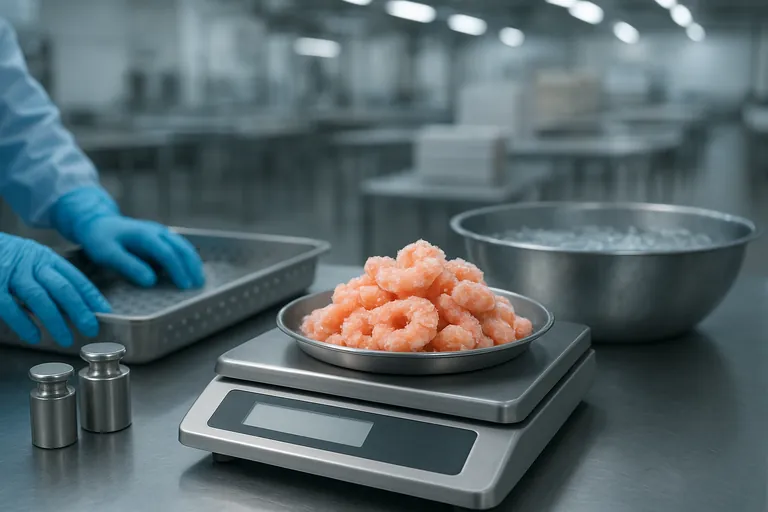
A practical, step-by-step playbook for Indonesian seafood exporters to pick the right EU commercial designations (plus scientific names) for tuna, shrimp and reef fish. Includes how to locate official national lists, handle multi-country packs, and avoid the most common relabeling traps.
If you’ve ever had a European buyer say “great fish, wrong label,” you know the pain. We’ve seen perfectly good shipments held up or stickered over because the commercial designation wasn’t accepted in the destination country. The fix isn’t complicated, but it has to be systematic. Here’s the playbook we use when sending tuna, shrimp and reef fish from Indonesia into 1–3 EU markets—so you don’t pay for relabeling twice.
The 3 pillars of getting EU commercial names right
-
Country-by-country lists, not EU-wide names. The EU requires a commercial designation and the scientific name, but each Member State publishes its own accepted “EU fish commercial names” list. You must use the name from the list of the country of sale, in that country’s language(s).
-
Scientific name validates, but doesn’t replace. The scientific name must appear together with the commercial designation. You can’t use scientific name alone at retail. It’s your safety net for species accuracy and for buyers doing checks.
-
One product, several labels. Multi-country packs are common, but a single English name won’t pass in non-English markets. You either print multiple commercial designations on-pack (one per target country language) or run market-specific outer cartons/stickers.
Takeaway: Always pair the right commercial designation with the scientific name for the country where the product will be sold.
Week 1–2: Market research and validation (tools + templates)
Start with a short list of target markets. For many Indonesian exporters, that’s Spain + France, or Germany + Netherlands. Then:
- Locate the official national lists. We cross-check two sources: the Member State’s own list and the EU portal that links to them. Practical route: search “site:gov.es denominaciones comerciales peces” (Spain), “DGCCRF dénominations commerciales poissons” (France), “Handelsbezeichnungen Fische BMEL” (Germany), “NVWA handelsbenamingen vis” (Netherlands). The EU also maintains a hub that links to national lists. Save PDFs or live database screenshots to your QA folder.
- Build a simple “designation matrix.” Columns: SKU, CN code, species scientific name, target country, accepted commercial designation, language, source link/date checked, label owner. Keep it in your QMS. We maintain this for each line, from Yellowfin Saku (Sushi Grade) to Frozen Shrimp (Black Tiger, Vannamei & Wild Caught).
- Validate 3 high-risk items first. Tuna species, tropical reef fish with multiple local names, and shrimp/prawn terminology. In our experience, 3 out of 5 relabels come from these.
Quick examples based on current lists (always verify before print):
- Skipjack tuna (Katsuwonus pelamis): Spain uses “Listao” (also seen “Bonito listado”). France uses “Listao.”
- Yellowfin tuna (Thunnus albacares): Germany uses “Gelbflossenthun.” France uses “Thon albacore.” Spain uses “Atún de aleta amarilla.”
- Whiteleg shrimp (Litopenaeus vannamei): Netherlands accepts terms including “Vannamei-garnaal” or “Witpootgarnaal.” Germany commonly accepts “Vannamei-Garnele.” Spain does not accept “vannamei” alone; use the Spanish designation from the list.
Takeaway: Do country-specific lookups early and log the source/date. Thirty minutes now saves weeks later.
Week 3–6: MVP creation and testing
Create a label MVP for one or two SKUs and get buyer sign-off before scaling.
- Print both names together. Example for Spain frozen retail: “Designación comercial: Listao. Nombre científico: Katsuwonus pelamis.” For Germany: “Handelsbezeichnung: Gelbflossenthun. Wissenschaftlicher Name: Thunnus albacares.” Keep phrasing natural to each language.
- Mock multi-country panels. If you’re shipping Yellowfin Steak to Spain and France using one inner bag, your panel might show: “ES: Atún de aleta amarilla (Thunnus albacares). FR: Thon albacore (Thunnus albacares).” Do the same for Mahi Mahi Fillet across FR/DE if needed.
- B2B vs retail. For B2B master cartons, include the commercial designation(s) and scientific name plus the language of the buyer and their market of sale. Retail prepacked units must carry the correct country language(s) for the market where they’ll be sold.
- Buyer confirmation loop. Share your designation matrix and label mockups. Ask buyers to confirm the exact countries of resale. We’ve seen Germany-based distributors resell into Austria or Benelux without telling suppliers. That changes the names.
Need a second pair of eyes on your designation matrix or a sanity check on Spain/France/Germany names? Send your draft panel and we’ll review quickly. If it helps, Contact us on whatsapp.
Week 7–12: Scale and optimize
Once MVP labels clear, scale to the rest of your line.
- Create “language clusters.” Common bundles: ES+FR for Southern Europe. DE+NL for Central/Northwest. If you’re adding Italy later, plan space for “IT: …” in the same panel.
- Plan for synonyms. Some lists show more than one accepted name. Pick the primary name most used at retail to reduce questions at store level.
- Standardize tuna mixes. For products that may include more than one tuna species, align with buyer on species scope and declare each species with its scientific name, using the destination country’s accepted tuna group conventions. When in doubt, list each species actually present.
- Pre-approve templates for shrimp lines. For Frozen Shrimp (Black Tiger, Vannamei & Wild Caught), prepare stable wording for each market so you can swap only sizes or glaze without touching the commercial designation block.
Takeaway: Treat labels like product specs. Freeze the wording in a controlled template and only change after a documented recheck of national lists.
The 5 biggest mistakes that kill EU label approvals
-
Using one English name for all. English-only is not accepted in most EU markets. Ireland and Malta allow English, but Spain, France, Germany, Netherlands need their own languages on retail packs.
-
Printing only the scientific name. The EU requires the commercial designation plus the scientific name together at retail. Scientific alone fails checks.
-
Confusing tuna names. “Bonito” vs “atun” in Spain, “albacore” used colloquially for different species in some markets. Always map the exact species to the country’s accepted term.
-
Treating canned like fresh. Some highly processed or preserved products fall under different labelling frameworks than fresh/frozen fishery products. Many smoked, salted or frozen fillets do require the commercial designation. Canned/preserved items can be different depending on CN code and national practice. Check your CN code against Annex I of the EU rules and confirm with the buyer.
-
Not tracking updates. National lists change. We’ve seen edits mid-year. Set a quarterly reminder to recheck your target countries and log the date.
Takeaway: A two-minute preprint checklist avoids most of these.
FAQs we get every month
How do I find the official commercial name for skipjack tuna in Spain and France?
- Spain: Look up the national “denominaciones comerciales” list for fishery products and search for Katsuwonus pelamis. You’ll find “Listao” (also “Bonito listado” appears). Use the primary name.
- France: Check the DGCCRF list. For Katsuwonus pelamis the commercial designation is “Listao.”
Can I print one commercial designation if the product is sold in several EU countries?
You need the accepted name in each country’s language. Multi-country labels are fine, but include one designation per market language next to the scientific name. One English term for all won’t pass in Spain, France, Germany or the Netherlands.
Is “vannamei” accepted as a commercial name for whiteleg shrimp anywhere in the EU?
Yes, several countries accept “vannamei” as part of the commercial designation in their language, for example “Vannamei-Garnele” (DE) or “Vannamei-garnaal/Witpootgarnaal” (NL). Spain and France generally do not accept “vannamei” standing alone. Always check the national list.
Do canned or processed seafood products still need the commercial designation on label?
For many fresh, frozen, smoked or salted products sold at retail, yes. For some preserved/canned products the requirement differs. It depends on the product category (CN code) listed in the EU rules and national practice. When in doubt, include both the commercial designation and scientific name on the retail panel and confirm with the buyer.
Can I use only the scientific name to avoid translating commercial names?
No for retail packs. The EU requires the commercial designation of the species in the language of the country of sale, plus the scientific name. Scientific-only is typically acceptable in technical/B2B documents, not for retail consumers.
What happens if the commercial name on pack doesn’t match the destination country’s list?
Retailers can refuse the lot, authorities can require relabeling or withdrawal, and you’ll lose time and margin. We’ve seen 2–3 week delays from re-sticker jobs. Worst case, repeat non-conformities affect supplier approval status.
How often are EU national fish commercial name lists updated, and how do I track changes?
Updates are ad hoc—some countries revise annually, others whenever new species enter the market or corrections are needed. Our rule: recheck target lists quarterly, and always before a major print run. Subscribe to your buyer’s compliance updates and keep bookmarks to the national pages.
Worked examples you can copy
- Spain retail, frozen skipjack steaks: “Designación comercial: Listao. Nombre científico: Katsuwonus pelamis.” Applicable to Yellowfin Saku (Sushi Grade)? No, that’s Thunnus albacares. For yellowfin in Spain: “Atún de aleta amarilla (Thunnus albacares).”
- Germany retail, yellowfin saku or steak: “Handelsbezeichnung: Gelbflossenthun. Wissenschaftlicher Name: Thunnus albacares.” Suitable for Yellowfin Steak and Yellowfin Saku (Sushi Grade).
- Netherlands retail, raw vannamei shrimp: “Handelsbenaming: Vannamei-garnaal. Wetenschappelijke naam: Litopenaeus vannamei.” Applies to our Frozen Shrimp (Black Tiger, Vannamei & Wild Caught) when packed for NL.
- France retail, mahi-mahi fillet: “Dénomination commerciale: Coryphène. Nom scientifique: Coryphaena hippurus.” Use for Mahi Mahi Fillet.
Resources and next steps
- Build your designation matrix for your top 5 SKUs and 2–3 EU markets this week. Include screenshots and dates checked.
- Lock label templates and get buyer sign-off before mass print. Recheck national lists quarterly.
- Keep multi-country packs flexible. Plan space for two or three language lines now. You’ll thank yourself later when you expand distribution.
If you want us to cross-check your tuna, shrimp or snapper lines against Spain/France/Germany/Netherlands lists and suggest clean wording, send over your draft artwork. We’ll reply with tracked changes and sources. Or if you’re still deciding SKUs, browse our EU-ready options like Grouper Fillet (IQF), Goldband Snapper Fillet and Bigeye Loin, then share your target markets and we’ll tailor the designation matrix.