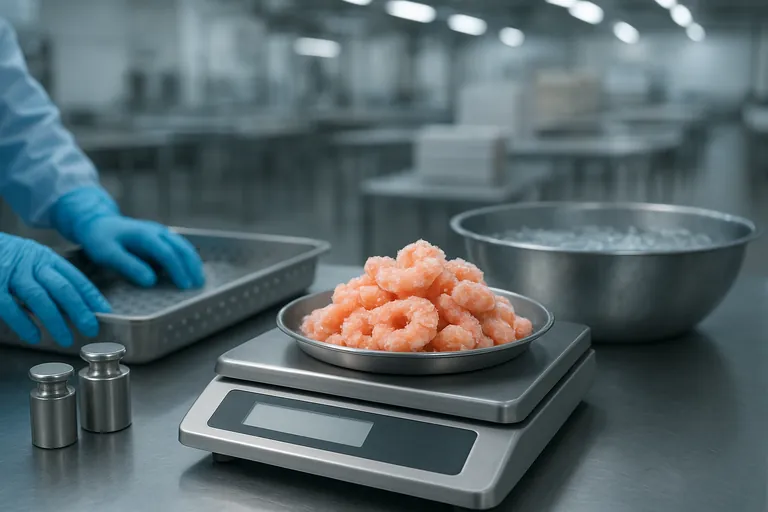
A step-by-step, claim-checker playbook to verify and document low-sodium/low-salt claims on Indonesian frozen or cooked shrimp for the US and EU in 2026. Clear math, weight-basis decisions, lab plans, and the exact thresholds to hit—without getting flagged.
If you’re trying to print “low sodium” on shrimp for both the US and EU in 2026, you’ve probably run into three headaches: different thresholds, different display units, and confusion over raw vs cooked vs drained weight. We’ve been on both sides of label audits, and the math is simple once you line up the rules. Here’s the claim-checker we use to keep Indonesian shrimp headed for the US and EU clean and compliant.
The short answer: US vs EU thresholds you must hit
- US (FDA) Nutrition Facts shows sodium in mg per serving. To claim “low sodium,” your product must be 140 mg sodium or less per serving (the serving is based on the RACC). “Very low sodium” is 35 mg or less. “Sodium-free” is less than 5 mg.
- EU labels show “salt” in g per 100 g. Claims are anchored per 100 g, not per serving. Thresholds:
- “Low sodium/salt”: ≤ 0.12 g sodium per 100 g, which equals ≤ 0.30 g salt per 100 g
- “Very low sodium”: ≤ 0.04 g sodium per 100 g, which equals ≤ 0.10 g salt per 100 g
- “Sodium-free”: ≤ 0.005 g sodium per 100 g, which equals ≤ 0.0125 g salt per 100 g
- Quick US–EU comparison for shrimp: The US “low sodium” limit is roughly equivalent to 165 mg sodium per 100 g. The EU “low salt” cap is 120 mg sodium per 100 g. So the EU is the stricter gatekeeper.
Takeaway: You can qualify for “low sodium” in the US and still fail “low salt” in the EU. Build for the EU limit first if you want one global SKU.
The claim‑checker workflow we use with exporters
We recommend a five-step flow so you can run the numbers before you commit to packaging.
Step 1: Lock the weight basis and serving size
- US serving size for plain shrimp is tied to the RACC: 85 g cooked edible portion. If you sell raw shrimp, many teams label a serving as 4 oz (113 g) raw to represent about 3 oz (85 g) cooked yield. Pick one and be consistent across testing and your Nutrition Facts.
- EU nutrition must be declared per 100 g as sold. If the product is in liquid, the net quantity is “drained weight,” and many teams also calculate the nutrition on the drained basis. Keep your claim checks aligned to the basis you put on pack.
What we do: For brined or glazed shrimp, we test and declare on the drained, edible portion “as sold.” For US, we also convert to the 85 g cooked RACC equivalent for the claim check.
Step 2: Get a real lab number for sodium
- Method: Use an accredited lab with ICP-OES/ICP-MS or AOAC-validated methods for sodium. Ask for sodium as mg/100 g on the basis you’ll declare (raw as sold, drained as sold, or cooked as consumed).
- Sampling: Pull a minimum of 3 subs from start, middle, end of the production run. Composite and test. If you’re making a claim, keep individual sub-results on file too. Brined lots are more variable, so don’t skip the subs.
- Detection limits: If you’re chasing “sodium-free,” ensure the lab’s LOQ comfortably detects below 5 mg/serving (US) and 5 mg/100 g (EU sodium).
Pro tip: Don’t rely on database values for brined or phosphate-treated shrimp. In our experience, treatment swings sodium more than species.
Step 3: Do the math once, document it forever
- EU conversion from sodium to salt: salt (g/100 g) = sodium (mg/100 g) × 2.5 ÷ 1000.
- US conversion to per serving: sodium per serving (mg) = sodium (mg/100 g) × serving size (g) ÷ 100.
Two real-world scenarios we see a lot:
- Scenario A: Lab result = 95 mg sodium per 100 g (raw, drained as sold).
- US “low sodium” check: 95 × 85 ÷ 100 = 80.8 mg per 85 g. Pass.
- EU “low salt” check: salt = 95 × 2.5 ÷ 1000 = 0.2375 g/100 g. Pass (≤ 0.30 g/100 g).
- Scenario B: Lab result = 150 mg sodium per 100 g (raw, drained as sold).
- US: 150 × 85 ÷ 100 = 127.5 mg. Pass.
- EU: salt = 150 × 2.5 ÷ 1000 = 0.375 g/100 g. Fail (over 0.30).
Conclusion: This product could claim “low sodium” in the US but not “low salt” in the EU.
Document your math: keep the lab COA, calculations, chosen serving size rationale, and final claim wording together. Auditors don’t just want the number. They want your basis.
Step 4: Choose the exact claim language
- US allowed claims on sodium: “low sodium,” “very low sodium,” “sodium-free,” and “no added salt” (each has specific criteria). Your Nutrition Facts must show sodium per serving in mg.
- EU allowed claims per Regulation (EC) No 1924/2006: “low sodium/salt,” “very low sodium/salt,” “sodium-free/salt-free.” You must show “salt” per 100 g. The word “salt” must be used on the nutrition table, not “sodium,” and the salt value must be sodium × 2.5.
- Front-of-pack icons: There’s no EU-wide mandatory low-salt icon harmonized today. If you use voluntary schemes like Nutri-Score in certain markets, check the importer’s requirements. Keep the regulated claims and voluntary schemes separate in your files.
Step 5: Build a sodium control plan
- If you use brines or pH control, set a max sodium spec for final product. We’ve found that even “light” brines push product over the EU threshold fast. Trial runs are worth it.
- Phosphates: STPP and related sodium salts can spike sodium while improving yield. If you’re chasing an EU low-salt claim, design a non-phosphate or ultra-low dose process with tight uptake control and verify it on finished product.
- Glaze: Salty glaze is a silent label killer. If you glaze to protect the surface, use low or no sodium in the glaze water. Always test on the drained edible portion.
Straight answers to the questions we get most
What is the FDA limit for a low sodium claim on shrimp?
140 mg sodium or less per serving based on the RACC. For plain shrimp, the RACC is 85 g cooked edible portion. If you label a 4 oz (113 g) raw serving as equivalent to 3 oz cooked, make sure the sodium per that labeled serving still meets 140 mg.
Does the EU require labels to show salt or sodium for shrimp?
Salt. EU nutrition tables must show “salt” in g per 100 g. You calculate it as sodium × 2.5. Claims are judged per 100 g on the salt (or equivalent sodium) basis.
Can I call my Indonesian frozen shrimp sodium‑free?
Usually no. “Sodium-free” in the US means less than 5 mg sodium per serving. In the EU, it’s ≤ 0.005 g sodium per 100 g. Raw shrimp naturally carries more sodium than that, even without brine or phosphate. You might reach “very low sodium” or “low sodium/low salt,” but “sodium-free” is rarely feasible for shrimp.
How do I convert lab sodium results to the EU “salt” value?
Use: salt (g/100 g) = sodium (mg/100 g) × 2.5 ÷ 1000.
Example: 120 mg sodium/100 g × 2.5 ÷ 1000 = 0.30 g salt/100 g.
What serving size should I use to check low sodium eligibility in the US?
Base your check on the RACC of 85 g cooked edible portion. If your label uses 4 oz raw as the serving, verify that the labeled serving equates to the RACC and still meets 140 mg. We like stating the serving as 3 oz (85 g) cooked for clarity.
Do I base shrimp sodium on raw, cooked, or drained weight?
- US: Check the claim on the RACC serving. If your Nutrition Facts are “as packaged” for raw shrimp, make sure the serving declared is equivalent to 85 g cooked.
- EU: Declare per 100 g as sold. For products in liquid, align to drained edible portion when that’s what consumers eat, and keep that basis consistent in testing and on pack.
How often should I lab‑test sodium to keep a low‑salt claim compliant?
For stable, un-brined raw shrimp lines, quarterly verification per plant and species is often sufficient. For brined, phosphate-treated, or value-added lines, test every batch or every change in formulation/brine uptake. Always re-verify when you change glaze, brine, or supplier. Keep COAs and batch records for at least the shelf life plus one year; two years is safer.
Three mistakes that trigger re‑labels
- Converting sodium to salt wrong. We still see 2.54 or 2.4 used by mistake. The EU factor is exactly 2.5.
- Testing on the wrong basis. Brined shrimp tested “undrained” will overstate sodium, and testing “cooked” when you label “as sold” creates mismatches. State the basis on your COA.
- Hiding sodium in processing aids. STPP, sodium bicarbonate, and salty glaze quietly push you over EU limits. If you need functional performance, trial potassium-based systems and tighten uptake targets.
Practical product notes from our production floor
For raw IQF shrimp like vannamei or black tiger, natural sodium typically sits around 120–200 mg/100 g, depending on species, size, and handling. Once you add brine or phosphate, expect it to climb. If your EU target is “low salt” (≤ 0.30 g/100 g salt, i.e., ≤ 120 mg sodium/100 g), your process window gets narrow.
We run specific low-salt specs for customers who need both US and EU claims on the same SKU. That includes tight control on uptake, neutral glaze, and COAs that state the measurement basis. If you’re exploring a low-salt shrimp line, we can share trial data and sample COA formats from our Frozen Shrimp (Black Tiger, Vannamei & Wild Caught) program.
Need help turning your lab results into claim-ready labels or setting a sodium test plan for brined shrimp? Send your current COA and target markets, and we’ll sanity-check the math with you. You can Contact us on whatsapp. If you’re still comparing options, you can also View our products to see compatible cuts and pack formats.
Bottom line
Build to the EU threshold first if you want one global claim. Test on the same basis you’ll declare. Convert sodium to salt with 2.5, every time. And keep the COA, math, and claim wording in one place. Do those four things and your “low sodium/low salt” shrimp won’t just pass an audit. It’ll survive real-world reformulations and still stay on spec.
Written by the Indonesia‑Seafood Team. We’ve labeled shrimp for customers in the US and EU for years, and we’ve learned that clean math and tight processing beats clever wording every single time.