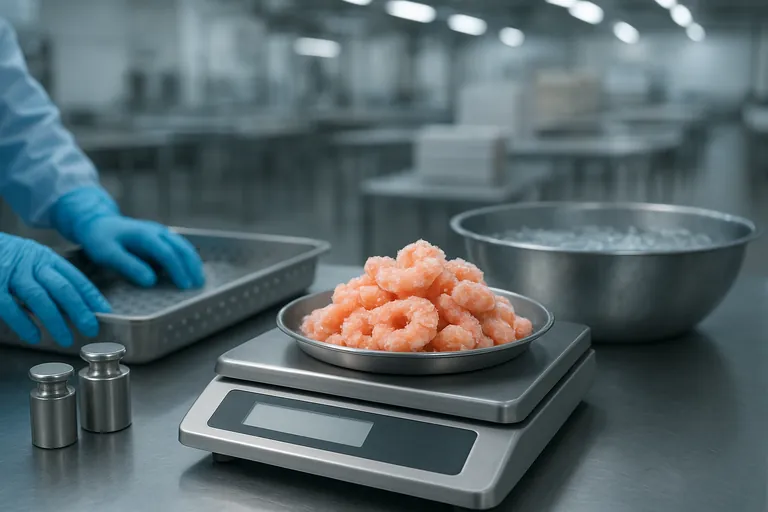
A practical, step-by-step plan to keep Indonesian shrimp free from nitrofuran residues for EU shipments in 2026. We cover RPAs, AOZ/AMOZ/SEM/AHD testing by LC-MS/MS, sampling that stands up to audits, ISO 17025 lab checks, timelines, and what to do after a positive.
If you ship shrimp to the EU in 2026, nitrofurans are still the residue risk that can derail an otherwise perfect container. We’ve lived this for years on our own lines. Here’s the system that actually works when the clock is ticking and bookings are locked.
Why nitrofurans still matter in 2026
What are nitrofurans and why are they banned in EU shrimp?
Nitrofurans are old, broad-spectrum antibiotics. They were cheap and effective in aquaculture decades ago, but they’re genotoxic. Because of that risk, the EU bans them in food of animal origin. Labs don’t typically test the parent drugs. They measure stable tissue-bound metabolites: AOZ (furazolidone), AMOZ (furaltadone), AHD (nitrofurantoin) and SEM (nitrofurazone).
What is the EU action limit for nitrofurans in shrimp in 2026?
Under EU rules for non-allowed substances, the reference point for action (RPA) is 0.5 µg/kg for each nitrofuran metabolite determined by LC-MS/MS. If AOZ, AMOZ, AHD or SEM is confirmed at or above 0.5 µg/kg on the edible portion, the lot is non-compliant. Many buyers go stricter and require “not detected” at ≤0.5 µg/kg, so set your specs accordingly.
Practical takeaway: your lab’s method must achieve an LOQ of 0.5 µg/kg or lower for every metabolite. Anything higher isn’t fit for EU pre-shipment screening.
A pre-shipment plan that works (and buyers trust)
We use a hold-and-release approach. It’s boring, and it prevents most crises.
-
Approve farms and raw material up front. Only buy from ponds with proven clean histories. If a pond or broker ever shows AOZ/AMOZ/SEM/AHD, insist on two consecutive clean harvests before reconsidering.
-
Sample representatively. Don’t cherry-pick “nice” cartons. Pull across pallets, layers and production times. Keep like-with-like: sample HOSO separately from peeled product. We explain how below.
-
Test by LC-MS/MS with LOQ ≤0.5 µg/kg per metabolite. Ask for stable-isotope internal standards in the method. It improves accuracy in fatty and high-protein matrices.
-
Hold every EU-bound lot until results are back. No exceptions. Plan your cold storage and vessel booking around a 3–7 working day window.
-
Keep an investigation kit ready. If you ever see a detection, you’ll need retains, extra sample material, production records, pond traceability, and feed/chemical logs within hours, not days.
Need help tailoring this to your buyer’s spec or your plant realities? When you’re stuck between a loading date and lab capacity, timing matters. Contact us on whatsapp.
Sampling design that stands up to audits
How many samples should we test per lot for nitrofuran screening?
For pre-shipment screening, we recommend at least one 1 kg composite per homogeneous lot, plus a 1 kg reserve. “Homogeneous” means same species, form (HOSO vs. PD/HL), grade, and production date range. If your lot mixes multiple count sizes or multiple peeling lines, split them and test each subgroup.
In practice for shrimp:
- HOSO lots: 30 primary units across 10 cartons to produce a 1 kg composite.
- Peeled/deveined or PUD: grab portions from 30 primary units across 10 cartons to make a 1 kg composite.
Composite sampling protocol for shrimp going to the EU
- Define the lot. Example: 8,400 kg PD Vannamei, 26/30, produced in one shift.
- Randomize. Select cartons from first, middle and last pallets and from top/middle/bottom layers.
- Primary units. Take at least 30 primary units (a handful per carton for peeled; 3–5 pcs per carton for HOSO), cutting a small piece from the central muscle for HOSO.
- Make a 1 kg composite. Homogenize thoroughly. Seal, label with lot ID, date, and sampler name.
- Create two identical 1 kg composites: one for the lab, one sealed retain at -18°C.
- Chain of custody. Document carton IDs, pallet numbers, and time of sampling.
Two non-obvious details we’ve learned:
- Never pool HOSO and peeled in one composite. Heads, shells and different processing lines can skew results and complicate investigations.
- If you produce multiple cooked states or value-added, test raw material pre-heat treatment. Heat can reduce parent drug traces but not bound metabolites. You need to know what entered the line.
Picking the right lab and reading the certificate
Which Indonesian labs can test AOZ/AMOZ/SEM/AHD by LC-MS/MS?
Use an ISO/IEC 17025 accredited lab (accredited by KAN) with shrimp or fish tissue on the scope and LC-MS/MS validated for AOZ, AMOZ, AHD and SEM at ≤0.5 µg/kg LOQ. Jakarta and Surabaya have multiple public and private options. If your local capacity is tight, some exporters route to regional reference labs in Southeast Asia, but build extra lead time.
How do I verify an ISO 17025 scope covers nitrofuran metabolites?
Ask the lab for:
- The accreditation certificate and the detailed scope annex. Look specifically for “AOZ, AMOZ, AHD, SEM in fish/shrimp by LC-MS/MS.”
- Method LOQs. They should list ≤0.5 µg/kg for each metabolite.
- Participation in proficiency tests for nitrofurans within the last 12–24 months.
- Use of isotope-labeled internal standards (e.g., 13C/15N AOZ-d4). It’s a good proxy for method robustness.
How fast can I get nitrofuran test results before shipment?
Typical routine TAT is 3–5 working days from sample receipt. Express service is often 24–48 hours if you pre-book a slot. Factor in courier time from plant to lab and one business day for QA review and buyer circulation. Realistically, build a 5–7 day buffer before stuffing.
Costs in Indonesia vary by lab and volume, but in 2026 we generally see the AOZ/AMOZ/SEM/AHD LC-MS/MS panel at roughly IDR 1.5–3.0 million per composite sample. Volume contracts can trim that.
How to read the LC-MS/MS report and the BKIPM health certificate
On the LC-MS/MS report, confirm:
- Matrix: “shrimp” or the exact product form tested.
- Method and LOQ: LC-MS/MS, LOQ ≤0.5 µg/kg for each metabolite.
- Units and basis: µg/kg, wet weight.
- Results for each metabolite. “<0.5 µg/kg” or a numeric result with its uncertainty.
- Sample ID that matches your lot and chain-of-custody.
On the BKIPM health certificate, the antibiotics section typically states compliance with EU requirements for prohibited substances. It may not list numeric nitrofuran values unless tied to official control sampling. Buyers often expect your third-party LC-MS/MS report attached to the shipping docs set. Keep those consistent with the certificate and packing list lot IDs.
When results aren’t clean
What should I do if AOZ is detected below 0.5 µg/kg?
Three steps that keep shipments on track:
- Confirm and localize. Retest duplicate composite at the same lab and, if time allows, a second ISO 17025 lab. Split the lot into smaller, tighter sub-lots and test to localize the issue.
- Talk specs. If your buyer requires ≤0.5 µg/kg “ND,” any numeric detection may be rejected. Align on accept/reject criteria before production starts.
- Investigate root cause. Review pond records, chemical logs, shared processing lines, and contact materials. SEM positives can occasionally be linked to packaging or equipment with azodicarbonamide-derived residues. Replace suspect materials immediately.
If a pre-shipment test is positive, what’s the immediate action plan?
- Hold and segregate the lot. Lock pallets and mark “QA HOLD.”
- Escalate sampling. Test additional composites from different pallets. Check raw material retains.
- Trace upstream. Identify farm pond IDs, harvest dates, and brokers. Test raw, pre-process frozen blocks if available.
- Decide disposition. Rework won’t fix nitrofuran metabolites. Most exporters divert or destroy. Don’t ship to a market with similar or stricter controls.
- Document CAPA. EU buyers expect a written corrective and preventive action plan before you resume supply.
Common mistakes we still see (and easy fixes)
- Testing only finished goods. Fix: test raw material intake for EU programs. It saves days.
- One composite for a mixed mega-lot. Fix: split by grade, form, and date. More samples, fewer surprises.
- Accepting a lab report with LOQ >0.5 µg/kg. Fix: pre-qualify labs and make LOQ a contractual requirement.
- Stuffing before results. Fix: hold-and-release, every time. Build TAT into your booking calendar.
Where this advice applies (and where it doesn’t)
This guide is laser-focused on nitrofurans in shrimp for EU-bound shipments in 2026. It doesn’t cover other antibiotic classes, non-shrimp species, or US/China rules. If your buyer has specs tighter than EU RPAs, align your LOQs and sampling plan to that higher bar.
What this looks like on our lines
For our Frozen Shrimp (Black Tiger, Vannamei & Wild Caught), we run a pond-level approval, raw intake screening, and lot-specific LC-MS/MS on 1 kg composites per homogeneous subgroup. LOQs are ≤0.5 µg/kg per metabolite. We hold every EU lot until QA clears results, then attach the report to the shipping docs alongside the BKIPM health certificate. It’s predictable, and buyers appreciate predictability.
RASFF alerts from 2024–2026 still show nitrofurans among the top reasons for crustacean detentions in Europe. The difference between a headache and a smooth landing is rarely technique. It’s discipline. Sample right, test right, and release only when the paper trail is bulletproof.
If you’d like us to review your SOP, recommend a lab with the right 17025 scope, or sanity-check your sampling math, just Contact us on whatsapp. And if you need spec sheets aligned to your buyer’s RPA and LOQ language, you can also View our products to see what we can pack to your requirements next production week.