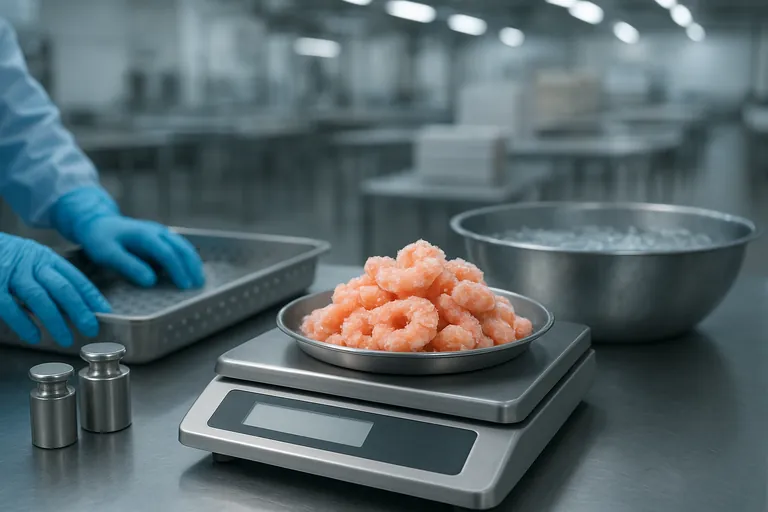
A field-by-field, 2026-ready label checklist and mock-up for frozen shrimp going into Singapore. Built from real export experience so you can clear SFA fast, avoid re-labelling costs, and keep your buyers happy.
We’ve shipped Indonesian seafood into Singapore for years, and the fastest way to pass SFA checks is to get the label right the first time. The truth is, most delays we see aren’t about food safety. They’re about small, fixable label gaps. Here’s a practical, 2026-ready guide you can copy for frozen shrimp.
The 3 pillars of a compliant frozen shrimp label
-
Identity and composition. The product must be described honestly and clearly in English. That means a proper name, species/common name, accurate net weight in metric, and an ingredient list if anything is added beyond shrimp.
-
Traceability and origin. Country of origin and a batch/lot code that links back to production. Your Singapore supplier details must be on-pack.
-
Safe use and legibility. Correct date marking, storage temperature and simple handling advice so consumers can use the product safely. Labels must be conspicuous and easy to read.
Takeaway. If you cover these three, you’ll solve 90% of issues we see in SFA holds.
Weeks 1–2: Build your label field-by-field (tools + a clean template)
Here’s the working template we use for frozen vannamei going to Singapore. Adjust to your SKU and pack size.
- Name of food: “Frozen Raw Prawns” or “Frozen Raw Shrimp.” Add the species/common name: “Vannamei (Whiteleg Shrimp).” Don’t just write “Seafood.”
- Species/common name: Use a recognised common name in Singapore. Scientific name is optional but helpful. Example: “Litopenaeus vannamei.”
- Ingredient list: Required if you add anything beyond shrimp. For glazed shrimp, declare water and any additives in descending order. Example: “Ingredients: Shrimp (Crustacean), Water, Salt, Antioxidant (Sodium Metabisulphite).” If it’s truly just shrimp with no glaze or additives, a formal ingredient list is not required. We still add one-liners for clarity.
- Allergen declaration: Make it plain and visible. Example: “Contains: Crustacean.” Legally, if “shrimp/prawn” is clearly stated, a separate Contains line isn’t strictly mandatory. But we use it on every shrimp pack because it prevents confusion at retail and with audits. If sulphites ≥10 mg/kg (as SO2), declare it as well.
- Net weight: State in metric and exclude the ice glaze. Example: “Net Weight: 400 g.” You can add support text like “Glaze: 10%” or “Net weight excludes glaze” to avoid disputes. Over-glaze complaints are common.
- Date marking: Frozen raw shrimp generally uses “Best Before.” We recommend “Best Before: DD MMM YYYY” because it’s unambiguous (e.g., 15 JUN 2026). “Use By” is reserved for foods that become unsafe soon after the date, which doesn’t fit properly frozen raw shrimp.
- Storage and handling: Keep it simple and practical. “Keep frozen at –18°C or below. Thaw under refrigeration. Cook thoroughly before consumption. Do not refreeze once thawed.” SFA expects storage conditions necessary to maintain safety/quality.
- Country of origin: “Product of Indonesia.” Don’t bury this.
- Singapore supplier details: Name and full address of the Singapore importer or distributor. Example: “Imported by: ABC Foods Pte. Ltd., 123 Jurong Ave, Singapore 60XXXX.” A PO box alone isn’t enough.
- Batch/lot identification: A printed lot or production code is critical for traceability. Example: “Lot: 2405VAN01.” SFA officers will ask for it during any follow-up.
- Optional but smart: QR code linking to specs or thawing instructions. This can support the label but cannot replace mandatory on-pack text.
Font/legibility. SFA doesn’t publish a single minimum font size across all packs. The rule is “conspicuous and easily legible.” Our working rule-of-thumb: 1.5 mm x-height or larger for body text, 3 mm for headings on retail packs. Test-print and read it from 30–40 cm. If you have to squint, it’s too small.
Weeks 3–6: Design, translate, and stress-test
-
English is mandatory. Bilingual labels are allowed as long as the English version is present and consistent with other languages. You can keep Bahasa Indonesia, just ensure English is complete and accurate.
-
Stickers vs. printed film. Yes, you can use a sticker to add importer details or tweak country-of-origin. Make sure it adheres at –18°C and is tamper-evident. Apply it before goods hit retail and, practically, before SFA checks. We’ve seen shipments held because the sticker was in the carton but not on the pack.
-
Materials. Frozen packs get condensation. Use low-temperature adhesives and scuff-resistant inks. Wipe test a frozen sample. If the ink smears or the sticker lifts, back to the printer.
-
Importer sign-off. Send your mock-up to the Singapore importer early. Their name and address must match their licence profile and they’ll know retailer nuances. Need a second set of eyes? If you want a quick label audit against current rules, Contact us on whatsapp. We can usually turn it in 1–2 business days.
Weeks 7–12: Roll out across SKUs and avoid relabelling costs
Standardise the fields above across your shrimp range. For example, keep date format, storage text and allergen phrasing identical on Vannamei, Black Tiger and wild-caught lines. It reduces training time and QC misses. If you also ship fish into Singapore, the same framework applies to items like Grouper Fillet (IQF) or Mahi Mahi Portion (IQF): identity, origin, date mark, storage, and Singapore supplier on-pack.
We also consolidate pack sizes. Instead of 350 g, 400 g, and 454 g running in parallel, choose one metric-friendly size per channel. Retail prefers 400 g and 1 kg. Foodservice often goes 2 kg. Fewer SKUs. Fewer artwork risks.
A clean mock-up you can copy
- Frozen Raw Prawns – Vannamei (Whiteleg Shrimp)
- Scientific name: Litopenaeus vannamei
- Ingredients: Shrimp (Crustacean), Water, Salt, Antioxidant (Sodium Metabisulphite)
- Contains: Crustacean. Contains Sulphites.
- Net Weight: 1 kg (net weight excludes glaze). Glaze: 10%.
- Best Before: 15 JUN 2026 (DD MMM YYYY)
- Storage: Keep frozen at –18°C or below. Thaw under refrigeration. Cook thoroughly. Do not refreeze once thawed.
- Product of Indonesia
- Imported by: ABC Foods Pte. Ltd., 123 Jurong Ave, Singapore 60XXXX
- Lot: 2405VAN01
That’s the backbone. Tidy layout, high contrast, and a barcode placed away from seams, and you’re good.
Quick answers to the questions exporters ask us
What must be on a frozen shrimp label to sell in Singapore?
Name of food, species/common name, net weight in metric, date marking, storage conditions, country of origin, Singapore importer’s name and address, and a batch/lot code. Add an ingredient list if anything beyond shrimp is used.
Do I need an ingredient list if the pack contains only shrimp (and water/ice glaze)?
If it’s only shrimp, you can omit the list. If there’s water glaze, salt, phosphates or preservatives, include a full ingredient list in descending order. Declare additive class and name, for example “Stabiliser (Sodium Tripolyphosphate).”
Is “Contains: Crustacean” mandatory for frozen prawns?
Not strictly, if “shrimp/prawn” appears clearly in the ingredients or product name. In practice we always include “Contains: Crustacean.” It reduces allergen risk and avoids retail pushback.
Should I use “Best Before” or “Use By” on frozen seafood in Singapore?
Use “Best Before” for properly frozen raw shrimp. “Use By” is for foods that become unsafe quickly after the date, which typically applies to chilled ready-to-eat items, not frozen raw prawns.
Does the label have to show my Singapore importer’s name and address?
Yes. Prepacked food needs a local supplier’s (importer/distributor) name and full address on-pack. A phone number is optional but helpful. We print the postal code too because it speeds up checks.
Can I keep Indonesian text if I add an English label that meets SFA rules?
Yes. Bilingual is fine as long as English is present and all languages are consistent. Don’t let translations contradict each other.
What storage temperature and handling statements are required?
State conditions needed to keep the food safe and of expected quality. For frozen shrimp: “Keep frozen at –18°C or below. Thaw under refrigeration. Do not refreeze once thawed.” Add “Cook thoroughly” if the product is raw.
5 mistakes that trigger SFA holds (and how to avoid them)
- Missing importer details. Easy to forget, always caught. Lock this field in your master artwork template.
- Ambiguous date formats. Use DD MMM YYYY to avoid 06/07 mix-ups. We’ve seen cartons relabelled for this alone.
- Net weight includes glaze. Declare net weight excluding glaze. If you must carry glaze, add a clear “Glaze: X%” note.
- Hidden allergen. If you use sulphite preservatives, declare them. Over 10 mg/kg as SO2, call out “Contains Sulphites.”
- Illegible stickers. Cold-chain kills cheap adhesives. Use low-temp labels, press firmly on a dry surface, and spot-check at –18°C.
2026 watch-outs and good-to-haves
- Digital support is welcome. QR codes for specs and thawing guides are great, but they don’t replace mandatory text on-pack.
- No nutrition panel needed unless you make a nutrition claim. Plain frozen shrimp doesn’t require it. If you add a claim like “High in protein,” then the panel becomes mandatory.
- Halal logos are allowed if you’re certified by MUIS or a MUIS-recognised foreign certifier. Make sure the mark matches the current certificate.
- Species naming. Singapore retailers are increasingly strict about accurate common names. “Vannamei Prawn” or “Whiteleg Shrimp” are safe for L. vannamei. Avoid vague “Seafood.”
If you want a ready-to-export base spec, our Frozen Shrimp (Black Tiger, Vannamei & Wild Caught) templates use the exact fields above and can be adapted to your pack sizes.
What’s interesting is that once your core label logic is right, scaling to other SKUs is straightforward. The compliance burden drops, and your team stops firefighting. Questions about your specific label or a retailer’s private-label spec? Contact us on whatsapp and we’ll share a one-page checklist you can hand to your designer.