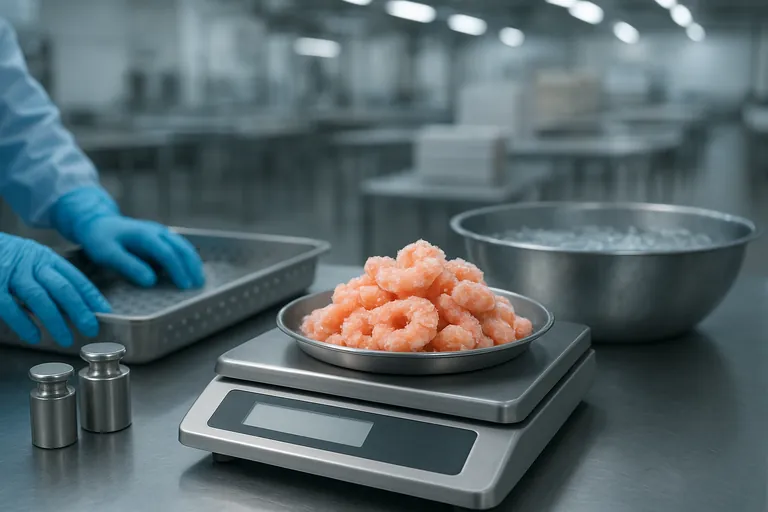
A practical, pass-first-time Spanish label checklist for frozen shrimp going to Mexico in 2026. What to print, how to phrase it, and the pitfalls that trigger COFEPRIS/PROFECO holds.
If you’ve ever had a shrimp shipment held in Mexico for a tiny label miss, you know how expensive “almost compliant” can be. Over the last two years we’ve supported buyers and partners to move dozens of Indonesian shrimp SKUs through Mexico with zero relabel holds. Here’s the exact 2026-ready approach we use for plain frozen shrimp so your artwork passes COFEPRIS/NOM checks on the first attempt.
Note: We focus on Spanish labeling for retail packs of plain, raw IQF shrimp (e.g., 500 g). We’re not covering plant listings, SENASICA zoosanitary permits, tariff codes, or microbiology.
The 3 pillars of a pass-first-time shrimp label (Mexico, 2026)
- Pillar 1. Get the right NOMs on your radar. NOM-242-SSA1-2009 governs seafood identity and sanitation, including labeling specifics for fishery products. NOM-051-SCFI/SSA1-2010 (as amended) governs general prepack labeling, nutrition, and front-of-pack seals. NOM-030-SCFI-2006 governs how to declare net content.
- Pillar 2. Print what inspectors actually look for first. In our experience, COFEPRIS and PROFECO agents go straight to: product name with scientific name, importer’s name/address with RFC, country of origin, net content excluding glaze, best-before and lot, and storage statements in Spanish. Miss any of these and you’re asking for a hold.
- Pillar 3. Decide early if you risk front-of-pack seals. If your shrimp is truly plain with no added sodium or marinades, you typically won’t trigger seals under NOM-051. But if you brine, add STPP, or season, you might. Reserve space on the principal display panel just in case.
Weeks 1–2. Validate your spec and Spanish claims before design
Here’s the thing: label text decisions come from your product spec, not from the designer. Lock these five items first.
- Species and name. Use Mexico’s accepted common name with the scientific name. Examples: Camarón blanco del Pacífico (Litopenaeus vannamei), Camarón tigre (Penaeus monodon). Avoid trading names that don’t exist in Mexico’s market.
- Presentation. State form clearly in Spanish per NOM-242. Examples: crudo, congelado IQF, pelado y desvenado, cola-on/off, HOSO/HLSO when relevant.
- Ingredients. If it’s single-ingredient shrimp, list “Camarón (Litopenaeus vannamei).” If you add anything, list in descending order: agua, sal, regulador de acidez, fosfatos, etc.
- Allergen. Add “Alérgenos: crustáceos.” Simple, but we still see it missed.
- Glaze policy. Mexico verifies net weight without glaze. If you glaze, declare “Contenido neto” as shrimp-only. You may optionally declare glaze percent separately. Agree this with your buyer now.
Practical takeaway: have your importer share their RFC and legal address now. Waiting until artwork is final easily adds 1–2 weeks.
Weeks 3–6. Build the artwork and pre-screen for NOM-051
Below is a Spanish label template we’ve used for 500 g retail pouches of plain, raw IQF vannamei. Tweak fields to your spec.
- Denominación del producto: Camarón blanco del Pacífico (Litopenaeus vannamei), crudo, pelado y desvenado, IQF.
- Ingredientes: Camarón (Litopenaeus vannamei). Sin adición de sal ni fosfatos.
- Contenido neto (NOM-030): 500 g. Declarado sin incluir glaseado.
- Glaseado: 10% aprox. (no incluido en el contenido neto). [Opcional, pero recomendable para transparencia.]
- País de origen: Indonesia. Hecho en Indonesia.
- Nombre, razón social y domicilio del productor: PT FoodHub Collective Indonesia, [dirección completa].
- Importado y distribuido por: [Nombre de la empresa importadora, S.A. de C.V.], [domicilio completo], RFC: [XXXXXXXXXXX].
- Lote: [código legible].
- Consumir preferentemente antes de: 31/12/2026. [Formato DD/MM/AAAA o MM/AAAA, consistente con NOM-051.]
- Conservación: Mantener congelado a -18 °C o menor. No recongelar una vez descongelado.
- Instrucciones de uso: Descongelar bajo refrigeración. Cocinar completamente antes de consumir.
- Alérgenos: Contiene crustáceos.
- Declaración nutrimental: Panel en español conforme a NOM-051, por 100 g y por porción. [Use valores analíticos o bases reconocidas.]
What about front-of-pack seals? For plain, raw shrimp with no added sodium or fats, you generally won’t carry octagonal warning seals or legends. If you brine or season, run your exact nutrient numbers through the current NOM-051 nutrient profile to confirm. We often block a clean square at the top-right of the principal display panel that can accept seals if needed. If no seals apply, leave it blank.
Need a quick sense-check on your draft? Share your PDF and spec and we’ll flag any red lights before print. If you want our team’s eyes on it, you can Contact us on whatsapp.
Weeks 7–12. Scale and optimize across SKUs
Once your base template is compliant, cloning it across sizes and species is low-risk if you control these variables:
- Net content line. Keep “Contenido neto” as shrimp-only weight for all glazed SKUs. If you switch to block-frozen, revisit how you state format and net content.
- Species switch. Swap common/scientific names precisely. Example changes: Camarón rosado (Farfantepenaeus spp). Avoid catch-all scientific names.
- Claims. If you add “Libre de fosfatos añadidos” or “Sin adición de sal,” make sure batch records and COAs back you up. Mexico’s market got stricter on functional additives in late 2025, and inspectors now ask for proof more often.
The big questions we get (and straight answers)
Do I need front-of-pack warning seals for plain frozen shrimp in Mexico?
In practice, no for single-ingredient, raw shrimp with no added sodium, sugars, or fats. If you add brine, STPP, or marinade, verify against NOM-051 thresholds. We advise reserving space for seals just in case a value-added SKU joins the line.
What scientific and common names must appear?
Use the accepted Spanish common name plus scientific name. Examples: Camarón blanco del Pacífico (Litopenaeus vannamei), Camarón tigre (Penaeus monodon). This aligns with NOM-242 and avoids disputes at inspection.
Does Mexico require the importer’s RFC and address on seafood labels?
Yes. Print the importer or distributor’s full name, address, and RFC on the label. Missing RFC is one of the top three causes of holds we see.
How do I declare net weight vs glaze on frozen shrimp packs?
Declare shrimp-only net content per NOM-030. Example: Contenido neto: 500 g. If glazed, add a separate, optional line: Glaseado: 10% aprox. Inspectors will weigh and remove glaze for verification.
Is a best-before date mandatory, and how should the lot code look?
Yes, a best-before is required for frozen seafood under NOM-051. Use an unambiguous Spanish format like 31/12/2026. Lot code must be legible and traceable to production. Either printed or inkjetted is fine as long as it’s permanent and readable.
What Spanish storage and handling statements are required?
State frozen storage clearly: Mantener congelado a -18 °C o menor. No recongelar una vez descongelado. Add safe handling like Descongelar bajo refrigeración and Cocinar completamente antes de consumir for raw shrimp.
Can I add Spanish label stickers in a bonded warehouse before customs clearance in Mexico?
Yes. It’s common to apply compliant Spanish stickers in a recinto fiscalizado before customs release. Coordinate with your customs broker so COFEPRIS/PROFECO can verify the stickered label during inspection.
5 mistakes that keep tripping up shrimp imports (and how to avoid them)
- Declaring net weight with glaze included. Mexico will strip glaze and fail you. Always print shrimp-only net content and optionally declare glaze percent separately.
- Missing or wrong scientific name. “Camarón vannamei” without Litopenaeus vannamei invites questions. Print both.
- No RFC on the importer line. Have your buyer send their legal name, address, and RFC early. We build it into our master template so it’s never missed.
- Sodium creep from brines/STPP. A light brine seems harmless until it triggers an “Exceso sodio” seal. If you want to stay seal-free, keep the ingredient list strictly single-ingredient and validate with a nutrition analysis.
- English-first labels. Bilingual is fine, but Spanish must be present and fully compliant. Don’t import US-style panels without adapting to NOM-051 formatting and phrasing.
Resources and next steps
- Use a master Spanish template. One compliant base for all shrimp SKUs cuts artwork time by 30–40 percent and reduces human error.
- Pre-shipment mockup check. We run a 20-minute pass against NOM-242, NOM-051, and NOM-030 before printing. It routinely saves weeks. If you’d like us to walk through your label on a call, Call us.
- Build for scale. If you plan to add grouper, snapper, or tuna later, the same framework applies. See how we spec our shrimp here: Frozen Shrimp (Black Tiger, Vannamei & Wild Caught). You can also explore our broader export-ready range: View our products.
Final word. Mexico enforcement tightened again in late 2025, especially around additives and truthful net content. If you keep shrimp single-ingredient, declare net without glaze, and print the importer’s RFC, you’ve already solved 80 percent of real-world issues. The rest is disciplined artwork control and a quick pre-shipment review. That’s how shipments move on the first try.