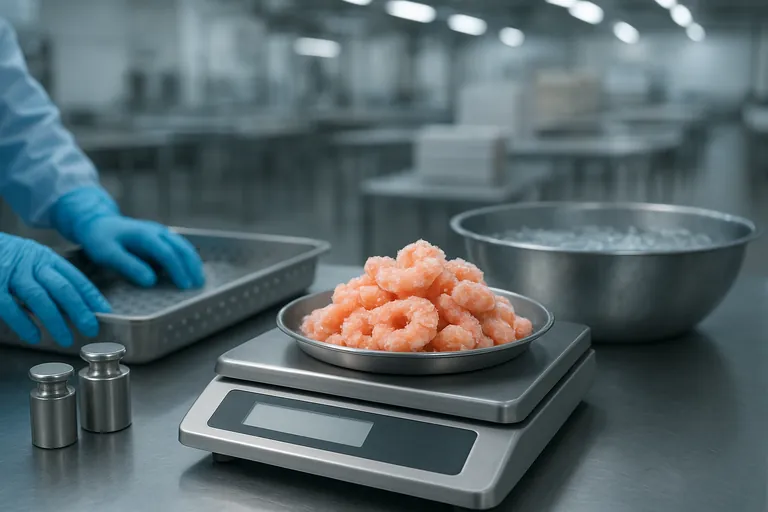
A first-pass approval checklist you can copy. Exactly what to prepare, in what order, and how to fill the INSW/BKIPM form so your Health Certificate is issued without back-and-forth in 2026.
If you’ve ever watched a container sit because a Health Certificate wasn’t ready, you know the cost isn’t just demurrage. It’s confidence. Over the last few years, we’ve taken our BKIPM HC first-pass approval rate from inconsistent to near-automatic by treating the application like a production run. Here’s the exact system we use and share with partners.
The 3 pillars of first-pass approval
-
Master data alignment. Every name, code, and number must match across invoice, packing list, labels, and the INSW form. If “Epinephelus spp” appears as “Epinephelus sp.” on your lab report, expect a query. We maintain a product master with HS codes, commodity names, and scientific names that we paste into the application.
-
Lot and lab strategy. BKIPM approves shipments, not theories. Labs need to link to lot codes, production dates, and species as shipped. Group lots intelligently. If we combine two lots of Grouper Fillet (IQF) from the same date and line, we make sure the lab report clearly states both lot codes.
-
Submission discipline. Sequence matters. Book inspection and sampling before you finalize the INSW form. Only lock the application when you have final weights, container and seal numbers, and confirmed lab results.
Practical takeaway: Build a single spreadsheet that mirrors the INSW fields, and don’t open the application until your sheet is 100% complete.
The 2026 first-pass checklist you can copy
Fill these in before you touch the portal.
Company and unit
- Exporter name as per NIB and address
- NIB and BKIPM-registered processing unit code
- Plant HACCP/SKP reference number (as registered with BKIPM)
Consignee and contract
- Consignee name and full address
- Purchase order or contract number (if any)
- Country of destination and port of discharge
Commercial docs
- Final commercial invoice number/date
- Packing list number/date
- HS code(s) exactly as on the invoice
Product-by-product details (repeat per line item)
- Commodity name and scientific name (e.g., Red Snapper, Lutjanus spp)
- Product form and state: frozen fillet, skinless/boneless, glazing % if shown on label
- Lot code(s) and production date(s)
- Net weight per carton and total net weight
- Number of cartons and pack format (IQF, IVP, IWP)
- Temperature requirement (e.g., -18°C or below)
Shipment details
- Planned date of stuffing and BKIPM inspection window
- Container number(s) and final seal number(s)
- Vessel name/voyage or flight number
- Port of loading
Lab and quality attachments
- Microbiology profile appropriate to product and market
- Histamine for scombroid species (tuna, mahi, wahoo, kingfish)
- Residues (antibiotics) for aquaculture species, heavy metals if required by buyer/country
- Lab report(s) mapping to each lot/species in the shipment
- Cold-chain logs (production to stuffing), label photos, and any buyer-required declarations
Fees and payment
- PNBP e-billing code ready (BKIPM fee). Confirm your station’s payment cut-off to avoid overnight delays.
Here’s the thing. When any one of these fields is “TBD,” you’re inviting a query. We’ve found waiting 30 minutes to get the final seal number prevents 24 hours of back-and-forth.
BKIPM online application and sequencing (what actually works)
- Book inspection and sampling first. Contact your local BKIPM station to schedule. We target sampling the morning of or day before stuffing. If you need guidance for your station’s cadence, Contact us on whatsapp.
- Prepare your lab mapping. Each lab file name includes species, lot code, and production date. Example: “Epinephelus-lotGFR230914-2026-01-05-micro.pdf.” The same strings appear in the INSW product lines.
- Open INSW and select the Health Certificate for Fishery Products export module. Create the draft, then paste from your master sheet. Do not improvise names or HS codes.
- Attachments. Upload lab results and commercial docs. Combine multi-lot lab results into a single PDF per species with a cover page that lists which product lines each result covers.
- Finalize after stuffing. Add container and seal numbers only after the door is sealed. Then submit and proceed to fee payment.
Recent updates we’ve noticed: more stations in late 2025 began issuing digitally signed HC with QR code validation. Importers appreciate that verification link at destination. Also, INSW’s document size limits tightened. Compress PDFs to avoid failed uploads.
Real-world examples (so you can see the mapping)
- Mixed container to North America. Mahi Mahi Portion (IQF) and Wahoo Portion (IQF / IVP / IWP) in one HC. Separate product lines with their own lot codes. Histamine reports per species, micro per product form. One HC because same consignee and sailing.
- Single-species EU load. Goldband Snapper Fillet. One species, three lots over two production dates. Composite microbiology allowed by the station for the same day and line, but histamine not relevant. The lab report explicitly lists each lot.
If you’re building a compliant lineup for a multi-item container, here’s a curated range we ship globally. View our products.
Questions we get all the time
What documents are required to get a BKIPM Health Certificate in 2026?
- Company: NIB, registered processing unit code.
- Trade: invoice, packing list, PO/contract.
- Shipment: vessel/flight, port of loading/discharge, container and seal numbers.
- Technical: product specs (name, scientific name, form), lot codes, production dates, temperature requirement.
- Lab: microbiology, histamine for scombroids, residues for aquaculture, heavy metals if required, all mapped to lots.
- Proof of payment for BKIPM fees.
Do I need lab test results for every production lot or can I use composite testing?
In our experience, BKIPM allows composite microbiology when lots are truly homogeneous. Same species, same line, same day, identical formulation. Clarify this with your station and state it on the lab’s sampling plan. For histamine, we run lot-specific testing for scombroid species. Residues are per batch of raw material or per production lot depending on your plan. When in doubt, don’t composite.
How long does BKIPM take to issue the Health Certificate after inspection and sampling?
Typical ranges we see:
- Microbiology: 2–3 working days.
- Histamine: 1–2 working days.
- Residues/heavy metals: 5–7 working days. End-to-end, 3–7 working days is common if you’ve pre-booked sampling and uploaded complete docs. Add time if your station or lab is at capacity.
Can I apply before container stuffing and final seal number is known?
You can draft the application and even submit preliminarily, but BKIPM won’t issue the HC until container and seal numbers are final. We keep the application in draft and only submit after sealing to avoid corrections.
How long is the BKIPM Health Certificate valid for frozen seafood exports?
BKIPM issues the HC for a specific shipment. There’s no universal “expiry” in Indonesian rules, but most buyers and authorities expect the issuance date to be close to loading. For frozen products, 30–60 days from issuance is broadly acceptable in practice, while chilled is much tighter. Always follow the destination’s SPS rules.
Why was my BKIPM Health Certificate application rejected and how do I fix it on resubmission?
The most common reasons we see:
- HS code or commodity name doesn’t match the invoice.
- Scientific name on the application doesn’t match the lab report.
- Lot codes on labels don’t appear on lab results.
- Weight/carton count discrepancies over 1–2% without explanation.
- Missing or placeholder seal numbers.
- Lab methods or scope not appropriate for the product/destination. Fix by correcting the data, re-uploading a clean document pack, and adding a one-page clarification note referencing the original application number. Don’t drip-feed files.
Can one BKIPM Health Certificate cover multiple products or HS codes in a single shipment?
Yes, if it’s the same consignee and sailing. Each item must have its own line with species, form, HS code, and mapped lab coverage. We avoid putting chilled and frozen on the same HC to reduce complexity.
Bonus: does BKIPM require a catch certificate with the Health Certificate?
Not for every market. The HC is sanitary. Some destinations also require catch certificates or IUU statements for specific species. If your buyer requests it, prepare it in parallel. Don’t attach it to the HC unless your station asks.
Bonus: can I get an HC for sample shipments?
Yes. Mark the invoice as “non-commercial samples,” include realistic values, and still provide lab coverage proportional to the risk. Airfreight samples move faster if you pre-book sampling.
Common mistakes that trigger delays
- Free-texting commodity names. Use your maintained master names, not what’s on your mind at 10 p.m.
- Uploading lab reports with different product names than the application. Align terminology before testing.
- Underestimating residues lead time for aquaculture shrimp. Plan at least a week.
- Rushing seal numbers. We’ve lost a day fixing a single digit.
What’s interesting is how often the “small” mismatches cause the biggest delays. Three out of five rejections we’ve seen were just naming or code mismatches.
Your next steps
- Build the master sheet today. Copy our sections above and save it with your product catalog. Include examples for items like Grouper Bites (Portion Cut) and Red Snapper Portion (WGGS / Fillet) so your team isn’t guessing.
- Pre-book inspection for your next stuffing. Align sampling with production and give the lab a clean mapping of lots to tests.
- Only submit when every field is final. It feels slower, but it’s faster than a resubmission.
Need help aligning your lot and lab strategy with BKIPM expectations at your local station? Questions about a mixed-species, multi-HS shipment? Call us and we’ll walk through your draft before you submit.
In our experience, this checklist reduces HC turnaround from a week of emails to a predictable 3–5 day window. That’s the difference between chasing paperwork and shipping on schedule.