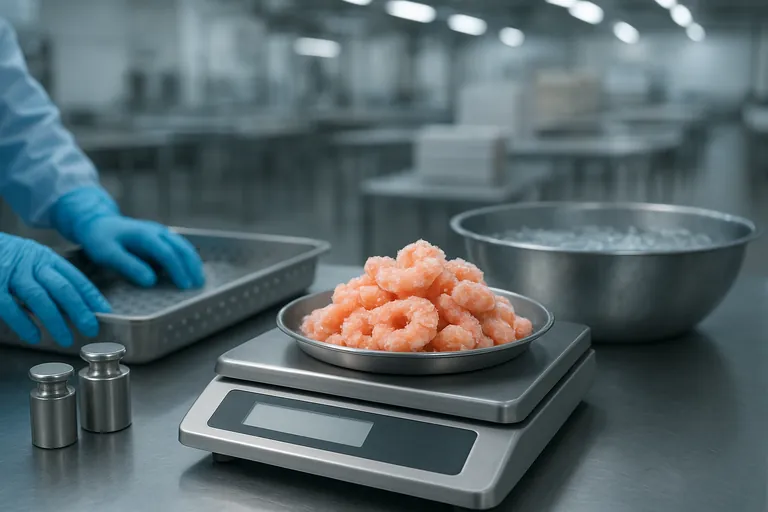
A practical, QA‑manager’s checklist for releasing frozen raw shrimp in Indonesia in 2026: exact organisms to test, working n/c/m/M limits aligned with SNI/BPOM, accepted lab methods, sample counts per lot, how to read borderline results, and what must appear on the COA.
We’ve released thousands of lots of Indonesian shrimp. And we’ve learned the hard way what actually keeps shipments moving and regulators satisfied. If you’re a QA manager or buyer who needs a clean, Indonesia‑compliant microbiology COA for frozen raw shrimp, here’s the exact, field‑tested system we use.
The hook: how we cut holds to near-zero in 90 days
Three seasons ago, our team went from repeated holds for borderline Vibrio results to clean releases across multiple pack plants in under 90 days. The shift wasn’t magic. It was a simple playbook: align to the national standard, lock the sampling plan, and insist on method clarity. We’ll walk you through that playbook below.
The 3 pillars of compliant lot release (Indonesia, raw frozen shrimp)
- Clear criteria and sampling plan. Decide your n/c/m/M before sampling starts, not after you see results.
- Method discipline. Use KAN‑accredited labs and specify ISO/BAM methods on the PO and COA.
- Interpretation rules. Know exactly when a lot passes, when it needs rework, and when it must be rejected.
Here’s the thing. Most delays we see don’t come from “bad shrimp.” They come from fuzzy specs and mixed methods. Fix those, and your pass rate climbs fast.
Weeks 1–2: Set your standard and sampling plan (n/c/m/M)
In Indonesia, frozen raw shrimp lots are typically released against microbiological criteria aligned to SNI and BPOM guidance. As of our latest checks with KAN‑accredited labs (2024–2025) and industry practice carried into 2026, these are the working release limits most plants and buyers use for raw frozen shrimp. Always confirm your buyer’s spec and any BPOM/SNI updates for 2026.
Core organisms and typical limits for frozen raw shrimp:
- Salmonella: Not detected in 25 g. Sampling plan: n = 5 units, c = 0. Method: ISO 6579‑1 or SNI equivalent. Pass only if all five 25 g units are negative.
- Vibrio parahaemolyticus: n = 5, c = 2, m = 1×10^2 CFU/g, M = 1×10^3 CFU/g. Methods: ISO 21872‑1 for detection and ISO/TS 21872‑2 or FDA BAM Chapter 9 for enumeration (CFU or MPN reporting accepted if method is stated). Accept if no more than 2 units fall between 100 and 1,000; none may exceed 1,000.
- E. coli: n = 5, c = 2, m = 10 MPN/g, M = 100 MPN/g. Methods: ISO 16649‑3 (MPN) or ISO 16649‑2 (CFU on TBX). Same acceptance rule as Vibrio.
- Staphylococcus aureus (coagulase positive): n = 5, c = 2, m = 1×10^2 CFU/g, M = 1×10^3 CFU/g. Method: ISO 6888‑1.
- Vibrio cholerae (O1/O139): Not detected. Practical plan: n = 5, c = 0, using ISO 21872‑1 with serogroup confirmation.
Optional but common plant controls for trending and shelf-life (buyer‑dependent):
- Aerobic Plate Count (APC/TVAC): often trended with a house limit in the 10^5–10^6 CFU/g range. Method: ISO 4833‑1. We treat this as process control, not a strict reject criterion unless buyer‑mandated.
Do farmed and wild‑caught shrimp have different limits? No. The criteria apply by product category (raw frozen shrimp), not by origin. But prevalence differs seasonally and by source, so you may adjust testing frequency, not the numeric limits.
Practical takeaways for Week 1–2:
- Lock your n/c/m/M now. Put it in your PO and sampling SOP.
- Specify the method for each organism. Don’t leave it to lab interpretation.
- For Salmonella, never composite. Test five individual 25 g units.
Weeks 3–6: Align labs and methods, then dry‑run your release workflow
Which laboratory methods are accepted in Indonesia? In our experience, Indonesia’s KAN‑accredited labs reliably run the following:
- Salmonella: ISO 6579‑1 (or SNI‑adopted equivalent).
- Vibrio parahaemolyticus: ISO 21872‑1 for detection and ISO/TS 21872‑2 or FDA BAM Chapter 9 for enumeration (MPN or direct plating). Declare CFU/g or MPN/g consistently on COA.
- E. coli: ISO 16649‑3 (MPN) or ISO 16649‑2 (CFU on TBX).
- Staphylococcus aureus: ISO 6888‑1 (coagulase positive).
- Vibrio cholerae: ISO 21872‑1 with O1/O139 confirmation.
Three non‑obvious wins we’ve found in this phase:
- Write the enumeration unit into your PO and COA template. “V. parahaemolyticus: CFU/g (ISO/TS 21872‑2).” Buyers hate switching between MPN and CFU year to year.
- For warm‑water months, add a receiving‑stage Vibrio screen. You’ll catch high‑load raw materials before you portion, glaze, and value‑add them.
- Ask your lab to flag tdh/trl genes only if your buyer asks. Pathogenicity markers are powerful but can complicate interpretation when your acceptance plan is built on total V. parahaemolyticus counts.
Weeks 7–12: Scale, monitor, and optimize (so results don’t surprise you)
How many units per lot for Vibrio? Stick to n = 5 per lot, tested as individual units. We avoid composites for enumeration because a hot unit can be diluted below m. If a buyer insists on composites, we still hold retain samples and run individuals if a composite fails.
How to interpret borderline results:
- Salmonella: Any positive in the 5 × 25 g set is a fail. Re‑sampling or composite re‑tests don’t “erase” a positive. Your options are rework with a validated lethality step or reject.
- Vibrio/E. coli/S. aureus with n = 5, c = 2, m/M as above: Up to two units may sit between m and M. None can exceed M. If three or more are above m, or any is above M, the lot fails.
Are cooked (ready‑to‑eat) shrimp different? Yes. Cooked RTE shrimp in Indonesia typically add Listeria monocytogenes criteria and often tighten E. coli and S. aureus to near‑absence expectations for RTE foods. This guide stays focused on raw frozen shrimp used for cooking by the end consumer.
Seasonal note we’re watching: Warmer sea surface temps the past 6–9 months have pushed Vibrio baselines higher at harvest in several Indonesian zones. The fastest countermeasure is time‑to‑chill. Aim for sub‑4°C within 2 hours of harvest and keep deck time under 30 minutes, with ice made from potable water. It sounds basic, but it shows up in your counts.
Your COA: what has to be on it to satisfy Indonesian buyers and inspectors
From real audits, here’s the COA content list that avoids back‑and‑forth:
- Product and lot identifiers: species, form, size/grade, production date, lot/batch.
- Sampling plan: n/c/m/M for each organism or a clear reference to the governing spec (e.g., “Per SNI/BPOM criteria for raw frozen shrimp”). For Salmonella, explicitly state “n=5, c=0, 25 g each.”
- Methods used: cite ISO/SNI or BAM chapter for each organism. Keep method versions consistent.
- Results with units: CFU/g or MPN/g. For Salmonella/V. cholerae, “Not detected in 25 g” or detected/negative per unit.
- Lab credentials: KAN accreditation number, report number, analyst signatory, issue date.
- Storage/shipment temperature statement and sample condition on receipt (if your buyer requires chain‑of‑custody clarity).
If you want a working COA template aligned with the criteria above, we’re happy to share what we use for our export shrimp. Need one tailored to your buyer’s spec? Just Contact us on whatsapp.
The 5 mistakes that quietly kill shrimp shipments
- Composite Salmonella testing. One positive unit sinks the lot. Don’t mask it.
- Mixing CFU and MPN mid‑season. Trend lines become meaningless, and buyers lose trust.
- Unstated acceptance numbers. Labs report results. You must define n/c/m/M.
- Method drift. A switch from ISO 21872‑1/2 to a rapid method without bridging validation invites disputes.
- Sampling late. Pulling end‑of‑line samples only, when raw material was already hot for Vibrio, turns results into a coin toss.
Quick answers to the most‑asked questions
- What is the Salmonella limit for frozen raw shrimp in Indonesia? Not detected in 25 g, with n = 5, c = 0.
- How many units per lot should I test for Vibrio? Five individual sample units per lot is the standard plan.
- Which methods are accepted for V. parahaemolyticus? ISO 21872‑1 for detection plus ISO/TS 21872‑2 or FDA BAM Chapter 9 for enumeration. State CFU/g or MPN/g on the COA.
- Do the same limits apply to farmed vs wild‑caught shrimp? Yes, criteria are by product type, not origin.
- What must appear on a shrimp COA? Lot IDs, sampling plan, methods, results with units, and lab accreditation details. See the checklist above.
- How do I set an n/c/m/M plan that aligns with 2026 limits? Use the sets above, confirm with your buyer, and reference SNI/BPOM on the PO and COA. Keep n = 5 across organisms for simplicity.
- Are cooked shrimp limits different? Yes. Cooked RTE shrimp add Listeria criteria and tighter indicators. This guide covers raw frozen only.
Where this advice applies (and where it doesn’t)
Use this guide for Indonesia‑processed, frozen raw shrimp lots intended for buyers who accept SNI/BPOM‑aligned microbiological criteria. If you’re targeting markets with stricter rules or additional pathogens (for example, specific EU or US retailer specs), layer those on top. We regularly run parallel panels for export buyers when needed.
If you want to see how we implement this in practice, review the specs behind our Frozen Shrimp (Black Tiger, Vannamei & Wild Caught). We build every COA to the structure above so release decisions are fast and defensible.
Final thought. Microbiology is probability management. Get your plan, methods, and interpretation rules aligned up front, and the rest becomes routine QC rather than last‑minute firefighting. And if you need us to sanity‑check your spec before you book a vessel, View our products and reach out with the lot details—we’re happy to help.