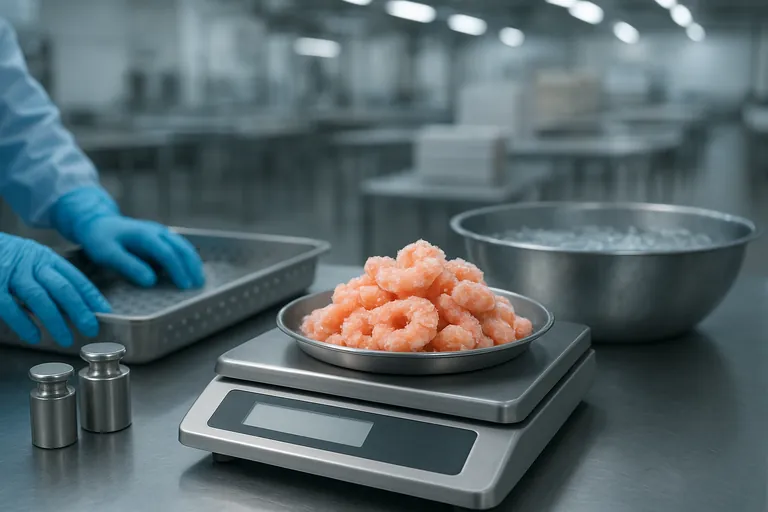
A practical, save-and-share guide to classifying Indonesian frozen vannamei shrimp under the US HTSUS in 2026. We cover HS 030617 vs 1605, peeled/deveined vs shell-on, tail-on, salt/STPP, how to calculate duty + MPF/HMF, and how to check trade remedies—plus a clean, worked example.
If you’ve ever spent an afternoon arguing with your broker about shrimp codes, you’re not alone. The line between raw frozen (HS 0306) and prepared shrimp (HS 1605) looks simple on paper. In real life, additives, glazing, tail-on spec, and “just a quick blanch” can send you down a rabbit hole. Here’s the 2026 playbook we use to get Indonesian vannamei right the first time.
The quick answer: HS and HTSUS essentials for Indonesian frozen shrimp in 2026
- Global HS at 6 digits: Frozen vannamei shrimp is generally HS 0306.17 (Other shrimps and prawns, frozen). Vannamei is warmwater, so you’re in .17, not .16 (cold-water).
- US HTSUS at 10 digits: Classify under 0306.17.00 plus a statistical suffix that reflects whether it’s in shell or peeled (and some tail-on distinctions). The Column 1 General duty rate for 0306.17.00 has historically been Free. Verify current rates in the 2026 HTSUS before filing.
- Cooked/seasoned/breaded shrimp moves to Chapter 16. If it’s cooked or otherwise prepared/preserved (beyond simple treatments), you’ll be in 1605.21 or related subheadings, which can carry non‑zero duty.
Takeaway: Raw, frozen, unseasoned Indonesian vannamei almost always sits in HTSUS 0306.17.00.xx with a 0% base duty. Cooked or prepared product is 1605 with a different duty picture.
A simple decision path you can use today
I’ve found that 80% of misclassifications come from skipping one of these four questions:
- Is it raw or cooked?
- Raw frozen. Stay in Chapter 3. Likely 0306.17.00.xx for warmwater shrimp.
- Cooked (boiled, steamed, par‑cooked, breaded, marinated, in sauce, or in brine). You’ve crossed into Chapter 16, generally 1605.21.
- In shell or peeled?
- Headless shell‑on (HLSO) or head‑on shell‑on (HOSO). Use the “in shell” statistical line under 0306.17.00.
- Peeled (PD, PUD, PDTO, etc.). Use the “not in shell” statistical line under 0306.17.00. Tail‑on vs tail‑off usually just changes the statistical suffix, not the duty.
- Any additives that change the nature?
- Ice glazing, moisture control, salt below roughly 2% as a processing aid, and STPP used to retain moisture typically do not move you out of Chapter 3.
- Brined, seasoned, spiced, candied, sauced, or breaded products are “prepared/preserved.” That’s Chapter 16.
- Pack style and presentation
- IQF vs block‑frozen doesn’t change the heading. Neither does retail vs bulk pack by itself. But “airtight containers” can matter for certain 1605 sublines. Check if you’re truly in Chapter 16 first.
What’s the correct HTSUS code for peeled and deveined frozen shrimp from Indonesia?
Peeled and deveined, raw, frozen vannamei typically falls under HTSUS 0306.17.00 with a “not in shell” statistical suffix. The exact 10-digit suffix depends on tails and other statistical distinctions. The base duty has historically been Free for these lines. Confirm the current 10‑digit suffix in the 2026 HTSUS and match your product spec carefully.
Does cooked Indonesian shrimp fall under 0306 or 1605 in the US tariff schedule?
Cooked moves you to Chapter 16. If it’s boiled, steamed, seared, breaded, marinated, or held in brine/sauce, you’re in 1605.21 (prepared or preserved shrimp). Duty can apply, and pack style can change which 10‑digit you use. Raw = 0306. Cooked/prepared = 1605.
Will salt, glazing, or STPP change the HS code?
Here’s the thing: small amounts of salt and polyphosphates are common in raw frozen shrimp and are generally treated as processing aids. In our experience, when salt is under about 2% and there’s no marinade, spice blend, or brine that imparts a distinct flavor, CBP rulings keep the product in 0306.17. STPP or sodium metabisulfite, declared and within good manufacturing practices, also typically stays in Chapter 3.
But heavy brining or seasoning pushes the product to 1605. If your spec reads like a recipe, you’re not in Chapter 3 anymore. When in doubt, keep the additive breakdown on a one‑page spec sheet and get your broker to sign off before you book.
Duty, MPF, and HMF: how to calculate your 2026 landed cost
For HS 0306.17 shrimp, the base duty is generally 0%. You’ll still pay:
- MPF. Merchandise Processing Fee, typically 0.3464% of the declared value with a minimum and maximum that CBP adjusts periodically. Check the current year’s min/max.
- HMF. Harbor Maintenance Fee, 0.125% of value for ocean shipments entering US ports.
A quick example: Indonesian peeled, deveined, tail‑on vannamei, 1 x 40’ FCL, CIF value USD 110,000.
- Base duty (0306.17.00). 0% = USD 0.
- MPF. 0.3464% × 110,000 = USD 381.04. If below CBP’s minimum, you’d pay the minimum instead.
- HMF. 0.125% × 110,000 = USD 137.50.
- Total duty/fees to CBP on entry. About USD 518.54, before brokerage, exams, storage, or delivery.
Takeaway: Even duty‑free shrimp carries predictable MPF and HMF. Build them into your margin model early.
Do anti‑dumping or other trade remedies apply to Indonesian shrimp in 2026?
Trade remedies are the landmines. As of our latest experience, there are no active AD/CVD orders on Indonesian frozen warmwater shrimp. Petitions have come and gone in recent cycles, so we always check before contract signing.
A fast way to check:
- Search the US Department of Commerce AD/CVD case database for “shrimp” and country = Indonesia.
- Scan HTSUS Chapter 99 notes for any Section 301, 201, or 232 lines applying to your HS code.
- Ask your broker for an ACE AD/CVD inquiry screenshot with your exact 10‑digit and country.
If you need a quick second opinion on a live PO, you can Contact us on whatsapp. We’ll run the same checks we use for our own shipments.
What details do brokers and CBP want to see for 0306.17 shrimp?
We recommend you keep a “classification sheet” per SKU. At minimum:
- Species and origin. Penaeus vannamei, farmed in Indonesia; harvest and processing locations.
- State and processing. Raw, frozen, IQF or block; HOSO/HLSO or peeled; PD/PUD/PDTO; tail‑on or tail‑off.
- Additives and percentages. Glaze %, salt %, STPP %, sulfites ppm.
- Count size and pack. e.g., 26/30 PD tail‑on, 10 x 1 kg IVP, master carton net weight.
- Photos or line drawings. One close‑up of tail spec and one of pack.
- Clear statement on cooking. “Uncooked” or “Fully cooked.”
Three out of five disputes we’ve seen were solved by a one‑page sheet with additive percentages and photos. It saves hours.
Tail‑on vs tail‑off, HLSO vs PUD: will this change duty?
Not for raw frozen shrimp. These details usually change the statistical suffix within 0306.17.00 and your ACE data, but the Column 1 General duty rate has been the same across those lines. It does matter for reporting and for any future trade actions keyed to specific lines. So pick the correct 10‑digit.
Worked example you can copy
Scenario. You’re importing raw frozen vannamei PD tail‑on from Indonesia. Spec is IQF, 21/25 count, 10x1 kg IVP, glaze 8%, salt 1.2%, STPP 0.3%, not cooked.
- Classification. HS 0306.17 at 6 digits. In the US, HTSUS 0306.17.00 with the “not in shell” statistical suffix that matches tail‑on peeled product. Base duty likely 0%.
- Origin. Indonesia. Farmed and processed in Indonesia, so COO = Indonesia for CBP marking and origin declarations.
- Duty and fees (CIF USD 5.80/kg × 18,000 kg = USD 104,400). Base duty 0%; MPF ≈ 0.3464% × 104,400 = USD 361.22 (subject to min/max); HMF = 0.125% × 104,400 = USD 130.50. Total to CBP ≈ USD 491.72.
- Documents on file. Product spec with additives, photos, process flow confirming “raw/uncooked,” invoice, packing list, health certificate, and labels.
Now change one variable. If the same shrimp is blanched or fully cooked, you move to Chapter 16, typically 1605.21. Duty can apply. If it’s breaded or marinated, also 1605. This is where margin surprises happen, so confirm before you sign.
When this guidance applies (and when it doesn’t)
Use this guide when your product is Indonesian origin, raw, frozen vannamei or black tiger, sold bulk or retail, with only processing aids like salt/STPP and standard glazing. Don’t use it for breaded, sauced, canned/pouched, value‑added, or shelf‑stable items. Those are Chapter 16 with their own sub‑rules.
Where we can help in practice
We export raw frozen Indonesian shrimp in the formats you’re classifying here, including HOSO, HLSO, PD, PUD, PDTO, tail‑on/off, IQF or block. If you need a spec that cleanly fits HS 0306.17 and sails through US Customs, we can match it. See our Frozen Shrimp (Black Tiger, Vannamei & Wild Caught) line, then ask for the additive breakdown you need for your files. Questions about a live order or a tricky spec? You can also View our products and send us the SKU you’re considering.
In our experience, getting the HS code right isn’t about memorizing suffixes. It’s about building a habit: confirm raw vs cooked, confirm shell status, declare additives with percentages, and check remedies before you book. Do that every time and you won’t just clear smoothly. You’ll also quote with confidence, which is how you win repeat business in 2026.