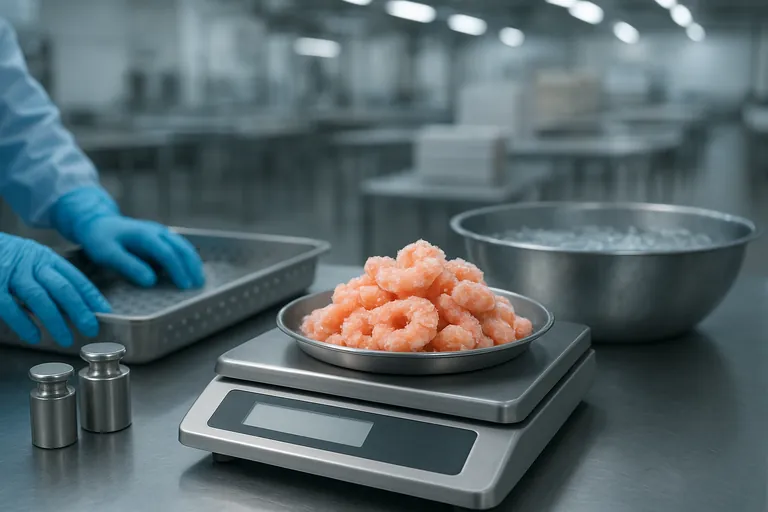
A practical, field-tested playbook for EU CATCH registration in Indonesia. Who needs it, how to register, how KKP validates, what to prepare, and how to avoid the rejections we see most often in 2026.
Indonesian Seafood EU IUU Catch Certificates: 2026 Guide
We’ve moved our EU-bound wild-caught shipments from paper to the EU’s CATCH system over the last 18 months. The result. Fewer border questions, faster clearances and a cleaner audit trail when Member States dig into details. If you’re trying to figure out EU CATCH registration in Indonesia, this is the practical walkthrough we wish we’d had on day one.
Here’s the thing. The EU is steadily pushing operators toward electronic catch certification. Some ports still accept paper, but in 2026 we treat CATCH as the default for wild-caught Indonesian products. It simply reduces risk.
The 3 pillars of smooth CATCH submissions from Indonesia
-
Operator setup and roles. Register correctly as a third-country operator and get validated by KKP. If the role or country is wrong, you’ll lose days fixing access.
-
Clean source documentation. Every CATCH field should map to an Indonesian document. When those don’t match exactly, that’s where rejections start.
-
Timeline discipline. Align CATCH validation, health certificate issuance and EU pre-notification. Three moving parts. One clean timeline.
Weeks 1–2. Account setup and validation
- Create an EU Login, then access TRACES NT and request CATCH as a third-country operator for Indonesia. Select your establishment and company roles. In our experience, attaching a signed authorization letter on company letterhead speeds up approval.
- Who approves you. KKP, acting as Indonesia’s Flag State competent authority, validates Indonesian operator accounts and catch certificates in CATCH.
- Typical approval time. 1–3 working days if details are complete. Longer if names, NIB/NPWP or addresses differ from your licenses.
What we prepare upfront:
- Company docs: NIB, NPWP, EU-listed establishment number if you process fishery products for the EU.
- Authorized users: at least two staff trained on CATCH. One prepares applications and one handles corrections when Member State questions come in.
Need help mapping your documents to the right fields. If you’re stuck on roles or approval timing, Contact us on whatsapp.
Weeks 3–6. Build master data and templates
- Vessels. Enter vessels you buy from routinely. Use exact names and call signs as per SIPI/logbook. For tuna, add RFMO authorizations if relevant.
- Products. Create templates for your common species and presentations. For example, we keep templates for Grouper Fillet (IQF), Goldband Snapper Fillet and Yellowfin Saku (Sushi Grade). Pre-filling FAO codes, product forms and HS codes saves time and eliminates typos.
- Processing statement logic. If you process fish in Indonesia that were caught by a non-Indonesian flag vessel, you’ll attach an EU Processing Statement validated by KKP and link it to the original flag state catch certificate in CATCH. Build that linkage workflow now.
Weeks 7–12. First submissions, KKP validation and pre-notification
- Create the catch certificate in CATCH. List vessels, gear, dates and quantities. Keep the scope tight. We try to avoid mixing many vessels or species on one certificate.
- Submit for KKP validation. Typical validation time we see is 2–5 working days. During peak seasons it can stretch, so plan buffers.
- Align with BKIPM health certificate. On the packing week, get the BKIPM health certificate issued with the CATCH reference where requested by your EU buyer’s authority. Then your EU importer uses CATCH to pre-notify their border authority, usually 48–72 hours before arrival.
Takeaway. Work backward from vessel landing dates and your ETD. Your CATCH should be validated before you book the container. It saves everyone a headache.
What documents should I prepare before starting a CATCH application?
Here’s the field-to-document mapping we actually use:
- Vessel identity and license. SIPI number and vessel details. For small vessels without SIPI, use the applicable Indonesian licensing/registration documents referenced by KKP.
- Fishing period and area. E-logbook entries, landing declaration and purchase notes from the landing site. FAO area and sub-area must match logs.
- Quantities by species. Summaries from logbook and receiving notes. Keep conversion yields handy when you export fillets or portions.
- Transshipment details. At-sea or in-port transshipment declarations and authorizations. For tuna, RFMO compliance docs where applicable.
- Processing statement (when required). EU form completed by your plant and validated by KKP, linking to the source catch certificate(s).
- Health certificate. BKIPM export health certificate. While separate from IUU, weights and species must align with CATCH and the commercial invoice.
Do Indonesian exporters need their own EU CATCH account, or does KKP submit on our behalf?
You need your own third-country operator account to create and submit the draft catch certificate. KKP reviews and validates in CATCH. They don’t create applications for you, but they can request corrections.
When will the EU stop accepting paper catch certificates and require CATCH for Indonesia?
There isn’t a single hard cutoff date published for Indonesia. But many EU border authorities now prefer or expect CATCH pre-arrival submissions, and audits increasingly favor electronic records. Our rule in 2026. Use CATCH for all wild-caught shipments unless your buyer’s authority confirms paper is still acceptable for that port.
Which Indonesian authority validates EU catch certificates and how long does it take?
KKP is the Flag State competent authority for Indonesia in the EU IUU system. We typically see 2–5 working days for validation, faster when all vessel documents line up with your CATCH entries.
Do processed tuna loins made in Indonesia need a processing statement linked in CATCH?
Yes, if the tuna were caught by a non-Indonesian flag or if you rely on an original catch certificate issued by another country. Your Indonesian plant completes the EU Processing Statement and KKP validates it. Then you link it in CATCH to the original catch certificate. If the tuna was caught by Indonesian-flag vessels and you export without using a foreign flag’s catch certificate, you usually don’t need a processing statement.
Can I list multiple vessels or landings on one EU catch certificate?
You can, as long as they share the same flag state and product consignment. But here’s our experience. The more vessels and landings you combine, the higher the chance of weight mismatches and requests for clarification. For risk control we prefer one vessel per certificate per species where possible.
Which HS codes require an EU IUU catch certificate from Indonesia?
Most marine wild-caught products under HS Chapter 03 and prepared/preserved products under 1604 and 1605 require a catch certificate. Aquaculture and freshwater-only products are generally excluded. When in doubt, check with your EU importer’s authority and align the HS on both the commercial invoice and the CATCH entry.
Do aquaculture shrimp need an EU catch certificate?
No. Farmed shrimp like vannamei and black tiger don’t require an EU IUU catch certificate. They still need the BKIPM health certificate and must meet all EU sanitary requirements. For example, our Frozen Shrimp (Black Tiger, Vannamei & Wild Caught) only requires the health certificate when sourced from aquaculture.
Common mistakes that trigger rejections and how to avoid them
- Flag state mismatch. Selecting the wrong flag state for a mixed consignment. Fix by splitting certificates by flag and linking processing statements correctly.
- FAO area errors. Using general areas that don’t match logbooks. Cross-check FAO area codes against landing sites and gear.
- Quantity and yield gaps. Net weights in CATCH don’t reconcile with health certificates or invoices. Keep a yield sheet for each species and cut, especially for fillets and portions.
- Missing or unlinked processing statements. If you process non-Indonesian flag fish in Indonesia, always link the validated processing statement to the original catch certificate(s).
- Overloaded certificates. Ten vessels, three species, two landing ports. Sounds efficient. It isn’t. Keep it simple.
Pre-notification to EU border using CATCH
Your EU importer submits the CATCH reference to their competent authority before arrival. Many ports expect 48–72 hours pre-arrival. Align your ETD so that KKP validation happens before the importer pre-notifies. If timing slips, proactively alert the importer to avoid holds.
Paper vs electronic in 2026
We still see occasional paper-based entries accepted in specific Member States, but the trend is clear. Electronic CATCH submissions are becoming the norm. Our advice. Standardize on CATCH, even when paper might be allowed, to reduce variance across ports.
What to do if your EU catch certificate is rejected at the border in 2026
- Read the exact rejection code and comments in CATCH. It usually points to a mismatch you can fix.
- Contact your importer’s authority contact through the importer, and notify KKP via CATCH that an amendment is needed.
- Correct the entry. If the certificate needs revalidation, KKP will guide you. In some cases you may have to withdraw and resubmit.
- Provide supporting docs. Upload scans of logbooks, landing notes, transshipment declarations and yield calculations for processed products.
- Keep the health certificate aligned. If weights change, coordinate with BKIPM and your buyer on how their border authority wants that reflected.
We’ve found that timely, transparent explanations solve 3 out of 5 cases within 24–48 hours.
Quick scenario checks
- Wild-caught reef fish fillets to EU retail. Use CATCH. For example, Grouper Fillet (IQF) or Goldband Snapper Fillet require a catch certificate validated by KKP.
- Tuna saku for sushi. If sourced from Indonesian-flag vessels, submit in CATCH. If processed from foreign-flag catches, attach a KKP-validated processing statement and link to the original certificate.
- Aquaculture shrimp. No catch certificate. Health certificate only.
Resources and next steps
If you’re setting up now, sequence your first three shipments like this. One vessel, one species, one landing port. Then scale templates to more complex mixes. The reality is most delays come from preventable mismatches.
Questions about your project timeline or a tricky mixed-flag tuna lot. Call us. We’re happy to sanity-check your CATCH setup before you book the container.