A practical, buyer-focused playbook to lock a fair 2025 FOB Indonesia price for 6 oz skinless/boneless IWP mahi-mahi portions with tight specs, clean verification, and no short-weight surprises.
We’ve helped enough buyers get burned on vague mahi specs to know the drill. The fastest way to a fair 2025 FOB Indonesia price is a tight spec, a verification plan the plant signs off on, and a realistic volume/port setup. Here’s the exact system we use.
The 3 pillars of a fair FOB deal in 2025
-
Define the SKU narrowly. One size, one trim, one pack. We recommend 6 oz skinless/boneless mahi-mahi portions, IVP, Trim C, 10% protective glaze, 10 lb cartons. Keep it simple for apples-to-apples pricing.
-
Lock verification up front. Agree how net weight, piece count, glaze, and trim will be checked at loading and at destination. If your plant and your receiver use the same method, short-weight disputes drop to near zero.
-
Match port and volume to what Indonesia actually runs. Most mahi portions ship FOB Benoa (Bali) or Surabaya. Price flexes a few cents per lb based on where the fish is consolidated and how much you book.
This leads us to the questions everyone asks.
Week 1–2: Market validation for this SKU
Start with a unified RFQ. If you send three different specs, you’ll get three different prices and no clarity.
Your RFQ should include:
- Size: 6 oz portions, target 170 g, tolerance ±10 g per piece.
- Trim: Trim C definition attached with photos. Skin off, pin-bone out, belly off, bloodline permitted up to X% surface area, no black skin or scale.
- Pack: IVP per piece (individually vacuum packed), bag film ≥90 microns, 10 lb net cartons.
- Glaze: 10% protective glaze. Net weight must meet on deglazed weight.
- Defect tolerances: broken portions ≤3% by count, gaping grade mild, bloodline/spec spots defined in pictures.
- Temperature: -18°C core or colder at loading.
- Labels: lot/date, species (Coryphaena hippurus), HS code 0304.49, net weight, count.
What’s interesting is many Indonesian plants use “IWP” and “IVP” interchangeably. If you want vacuum, write “individually vacuum packed” explicitly and add a bag thickness. We’ve seen that one line reduce freezer-burn claims by half.
Week 3–6: Samples, pre-shipment checks, and a clean AQL
Get 1–2 trial cartons produced on the same line you’ll use for the order. Approve glaze, trim, count, and piece dimensions. Then set a pre-shipment inspection method:
- Sample size: at least 10 cartons random for a 10–12 MT shipment. Scale up for 40’.
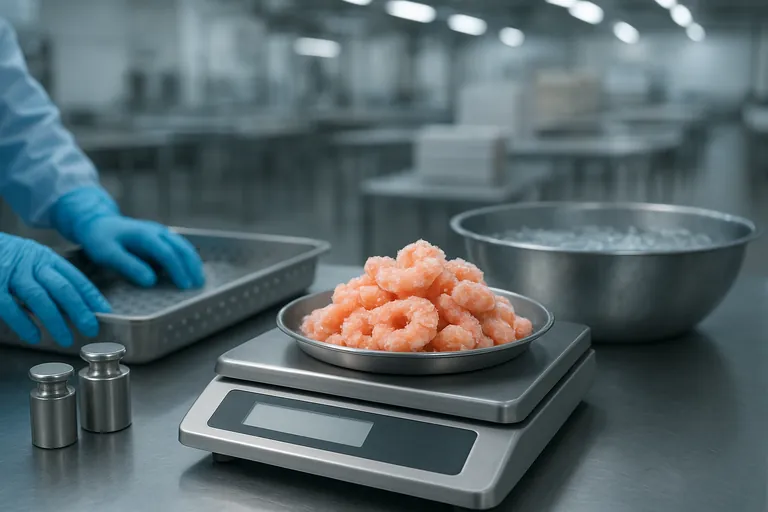
- Test: thaw-and-weigh deglaze to verify net. Count pieces to spec. Check vacuum integrity. Record core temps.
- Pictures: high-res photos of trim, bloodline, and a ruler next to pieces.
Need help tailoring your checklist to your DC’s receiving method? Reach out and we’ll share a simple template we use with buyers worldwide. If it’s urgent, Contact us on whatsapp.
Week 7–12: Scale, volumes, and container math
Once the sample matches, lock volumes tied to seasonality. Indonesian mahi runs are year-round but weather pinches supply late Q1. Prices usually soften on stronger landings in Q3–Q4. Build a flexible PO cadence: 1x40’ per month in shoulder seasons. 2x40’ in peak if you have sell-through.
- Lead time: 2–3 weeks if packing from existing raw material. 4–6 weeks on fresh-cut made-to-order during slower catch.
- Certifications: Full MSC for Indonesian mahi is limited. FIP-participating supply is often available with documentation. Expect a 10–20 cents/lb uplift for documented FIP lots.
What is a fair 2025 FOB price per lb for 6 oz IWP Indonesian mahi-mahi portions?
As of early 2025, a fair working range for skinless/boneless 6 oz portions, IVP, Trim C, 10% glaze is USD 4.70–5.40/lb FOB Benoa or Surabaya for non-MSC.
Price drivers you can control:
- Trim: Upgrading to Trim E typically adds USD 0.20–0.35/lb because you’re paying to remove extra bloodline and any discoloration.
- Pack: IVP vs simple IWP. True vacuum adds materials and labor. Plan for USD 0.10–0.15/lb more.
- Port: Surabaya consolidation can be 0.03–0.07/lb lower than Benoa depending on domestic transfer.
- Sustainability: FIP paperwork adds 0.10–0.20/lb. MSC, when available, can exceed that.
Is 10% glaze standard, or should I require 5%?
Ten percent glaze is the Indonesian norm for export mahi. It protects against dehydration on long supply chains and gives you cleaner fillet surfaces after thaw. If you have tight logistics and fast turns, 5% can work. But enforce net weight on a deglazed basis and keep IVP. In our experience, 5% glaze without vacuum leads to more dryness complaints and a higher broken-piece rate.
Practical compromise: hold 10% glaze but require “net weight to be achieved on deglazed weight at destination within 1% tolerance.” This sidesteps the glaze debate and keeps weights honest.
What’s the difference between Trim C and Trim E, and how does it affect price?
Indonesia doesn’t have a universal trim dictionary. “Trim C” in one plant can mean something slightly different in another. Generally:
- Trim C. Skin off, pin-bone out, belly off, modest bloodline allowed, no dark skin or scales.
- Trim E. Stricter. Skin off, pin-bone out, belly off, bloodline trimmed back further, cleaner presentation.
The tighter the trim, the lower the yield. Expect +0.20–0.35/lb for Trim E because you’re paying for extra trimming and yield loss. The real fix is to attach photos and maximum bloodline area rules in the spec. Don’t rely on the letter.
How do I verify true net weight and count at receiving?
Here’s a simple, defensible method that works in the US, EU, and AU/NZ:
-
Pull a random sample of cartons. Minimum n=10 for a 10–12 MT lot.
-
Record gross carton weight, then remove the master, inner bags, and packaging. Record frozen product weight.
-
Deglaze: immerse portions in cold running water until glaze is gone. Pat dry with lint-free towels. Weigh immediately.
-
Count pieces per carton. For 6 oz portions in 10 lb net cartons, you should see 26–27 pieces.
-
Calculate net weight variance. Acceptable variance is usually within 1% of stated net, averaged across sample cartons.
Document with photos and lot labels. If the plant signed this method in your PO, claims get resolved quickly.
Which Indonesian ports typically load mahi portions, and does port affect price?
Most mahi portions load FOB Benoa (Bali) or Surabaya. Benoa is closer to much of the dayboat mahi. Surabaya is a major consolidation hub with competitive port fees and cold storage.
Port can shift price by a few cents per lb. We often see Surabaya cheaper by USD 0.03–0.07/lb on the same spec, depending on domestic transfer costs, storage, and sailing schedules.
How many 6 oz portions and cartons fit in a 40' reefer? What MOQ should I set?
It depends on carton size and whether you floor-load or palletize, but here’s a useful planning range:
- 40’ HC reefer. 20–24 MT net is common on 10 lb cartons without exceeding road weight. That’s roughly 4,200–5,300 cartons.
- Pieces per carton. 10 lb divided by 0.375 lb per piece equals about 26–27 pieces. So per 40’, you’re looking at roughly 110,000–140,000 portions.
- MOQ for quotes. You’ll get the best pricing at a full 40’. Many Indonesian plants will quote a 10–12 MT starter lot, but expect a 5–10 cents/lb premium.
Want a precise load plan? Share your carton dimensions and whether you require pallets. We’ll map a floor-loaded vs palletized layout and give you an exact carton count and MT estimate. For a quick check, View our products and compare pack sizes on our Mahi Mahi Portion (IQF) page.
A tight spec you can copy and paste
- Species and cut. Mahi-mahi (Coryphaena hippurus), portions, 6 oz (170 g), tolerance ±10 g.
- Trim. “Trim C” per attached photos: skin off, pin-bone out, belly off, bloodline exposed ≤X% area, no black skin/scale.
- Pack. Individually Vacuum Packed (IVP) each piece. Bag film ≥90 microns. 10 lb net per carton.
- Glaze. 10% protective glaze. Net weight to meet on deglazed weight at destination within 1% tolerance.
- Defects. Broken pieces ≤3% by count. Gaping mild acceptable. Worms/parasites zero tolerance. Off-odors zero tolerance.
- Temperature. -18°C core at loading. Container set -18°C or colder.
- Label. Lot/date, species name + FAO area (71/57), HS 0304.49, net/gross, count/carton, production plant code.
- Inspection. Pre-shipment AQL agreed. Deglaze test method attached.
Common mistakes that cost buyers money
- Relying on trim letters without photos. Definitions vary by plant. Pictures and max bloodline rules save arguments.
- Mixing IWP and IVP in emails. If you want vacuum, write “IVP per piece” and include bag gauge.
- Dropping glaze to 0–5% without upgrading pack. You’ll pay for dehydration later in claims.
- Fuzzy size tolerances. “6 oz ±10 g” keeps counts consistent and prevents short-weight via undersized pieces.
- Ignoring seasonality in Q1. Weather squeezes landings and pushes quotes up. If you must ship Q1, book early.
Final notes from the floor
We’ve found buyers get the cleanest outcomes when they test the spec on a small run, then scale with the same SOP. If your program expands beyond mahi, Indonesia handles similar portion specs well on wahoo and kingfish. See our Wahoo Portion (IQF / IVP / IWP) and Kingfish Fillet (Portion Cut / IQF) for comparable builds. Keeping cuts, glaze, and pack uniform across SKUs simplifies receiving and retail planograms.
Questions about your spec, or want a sample carton produced to this exact build? Contact us on whatsapp. We’re happy to sanity-check pricing and share a one-page inspection checklist you can hand to your QC team tomorrow.