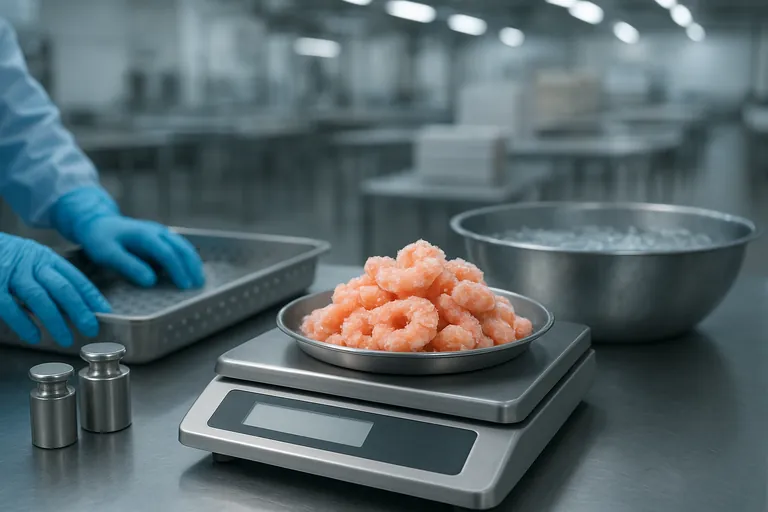
A buyer-ready, one-page EPR packaging data sheet for an Indonesian frozen shrimp SKU. Step-by-step: weigh each component, classify materials, map EU/UK recyclability, and record recycled content—with a complete worked example you can copy.
The hook: how we get buyer-ready EPR packaging data in two weeks
We’ve turned more than a few last-minute buyer requests into approvals in under 14 days. The trick isn’t magic. It’s a disciplined way to build a one-page EPR packaging data sheet that your EU/UK partner can plug straight into their 2026 systems. No fluff. Just the packaging bill of materials, weights by material, recyclability mappings, and recycled content—backed by supplier evidence.
Here’s the thing. Most exporters underestimate the time wasted on back-and-forth emails. In our experience, a clean, one-pager earns you trust and speeds up onboarding. So let’s build one together around a realistic frozen shrimp pack.
The 3 pillars of a bulletproof EPR data pack
- Completeness. List every component you place on the market, from vacuum pouch to pallet wrap, and split weights by material (plastic types separated, laminates split by layers).
- Recyclability clarity. Map each component to EU recyclability under PPWR direction and to UK OPRL guidance. Don’t guess. If unknown, say “Unknown—awaiting supplier confirmation” rather than filling blanks.
- Evidence. Keep supplier specs, declarations of conformity, and recycled-content statements on file. Your buyer may be audited and will ask you for PDFs.
Practical takeaway: if your EPR packaging data sheet can’t show “how we know,” it’s not ready for 2026.
Days 1–14: build the one-page sheet for a shrimp SKU (tools + template)
We’ll use a common Indonesian export configuration: 1 kg frozen vannamei shrimp in a vacuum pouch, one retail carton, packed with gel packs in an EPS fish box, then palletized with stretch film. We’ll document per selling unit.
Recommended tools:
- Kitchen scale with 1 g resolution (tare function).
- Calipers or micrometer if you measure film thickness.
- Supplier data: film layer structure, carton specs, recycled content statements, OPRL/PPWR recyclability notes.
Step 1: define components and weigh them
Pro tip: cut packaging cleanly and remove product residues. Tare your scale container. For laminates, get the layer split from your film supplier. If they won’t provide it, estimate using thickness and polymer densities—then label it as “estimate” until confirmed.
Worked example (1 kg Frozen Vannamei Shrimp; per selling unit):
- Primary: PA/PE vacuum pouch, 90 µm total, supplier confirms 20% PA / 80% PE by mass. Measured total pouch mass: 28 g. Recorded: 5.6 g PA (nylon), 22.4 g PE (LDPE). Inks/adhesives not reported separately (<5% of component).
- Secondary: Printed corrugated carton (B-flute, 3-ply). Measured: 170 g paper/card. Tape: 3 g PP. Label: 0.7 g paper + 0.3 g adhesive (record adhesive under “other”).
- Tertiary (allocation per unit):
- EPS fish box + lid: 800 g per box, holds 8 retail cartons. Allocation: 100 g EPS plastic per selling unit.
- Gel ice packs: 4 packs/box. Each pack has 800 g coolant inside and 12 g LDPE film. Only the film counts as packaging. 4 × 12 g = 48 g per box. Allocation: 6 g LDPE film per selling unit. Do not count water/gel mass.
- Pallet stretch wrap: 1.4 kg LLDPE per pallet. 50 EPS boxes/pallet, 8 units/box = 400 units. Allocation: 3.5 g LLDPE per unit.
- PP straps: 0.4 kg per pallet. Allocation: 1.0 g PP per unit.
That’s your packaging weight breakdown. Keep both the raw measurements and the allocations in your file.
Step 2: classify materials and recyclability (EU/UK)
Material codes help. Use PE-LD (4) for LDPE, PP (5) for polypropylene, PS/EPS (6) for polystyrene, PA for nylon.
EU PPWR recyclability (direction of travel as of 2024):
- PA/PE vacuum pouch. Mixed polyamide/polyethylene flexible films are generally “not recyclable at scale.” Record: Not recyclable under EU PPWR criteria 2026 baseline. Note: consider a mono-PE vacuum pouch upgrade for future-proofing.
- Carton. Widely recyclable. Record: Recyclable.
- EPS fish box. Business packaging. Not widely accepted in household collections. Record: Non-household. Business recycling where available; fees typically higher than cardboard.
- Gel pack film (LDPE). Non-household flexible film. Record: Recyclable in business film streams where collected.
- Stretch wrap (LLDPE). Non-household flexible film. Record: Recyclable in business film streams where collected.
- Tape/straps (PP). Non-household rigid plastic. Record: Recyclable where business facilities accept.
UK OPRL guidance (2024 snapshot):
- PA/PE laminate pouch. Do Not Recycle.
- Mono-PE pouch (if you switch). Recycle at Store for soft plastics. Kerbside status is still evolving.
- Corrugated carton. Recycle.
- EPS fish box. Not collected at kerbside. Business-only recycling.
- Stretch wrap and PP straps. Business recycling route.
Tip: on the EPR sheet, include both the current laminate pouch status and the “if mono-PE” scenario. Many buyers want to see your pathway to OPRL compliance.
Step 3: record recycled content
Buyers increasingly ask for post-consumer recycled (PCR) percentages for fee modulation.
- Vacuum pouch. Food-contact PCR in direct-contact PE layers is still constrained. Record 0% PCR unless your supplier proves compliance with EU/UK food-contact rules.
- Carton. Supplier states 85% recycled fiber (FSC Mix). Record 85% recycled content and attach certificate.
- EPS fish box. Typically 0% PCR. Record 0%.
- Stretch wrap. Many suppliers now offer 30% PCR LLDPE to meet plastic tax thresholds. Record 30% with supplier statement.
- PP straps. Often virgin. Record actual figure from supplier.
Step 4: put it on one page (your template)
Essential fields to include:
- SKU, product name, pack size, country of origin.
- Packaging bill of materials by component. Weight by material. Household vs non-household classification. EU PPWR recyclability mapping. UK OPRL outcome. Recycled content %. Evidence source.
- Allocation method for tertiary packaging (units per box, boxes per pallet, math shown).
If you want a filled specimen sheet tailored to your SKU, contact us on whatsapp. We’ll share our current template and help you adapt it.
Weeks 3–6: test your “MVP” with a buyer and your suppliers
We send the draft to one EU and one UK partner to stress-test assumptions. Ask them to mark anything unclear. In parallel, request missing documents from packaging suppliers: film layer spec and statement of composition, carton recycled-content certificate, and any OPRL or recyclability notes.
What’s interesting is how quickly small gaps surface. Three out of five times, the issue is laminates. If your pouch is PA/PE today, capture that clearly and add an alternative line for a mono-PE vacuum pouch. We use this playbook for products like Frozen Shrimp (Black Tiger, Vannamei & Wild Caught) and retail pouches for lines such as Grouper Fillet (IQF). Buyers appreciate seeing both the current state and a ready-to-go upgrade.
Weeks 7–12: scale and optimize across SKUs
Once one sheet is approved, roll it out:
- Standardize a packaging specification template and BOM codes across products.
- Keep a shared library of supplier proofs. Update quarterly.
- Add a “design-for-recycling” note for every flexible: consider mono-PE or mono-PP, inks <5% coverage, removable labels, and PE-compatible adhesives.
We’ve found this cuts onboarding times for new SKUs by 30–40%.
Quick answers to the questions we’re asked most
What packaging data do EU and UK buyers need from exporters for EPR in 2026?
- Component list and material split by weight.
- Household vs non-household classification.
- EU recyclability status and UK OPRL outcome.
- Recycled content by component.
- Evidence sources and version dates.
- Allocation math for tertiary packaging.
How do I calculate the weight of each packaging component for EPR reporting?
Weigh each component on a tared scale. For laminates, use supplier layer ratios. No data? Estimate via thickness × area × density (PA ≈ 1.14 g/cm³, LDPE ≈ 0.92 g/cm³), then confirm with supplier.
Do gel ice packs, pallet wrap, and straps count under UK EPR?
Yes, the outer films and straps are packaging. Classify as non-household tertiary packaging. Only count the plastic film of gel packs, not the water/gel inside.
Is a PA/PE vacuum pouch recyclable in the EU, and what should I record?
Generally not recyclable at scale under current EU direction. Record “Not recyclable.” Add a note if you have a mono-PE alternative and show its status.
What OPRL label applies to a mono-PE frozen seafood pouch sold in the UK?
Under 2024 OPRL guidance, mono-PE flexible typically carries “Recycle at Store.” Confirm with your UK customer’s latest OPRL license guidance before artwork.
How should EPS fish boxes be classified and reported for EPR fees?
As plastic (EPS). Non-household, transport packaging. Report by weight. Expect higher fees than cardboard in some schemes.
Who reports EPR data if we export filled seafood packs to a UK or EU importer?
Usually the UK/EU importer or brand owner in the destination market is the obligated producer. But they rely on you for accurate packaging data and evidence. Your one-pager is what they’ll use.
The 5 mistakes that kill EPR readiness (and how to avoid them)
- Not prorating tertiary packaging. Always show units per box and boxes per pallet to justify allocations.
- Treating laminates as a single “plastic” line. Split PA and PE. Buyers will push back otherwise.
- Missing recycled-content evidence. “Supplier email” isn’t enough. Ask for a formal statement or spec sheet.
- Assuming gel pack contents are packaging. Record only the film.
- Using theoretical weights only. Always add a measured weight and keep a photo of the scale reading in your evidence file.
Resources and next steps
- Build your EPR packaging data sheet this week. Start with one SKU and use the steps above.
- If you need product-specific specs or want to see how we package lines like Frozen Shrimp (Black Tiger, Vannamei & Wild Caught) or Grouper Fillet (IQF), View our products and ask us for the packaging specification template we use with EU/UK buyers.
We recommend you send a draft to your buyer early. A 30-minute review now saves weeks later. And if your team wants a sanity check on PA/PE vs mono-PE trade-offs or EU/UK recyclability wording, just contact us on whatsapp. We’re happy to share what’s worked across our export customers.