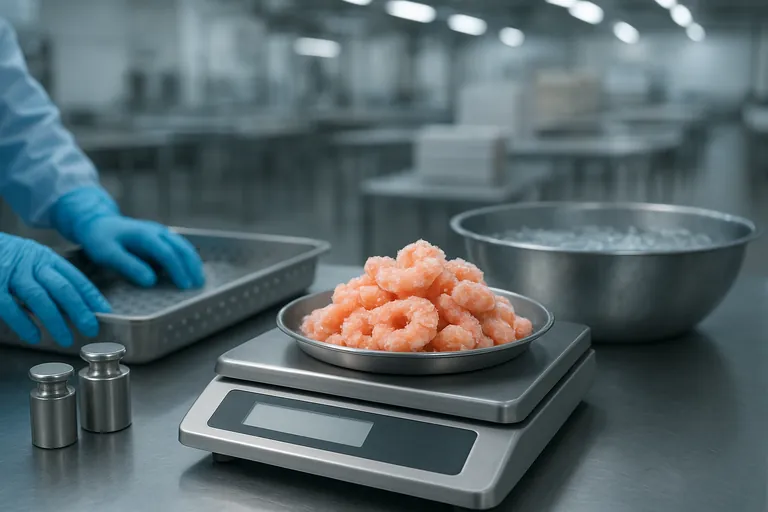
A practical, enforceable playbook to stop short‑weight in Indonesia private‑label frozen shrimp. Specs you can paste into your PO, in‑plant test methods, AQL sampling, STPP rules, and what to verify at container loading.
If you’ve ever opened a pallet of private-label shrimp and found bags light on net weight, you know how fast trust and margins evaporate. We’ve been there. Here’s the exact system we use in Indonesia plants to keep glaze honest, net weight compliant, and claims close to zero.
Hook: We cut short‑weight claims by $10,247 per container in 90 days using this exact system
Three months. One spec template. Two simple tests your QC can do without a lab. And a clear AQL plan that everyone follows. That’s how we turned a leaky private-label program into a consistent winner. You can do the same on your next PO.
The 3 pillars of fast, enforceable net‑weight control
-
Tight specs that remove wiggle room. Vague words like “about 10% glaze” invite problems. We specify glaze percentage frozen shrimp as a range with test method and tolerance. We define net weight vs glazed weight, STPP limits, and acceptance rules.
-
In‑plant tests your team actually runs. No lab. Just a calibrated scale, cold water, a timer and a rack. That’s how you verify net weight and do a drip loss test on shrimp.
-
AQL sampling that catches short weight early. Use ANSI/ASQ Z1.4, general inspection level II, and AQL 2.5 for retail bags. It’s the proven way to detect short weight seafood before it ships.
Practical takeaway: If your PO doesn’t lock these three pillars, you’re negotiating after the product is frozen. That’s a bad place to be.
Weeks 1–2: Spec and validation setup (use this wording)
Here’s a spec block you can paste into your Indonesia private label shrimp net weight specification.
Glaze and Net Weight
- Declared Net Weight: 454 g (1 lb) per retail bag. Protective glaze excluded.
- Target Glaze: 8–12% for retail bags. 15–20% acceptable for bulk master cartons with buyer approval.
- Test Method (How to test glaze percentage on frozen shrimp):
- Weigh frozen glazed product in bag (WG).
- Remove shrimp. Rinse under cold running water 10–15 seconds until no ice remains. Blot surface dry on a mesh rack for 60 seconds.
- Weigh deglazed product (WD). Glaze% = (WG – WD) / WG × 100.
- Net weight after deglazing shrimp must be ≥ declared net weight. Average and individual bag requirements apply per acceptance rules below.
Acceptance and Tolerances
- Bag‑level minimum: No individual bag may be under −2% of declared net weight after deglazing.
- Lot average: Sample average must be ≥ declared net weight. We recommend targeting +1% to protect against test variability.
- Glaze tolerance: 8–12% retail. Reject if <6% or >14% on average, or if more than 10% of sample units fall outside 8–12%.
Phosphate and STPP
- STPP shrimp labeling: If used, label ingredients as “Shrimp, water, salt, sodium tripolyphosphate.” Declare added water as required by destination market.
- Phosphate in shrimp limits: EU permits certain polyphosphates within maximum levels expressed as P2O5. Many buyers cap total P2O5 at ≤5,000 mg/kg. The US permits phosphates when declared. Always align with the import market’s latest rules.
- STPP‑free shrimp Indonesia suppliers: We offer STPP‑free programs. If STPP‑free is required, declare “no added phosphates” and set drip loss and sensory targets accordingly.
Third‑party testing
- Phosphate testing method for shrimp AOAC: Use accredited labs with AOAC‑validated spectrophotometric (molybdenum blue) or ion chromatography methods, reporting as P2O5 mg/kg.
This clarity removes 90% of arguments later on. Need help adapting this wording to your label and market? Contact us on whatsapp.
What is a reasonable glaze percentage for retail frozen shrimp?
We’ve found 8–12% strikes the right balance. It protects the surface without inflating apparent weight. Bulk or foodservice cartons may run 15–20% because they sit longer and have higher handling risk.
Is STPP allowed in shrimp, and how should it be labeled?
Yes, in many markets. In the US it’s permitted when declared. In the EU polyphosphates are allowed within defined maximums. Always declare added phosphates and water. If you want a clean label, run STPP‑free and use tight drip loss controls.
Weeks 3–6: In‑plant MVP and real tests (no lab needed)
Here’s the simple toolkit we use on the line.
Quick net weight and glaze check
- Tools: Calibrated digital bench scale (0.1 g resolution), cold water, timer, wire rack, paper towels, thermometer.
- Steps: Weigh bag glazed (WG). Remove shrimp. Deglaze under cold water 10–15 seconds. Blot 60 seconds on rack. Weigh deglazed (WD). Net weight calculation after deglazing shrimp: WD must be ≥ label weight. Glaze% = (WG – WD) / WG × 100.
Drip loss test shrimp (catches over‑soaked lots)
- Steps: After deglazing, store shrimp on a rack over a tray at 0–4°C for 24 hours. Reweigh (W24). Drip loss% = (WD – W24) / WD × 100. Targets: STPP‑free 3–6%. STPP‑treated often sits 1–3%. Set your spec and stick to it.
AQL sampling frozen seafood for short weight
- Use ANSI/ASQ Z1.4, General Inspection Level II, AQL 2.5 for retail bags. Sample size depends on lot size. For a 3,000‑bag lot, you’ll typically check around 125 bags. Acceptance number will be in the 7–10 range depending on the exact table. Your QA should keep the table at the weighing station.
- Pro tip: If you’ve had recent short‑weight, move to tightened inspection or raise scrutiny on early production.
Third‑party inspection Indonesia seafood
- When to bring in a third party: first orders with a new plant, when changing specs, or if past audits found short weight. Ask them to verify scale calibration, run the same glaze/net tests, and witness packing. SGS, Intertek, BV, QIMA and local specialists all operate in Indonesia.
Practical takeaway: Test five units per hour during pack as an in‑process control. It’s cheaper than rework and claims.
Weeks 7–12: Scale and optimize across lines and suppliers
Make it stick with process, not heroics.
- Factory QC procedure for glaze and net weight Indonesia: Add a control point after glazing. Document WG, WD, glaze%, temperatures and time. Hold any tote that fails and rework before IQF.
- Verify net weight during container loading Indonesia: Move a bench scale to the stuffing area. Sample 30–50 retail bags across multiple pallets. Video each weigh with the bag code facing the camera. Record seal numbers and final pallet weights.
- Inbound inspection checklist for frozen shrimp pallets: On arrival, check trailer or container temps, pallet condition, outer label, random bag weigh tests (WG and WD), thermometer photo, and scale calibration. Keep a chain of custody for your claim file.
We also apply this system to finfish SKUs when relevant. For example, our Frozen Shrimp (Black Tiger, Vannamei & Wild Caught) run alongside white‑fish lines, so our QA templates mirror across programs for consistency.
The 5 biggest mistakes that kill shrimp private labels
- Vague glaze language. “Approx 10%” is not a spec. Give a range, method, and tolerance.
- No bag‑level minimum. Relying only on averages lets too many underweights slip through.
- Skipping drip loss. That’s how over‑soaked or STPP‑heavy lots sneak past. You’ll pay in the pan.
- Weak sampling. AQL 6.5 might feel easy. It won’t catch systemic issues.
- No remedy clause. Without a penalty or rework trigger, problems repeat.
What sampling plan should I use to catch short‑weight bags?
Use General Level II at AQL 2.5. If you’re seeing issues, tighten to AQL 1.5 for the next three lots. Keep the table by the scale and train the supervisor to decide accept/reject on the spot.
How can I check net weight on frozen shrimp without a lab?
You only need a good scale, cold water, a timer and a rack. The glaze and drip methods above will get you 95% of the way. We’ve run hundreds of these in Indonesian plants and in buyer warehouses.
How much glaze is legal in US/EU frozen seafood?
There’s no universal legal maximum for protective glaze. What’s enforced is that the declared weight excludes glaze. Retail norms are 8–12% for bags. If you go over 14%, expect pushback and possible consumer complaints.
Resources and next steps: contract language you can use now
Here’s a simple, enforceable clause to prevent short weight in private label seafood contracts.
- Net Weight and Glaze: Each retail bag shall contain a minimum of [net] g of deglazed product. Lot average must meet or exceed declared net weight. Protective glaze 8–12% verified by deglazing method described herein.
- Sampling: ANSI/ASQ Z1.4, General II, AQL 2.5 for net weight and glaze. Failure triggers rework or price adjustment.
- Remedies for short weight seafood: For any unit under −2% net weight, supplier credits 2× the short weight value plus inspection costs. If reject per AQL, supplier either reworks at their expense or issues full credit including freight.
- STPP and Phosphates: If used, declare in ingredients. Total phosphates not to exceed [X] mg/kg as P2O5. If STPP‑free is specified, any detection above method LOQ constitutes non‑conformance.
- Records and Evidence: Supplier to maintain batch weigh logs, calibration certificates, photos of in‑process tests, and container loading verification. Buyer may appoint a third‑party to witness.
What photos and records do you need to support a short‑weight claim?
- Time‑stamped images of bag on scale before and after deglazing, with label visible.
- Video of deglazing process for at least five units.
- Scale calibration photo with weights, thermometer readings, and ambient temperature.
- Sampling sheet showing unit weights, glaze%, averages, and acceptance decision.
- Container seal numbers and pallet maps.
If you’d like a ready‑to‑use SOP pack for your team, including AQL tables, test worksheets, and photo templates, we’re happy to share what we use in our Indonesian plants. Questions about your project? Contact us on email.
One last thing. None of this replaces market‑specific regulations. US states apply NIST Handbook 133. The EU updates additives rules periodically. Verify label and additive compliance for your destination. Our job in Indonesia is to make compliance the default so your brand stays trusted when the bags hit the shelf.