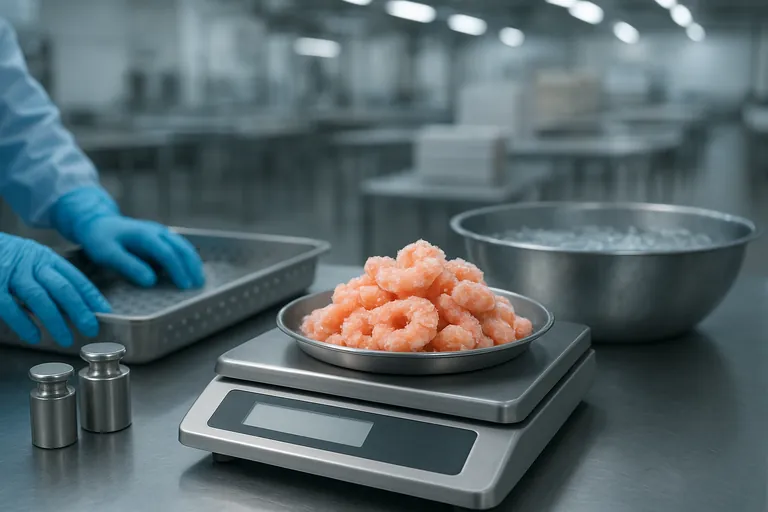
A practical, export-ready workflow for Indonesian shrimp producers and processors targeting EU/US markets in 2026: sampling by lot size, rapid screens vs LC‑MS/MS, ISO 17025 lab selection, detection limits, timelines, chain of custody, COA essentials, and the correct confirmatory path if a lot screens positive.
If you export shrimp in 2026, antibiotic screening isn’t a nice-to-have. It’s the difference between clean entry and costly border rejections. We’ve run pre-shipment programs for years, and the reality is simple. A disciplined sampling plan and LC‑MS/MS confirmation beat everything else.
What changed going into 2026
Importers haven’t relaxed. EU and US still treat nitrofuran metabolites and chloramphenicol as “zero tolerance,” which in practice means you need results below state-of-the-art detection limits. Labs now talk in terms of screening target concentrations and decision limits, but buyers still ask one thing: is it non-detect at or below their required LOQ? We also see more customers demanding ISO/IEC 17025-accredited reports and full chain-of-custody from plant to lab. That’s your baseline.
Here’s a step-by-step system we use with our own shrimp programs, including our Frozen Shrimp (Black Tiger, Vannamei & Wild Caught).
The 2026 export-ready workflow (step by step)
-
Define the lot precisely. Same farm source or fishing area, harvest date, species, size grade, processing shift, additives and glazing program, and storage location. Don’t mix ponds or harvest weeks. The cleaner the lot definition, the easier the traceability if you need to quarantine only a slice of production.
-
Decide the sampling plan by lot size.
- ≤10 MT lot: 3 composites. Each composite made from 10 random cartons across at least 3 pallets. Take 100–200 g per carton. Keep a lab duplicate and a sealed retention duplicate for each composite.
-
10–25 MT lot: 5 composites of 10 cartons each, spread across at least 5 pallets and both top/middle layers.
-
25–40 MT lot: 8 composites of 10 cartons each. When lots exceed 40 MT, split into sub-lots and sample each separately. Why composites? In practice, composites reduce cost while still casting a wide net across the lot. We’ve found importers accept this approach if your plan and mapping are documented.
- Screen smart, confirm once.
- Use rapid immunoassay screens (LFIA) for nitrofurans and chloramphenicol only as an internal triage. They’re cheap and quick, but not accepted as final proof by EU/US. If any composite is suspect or borderline, move straight to confirmatory LC‑MS/MS.
- For the COA that travels with your shipment, always rely on ISO 17025 LC‑MS/MS for nitrofuran metabolites (AOZ, AMOZ, AHD, SEM) and chloramphenicol.
- Sample handling and chain of custody.
- Keep product frozen at ≤−18°C. Avoid any thaw/refreeze cycles before homogenization.
- Use clean stainless tools. Remove external glaze and analyze on a deglazed, edible portion basis. Note “deglazed net weight basis” on the COC.
- Record everything: lot ID, pallet IDs, carton numbers, time, sampler, temperature, and seal numbers. Each composite gets its own tamper-evident seal and label.
- Hold-and-release discipline.
- Quarantine the sampled pallets in a designated “HOLD” zone with clear signage and locked system status.
- Release only the pallets covered by the passing COA. If you sampled by sub-lot, you can ship clean sub-lots while holding the rest.
- Documentation pack to attach to the shipment.
- Lab COA for antibiotics (LC‑MS/MS, ISO 17025) for each lot.
- Sampling report with pallet map, carton IDs, and composite logic.
- Chain-of-custody form with seals and temperature log.
- Copy of the lab’s accreditation scope indicating crustaceans, nitrofuran metabolites and chloramphenicol.
Need a sampling plan template or lab short-list? We’re happy to share what we use day to day. Contact us on whatsapp.
Practical questions we get all the time
What’s a practical sampling plan by lot size?
For most export lots we recommend 3, 5, or 8 composites built from 10 cartons each, depending on the lot mass noted above. This balances risk coverage and cost. Map each carton you touch to a pallet and layer, then keep a sealed retention sample for every composite. If something flags later, you can retest immediately without re-opening warehouse stock.
Do I need an ISO 17025-accredited lab for EU/US?
Yes. Buyers increasingly reject COAs that aren’t ISO/IEC 17025. Ask the lab for its accreditation certificate and scope. You want crustaceans explicitly listed, LC‑MS/MS methods, and the analytes specified by name (AOZ, AMOZ, AHD, SEM, chloramphenicol). Also ask the lab to state LOQ and measurement uncertainty on the report.
Can I rely on rapid test kits?
Use them as an internal screen, not as the certificate that travels. Rapid kits can throw false negatives in complex matrices, salted/brined products, or highly glazed items. We use them to avoid sending clearly positive composites to LC‑MS/MS. But shipments move with ISO 17025 LC‑MS/MS COAs. Period.
What detection limits should I request to satisfy EU/US?
Set your purchase order to require LOQ at or below current risk management levels used in the EU, which many buyers mirror.
- Chloramphenicol: request LOQ ≤ 0.1 µg/kg.
- Nitrofuran metabolites (AOZ, AMOZ, AHD, SEM): request LOQ ≤ 0.5 µg/kg for each metabolite. For the US, “zero tolerance” also plays out as non-detect at state-of-the-art LOQs. Using the EU-oriented LOQs above keeps you safe for both markets.
Non-obvious tip: ensure the lab performs acid hydrolysis for “bound” nitrofuran residues. If they skip hydrolysis, you may get an artificial non-detect that won’t hold up at import testing.
How far before shipment should I start testing?
Work backwards from sailing. Typical Indonesia LC‑MS/MS turnaround is 3–5 working days from sample receipt. Add 1 day for sample dispatch and 1 day for internal approvals. We book lab slots 7–10 days before the planned stuffing date. For urgent containers, most labs offer 24–48 hour expedite at a surcharge. Don’t rely on it during peak season.
What must appear on the antibiotics COA?
- Exporter/processor name and address, product description, species, size, and lot ID.
- Analytes tested and method (LC‑MS/MS), plus “hydrolysis for nitrofurans” if applicable.
- Results in µg/kg with LOD/LOQ and measurement uncertainty.
- Sample condition on receipt, sample ID, and chain-of-custody reference.
- ISO/IEC 17025 accreditation number and scope statement, report date, and authorized signature. We also ask labs to tag “Non-detect at LOQ” clearly when applicable. Clean formatting reduces back-and-forth with buyers and inspectors.
A composite screened positive. What now?
- Freeze the hold. Don’t move pallets linked to the composite.
- Send the sealed duplicate of that composite to a second ISO 17025 lab for confirmatory LC‑MS/MS. Parallel a sub-sample to your original lab to check reproducibility.
- If confirmed positive, split the lot. Resample by pallet cluster to identify affected sub-lots. Retain documentation for potential rework or destruction decisions.
- If the confirmatory test is clean and within method uncertainty, document both results and consult your buyer. In our experience, two clean LC‑MS/MS COAs from accredited labs usually clear the path to ship the unaffected sub-lots.
Costs and timelines at a glance
- Rapid screen kits: roughly USD 5–15 per test per analyte. Good for internal triage only.
- LC‑MS/MS banned antibiotics panel (nitrofuran metabolites + chloramphenicol) in Indonesia: roughly USD 120–220 per composite, depending on lab, LOQ, and turnaround.
- Turnaround: standard 3–5 working days. Expedited 24–48 hours where available.
Two places exporters quietly lose time: not pre-booking lab capacity, and not keeping sealed retention samples. Fix both and you’ll save a week on average.
Advanced tips from the floor
- Deglaze before homogenization. Ask the lab to report on a deglazed, edible-portion basis. Glaze can dilute residues and confuse interpretation.
- Put ccβ or screening target concentration on the PO. It forces clarity on what “non-detect” actually means at your chosen LOQ.
- Micro-lot your warehouse map. Tag pallets in clusters. If anything flags, you’ll quarantine a slice, not the whole container.
How we run this at Indonesia‑Seafood
Every shrimp lot we ship runs through the workflow above, with mapped composites, ISO 17025 LC‑MS/MS COAs, and strict hold-and-release. The same discipline underpins our other export lines too. If you’re building or tightening your 2026 program and want a working template, View our products and feel free to ask for our sampling SOPs.
In our experience, three things prevent 9 out of 10 antibiotic headaches: a clear lot definition, bound-residue hydrolysis for nitrofurans, and a COA that tells the full story at the right LOQs. Nail those, and the rest is logistics.