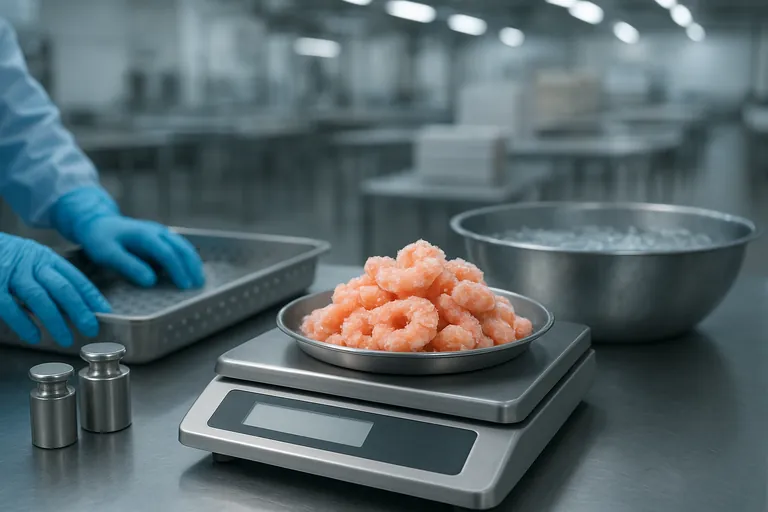
A buyer’s apples-to-apples guide to Indonesian baby octopus. Count-per-kilo grades, IQF specs, glaze math, FOB ports, seasonality, and how to normalize 2025 quotes so you place smarter POs.
I’ve watched smart buyers overpay five figures on octopus because the quotes weren’t apples to apples. The good news. Once you standardize specs and do the glaze math, Indonesian baby octopus pricing gets predictable fast.
The hook: how one buyer saved $10,247 in 90 days
We helped a European importer normalize three “20–40 count” baby octopus quotes that looked similar. One was priced per glazed weight with 20 percent glaze. Another was net weight with 10 percent glaze. The third included a premium for “flowered.” After converting everything to net weight and backing out the processing premium, the supplier that seemed cheapest was actually the most expensive by 11 percent. Switching to a Surabaya FOB lane and standardizing 10 x 1 kg packs saved $10,247 across two 20-foot containers. The process is simple. Here’s how to do it.
The 3 pillars of an apples-to-apples FOB comparison
- Align the exact spec.
- Convert every quote to net-weight pricing.
- Compare per-piece cost for the same count-per-kilo band.
Most confusion and margin leakage happens because one of these three is fuzzy. Fix them and the rest of the decision becomes obvious.
Week 1–2: Align specs and validate counts (tools + templates)
Here’s the thing. “20–40” means 20 to 40 pieces per kilogram net weight. That’s the count-per-kilo band. It drives both yield and price because bigger animals cost more per piece.
- Typical Indonesian baby octopus grades: 10–20. 20–40. 40–60. Sometimes 60–80 when supply is tight on larger sizes.
- What the grade means. 20–40 count equals roughly 25–50 g per piece net. A fair working average for costing is mid-band, so 33 pieces per kg or about 30 g each.
What does 20–40 count mean and how does it affect FOB price?
The lower the count, the larger the animal. Larger sizes command a premium because they’re scarcer and preferred by foodservice. In our recent bookings, 10–20 count often prices above 20–40 by a visible step. 40–60 is the value choice for retail skewers and ready meals. Expect a clear tiering by count. If you get a “flat” price across counts, look closer at the spec or raw material mix.
Whole cleaned vs flowered. What’s the real difference?
- Whole cleaned, head-on. Beak and eyes removed. Mantle eviscerated. Ink sac out. Skin intact. This is the most common spec for IQF baby octopus.
- Flowered. The body is scored so the octopus opens like a flower when cooked. It looks great on skewers and in hot pot. Flowering adds labor, slight trim loss, and usually a premium. In our experience that uplift sits in a modest but real range. Always compare whole cleaned versus flowered separately.
Pro tip. Ask for a clear photo deck of the actual lot with a counting frame and a thaw test. I’ve found that a 2 kg thaw check at 0 to 4 degrees Celsius tells you the truth about purge and real net weight.
Week 3–6: Lock IQF and glaze, then test a pilot lot
Are FOB quotes based on net or glazed weight?
Both exist. You have to ask. Indonesian IQF baby octopus is often quoted per kg glazed weight. Net-weight quotes are cleaner for buyers. If you receive a glazed-weight quote, convert it.
The conversion is straightforward.
- Net price per kg = Quoted price per kg glazed ÷ (1 − glaze percent)
- Example. $4.90/kg glazed at 20 percent glaze becomes $4.90 ÷ 0.80 = $6.125/kg net.
What glaze percentage is standard for IQF Indonesian baby octopus?
The practical range is 8 to 20 percent. We recommend 10 percent for most lanes. It protects against dehydration without hiding cost. For longer transits or mixed loads with frequent door openings, 15 percent can be justified. If a supplier proposes 20 percent, verify you are comparing on net weight.
Net vs glazed weight. How to handle yield loss after thawing
Glaze sheds at thaw. That’s expected. What you care about is net weight and purge. Typical purge on properly processed octopus is 1 to 3 percent. If you’re seeing 5 percent or more, look at pre-freeze handling or whether the product was over-soaked. Document this in your pilot-lot QC.
Normalize two quotes with different glaze and pack specs
Say you have two 20–40 count offers for whole cleaned, IQF baby octopus.
- Quote A. $5.35/kg, 10 percent glaze, FOB Surabaya, 10 x 1 kg IVP.
- Quote B. $4.90/kg, 20 percent glaze, FOB Jakarta, 5 x 2 kg IWP.
Step 1. Convert to net.
- A net. $5.35 ÷ 0.90 = $5.944/kg net.
- B net. $4.90 ÷ 0.80 = $6.125/kg net.
Step 2. Estimate per-piece cost using a mid-band count of 33 pcs/kg.
- A per piece. $5.944 ÷ 33 = $0.180 per piece.
- B per piece. $6.125 ÷ 33 = $0.186 per piece.
Step 3. Adjust for spec differences.
- 10 x 1 kg IVP vs 5 x 2 kg IWP. Single-kilo IVP usually gives better portion control and lower purge during multiple openings. If your operation opens and closes often, IVP is worth a small premium.
With this math, the “cheaper” quote is actually higher on a true net basis. Run this exact check on every offer. If you want us to sanity-check your current sheet and do the glaze math, Contact us on whatsapp.
Week 7–12: Scale POs and optimize lanes
Which Indonesian ports are typical for FOB baby octopus shipments?
We regularly book FOB from:
- Surabaya. Tanjung Perak. Strong for East Java processing. Good availability and competitive local charges.
- Jakarta. Tanjung Priok. Highest sailing frequency and the widest carrier choice.
- Benoa, Bali. Smaller volumes but useful when production is concentrated in Bali and West Nusa Tenggara.
FOB Surabaya vs Jakarta price difference is mostly about local charges and trucking. On pure ex-factory cost, Surabaya can be slightly leaner for East Java plants. Jakarta can win on schedule and space. On an FOB basis, we see deltas in the low single digits per kg. Ask for parallel FOB offers from both ports if your schedule is flexible.
Seasonality. Does availability shift by size?
Yes. Indonesia’s monsoon patterns influence small-boat landings. In our experience, Q2 to early Q4 tends to be friendlier for consistent 20–40 supply. 10–20 tightens first when weather turns and small vessels reduce trips. 40–60 stays available longer and is often the best value during shoulder months. If you need 10–20 in volume, pre-book. If your spec can tolerate 20–40 and 40–60 blends, you’ll buy better through the year.
Quick answers to the questions buyers ask us most
Are Indonesian baby octopus FOB quotes based on net or glazed weight?
Both circulate. Insist on net-weight comparisons and write the glaze percentage into your PO.
What glaze percentage should I accept?
10 percent is a practical standard. Up to 15 percent for long routes. Anything above that belongs in net-weight math and needs justification.
What’s the difference between whole cleaned and flowered pricing?
Flowered carries a labor and trim premium. Keep it as a separate line and do not compare to whole cleaned pricing.
How do I compare two supplier quotes fairly?
- Fix the count band first.
- Convert glazed to net using the formula above.
- Compute per-piece cost using a mid-band count.
- Note pack type. IVP often prevents cumulative thaw loss in high frequency use.
HS code for frozen baby octopus (Indonesia, 2025)
Most shipments use HS 0307.52 for frozen octopus. Always confirm with your customs broker and align with destination country requirements.
Typical pack spec buyers expect
- 10 x 1 kg IVP or IWP. 10 percent glaze. IQF.
- Whole cleaned, head-on. Beak and eyes removed. Ink sac removed.
- Label counts clearly. 10–20. 20–40. 40–60.
Pre-order lead time in 2025
For standard whole cleaned IQF. 2 to 4 weeks to build a lot that meets your count and spec. For flowered. 3 to 6 weeks depending on volume. Add 3 to 5 working days for documents after stuffing.
5 mistakes that quietly kill baby octopus margins
- Comparing glazed-weight prices without conversion. This is the number one leak we see.
- Mixing specs in a quote sheet. Whole cleaned and flowered on one line hides true cost.
- Not locking a glaze percentage. “As needed” glaze leads to both overglaze and underglaze issues.
- Ignoring per-piece economics. Menu engineering and kit building depend on consistent piece size.
- Overlooking port effects. You can lose weeks and dollars by forcing a lane your supplier cannot support at scale.
Recent observations from the ground
- Raw material for 10–20 count has been tighter relative to 20–40. This continues to push a premium for the larger size.
- Buyers are standardizing at 10 percent glaze and asking for thaw-loss documentation. This is a healthy trend. It rewards good handling.
- Mixed cephalopod loads are increasing. If you’re bundling octopus and squid, you can use identical IQF and glaze specs across both. Our Loligo Squid (Whole Round / Whole Cleaned) follows the same playbook, which simplifies QC on mixed orders.
Resources and next steps
If you take nothing else from this guide, take the glaze-to-net formula and the per-piece comparison. Those two steps solve most quote confusion in under five minutes. If you need a current 2025 sheet for Indonesian baby octopus by count band with FOB Surabaya and Jakarta lanes, or you want us to normalize your existing offers and run a sample PO plan, Contact us on whatsapp. We’ll share the exact template we use.
Practical takeaway. Lock your spec. Convert to net. Compare per piece. Then choose the port that fits your schedule. Do this and you’ll buy Indonesian baby octopus with confidence. And you’ll likely keep a few extra percentage points of margin where they belong.