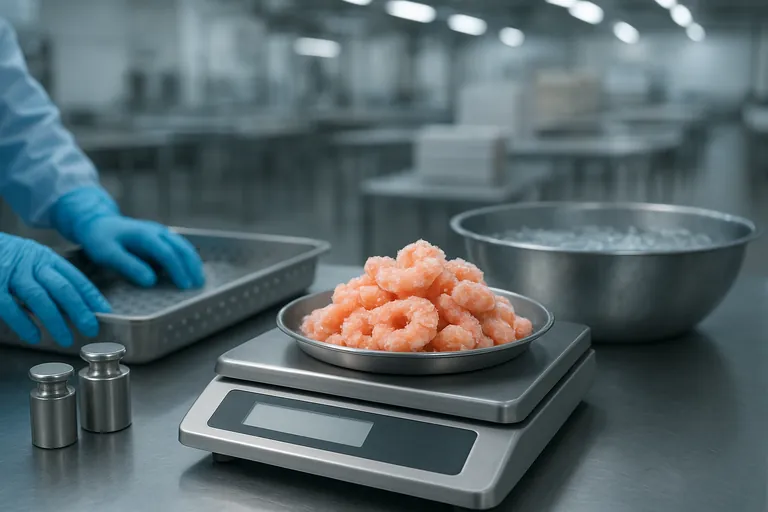
A practical yes/no decision guide for Indonesian exporters. Do farmed shrimp need an EU IUU catch certificate in 2025? What to submit instead, how to prove aquaculture origin, and how to avoid EU customs hiccups.
We get this question every week from serious buyers and exporters: do Indonesian farmed shrimp need an EU IUU catch certificate in 2025? Here’s the short version, plus the details you’ll actually use.
Why a FAQ format for this topic
Rules haven’t radically changed, but buyer requests and customs checks can feel inconsistent across EU member states. An FAQ makes it easy to find your exact situation fast, then move on to your shipment. We’ve organized this as a yes/no decision with supporting details, edge cases, and a quick-start checklist you can hand to your logistics team.
The yes/no decision, up front
Do farmed shrimp from Indonesia need an EU catch certificate in 2025?
No, not when they’re genuinely aquaculture products. Under the EU IUU framework (Regulation 1005/2008), catch certificates apply to wild-caught marine fishery products. Farmed shrimp (vannamei or black tiger) are exempt. The exemption holds whether your product is raw, cooked, peeled, breaded, or IQF. The key is proving aquaculture origin consistently across your paperwork.
What replaces the catch certificate? For aquaculture shrimp you’ll typically provide:
- BKIPM health certificate for the EU. Issued by Indonesia’s fish quarantine authority for the specific HS code and product state.
- CHED-P in TRACES NT. Lodged by the EU importer, supported by your docs.
- Invoice and packing list that explicitly state aquaculture origin.
Our experience: 3 out of 5 delays we see come from invoices that don’t say “aquaculture” or list the wrong HS code. Fix those, and you remove most friction.
Technical questions (the systems and codes)
1) Which HS/CN codes matter for IUU vs aquaculture shrimp?
- Raw/frozen shrimp often sit under CN 0306. Cooked/breaded forms go to CN 1605. The IUU regulation covers both chapters for wild-caught products. But the aquaculture exemption still applies. Code accuracy matters for CHED-P and customs risk profiling.
2) Who files TRACES NT CHED-P and what do you provide?
Your EU importer or their customs agent files CHED-P. You provide the BKIPM health certificate, commercial invoice, packing list, and product spec if needed. We also share processing-plant approval numbers and farm registration details on request. It helps the importer fill sections correctly and avoid last-minute queries.
3) What should the BKIPM health certificate show for aquaculture shrimp?
It should reference the correct species and product form and be issued for the EU. For farmed vannamei/monodon, health certs normally indicate aquaculture origin in the attestations. If not explicit, use your invoice and supporting declarations to make the status unmistakable.
4) How do we prove aquaculture origin in a way EU customs accepts?
We recommend this three-layer approach:
- Primary proof on invoice: “Aquaculture origin: Litopenaeus vannamei, farmed in Indonesia.” Include farm province and harvest lot codes where possible.
- Matching packing list: Replicate key wording and add plant approval numbers.
- Back-up pack: Maintain a supplier declaration of aquaculture origin listing pond/cluster, harvest dates, and lot mapping to finished goods. Keep farm registrations and harvest records ready. You’ll rarely need to submit them, but when a member state asks, you’ll answer in one email.
5) Do we need an EU IUU processing statement or the CATCH e-system entry?
No, not for aquaculture shrimp. Processing statements link wild-caught fish to a catch certificate when processing occurs in a non-flag state. Aquaculture shrimp don’t have a catch certificate to begin with, so no processing statement is required. Some buyers still ask out of habit. We share an aquaculture-origin declaration instead and it resolves the request.
Need help documenting a mixed product or a re-export route? If your case is nuanced, Contact us on whatsapp. We’ll review your draft docs and flag risks before loading.
Content questions (what your paperwork should literally say)
1) What should the invoice line read to avoid IUU confusion?
Use a clean description: “Frozen Vannamei Shrimp, Farmed (Aquaculture), Indonesia Origin, IQF, [spec].” The word “farmed” should be visible without hunting through footnotes.
2) How granular should lot traceability be?
Map pond or farm-cluster harvest lots to production lots. If you blend lots, keep blending records. In our files, the lot tree fits on a single page. That one page has solved every customs query we’ve seen on farmed shrimp.
3) Do labels need “aquaculture” printed?
Not always, but it helps. For B2B cartons we add “Aquaculture product” in the product name or origin line. What matters more is internal traceability that matches the invoice and health cert.
4) If the shrimp are cooked or breaded, does that change anything?
No for IUU. Cooked, peeled, or breaded farmed shrimp remain exempt. Where teams get tripped up is in added ingredients. If your breadcrumb or filling contains wild-caught fish subject to IUU, a catch certificate may be needed for that component. Easiest fix: choose non-fish breadcrumb or ensure any fish ingredient comes with its own compliant CC trail.
5) What if a shipment mixes farmed shrimp with any wild-caught ingredient?
Then expect document requests for the wild component. If you can, separate SKUs. It’s cleaner for customs and your buyer’s QA review.
Growth questions (using compliance to win the EU market)
1) How fast can we move with aquaculture shrimp into the EU?
Once your plant is EU-listed and the importer is set on TRACES NT, CHED-P approvals are routine. We see door-to-door lead times shrink by a week compared to wild-caught SKUs that need CC checks.
2) What do EU retailers typically ask beyond the legal minimum?
Farm and feed transparency. Antibiotic control program summaries. And BAP/ASC or equivalent. We maintain audit-ready binders so buyers get answers in a single pass.
3) Can the aquaculture exemption help with first-time buyer onboarding?
Yes. Reducing IUU paperwork lowers friction for trial orders. We’ve onboarded new EU buyers on farmed vannamei first, then expanded them into wild-caught SKUs like Grouper Fillet (IQF) once they trust our documentation process.
4) Will pre-validating docs with the buyer’s broker help?
Always. Share draft invoices and product descriptions 3–5 days before departure. The importer can pre-fill CHED-P. Surprises disappear.
5) What’s a smart product mix to scale?
Start with standard-form farmed vannamei under our Frozen Shrimp line. Add cooked and breaded variants once you lock specs. Keep wild-caught lines separate from an IUU standpoint to keep paperwork clean.
Business questions (cost, risk, responsibility)
1) What does the exemption save us?
Time and headaches. No catch certificate prep. Fewer authority touchpoints. And faster customs green-light in most member states.
2) Where do delays still happen?
- Invoice doesn’t say “farmed.”
- HS code mismatch between invoice and health cert.
- CHED-P filed with “wild” or blank status.
- Mixed-product ingredients missing paperwork.
3) What if an EU importer still insists on a catch certificate?
Share a short written explanation referencing the aquaculture exemption and provide your aquaculture-origin declaration. In our experience, this resolves the issue 9 times out of 10.
4) Does routing through another country trigger IUU paperwork?
No, not if the shrimp remain aquaculture and you don’t add wild ingredients. For simple transshipment, keep the original BKIPM health certificate and seal integrity. If repacked in a third country, the last country of dispatch must issue a new EU health certificate from an EU-approved establishment. Still no catch certificate needed for farmed shrimp.
5) What’s the real risk of customs rejection without a catch certificate?
For farmed shrimp, rejections usually stem from ambiguity, not missing CC. If your docs clearly say “aquaculture,” customs won’t ask for a CC. Ambiguous wording invites a stop.
Myth-busting
- “All seafood needs a catch certificate.” False. Aquaculture is exempt.
- “Cooked or breaded shrimp move to 1605 so they need a CC.” False for aquaculture shrimp.
- “Processing statements are mandatory.” Not for farmed shrimp.
- “If I re-export via Singapore, the exemption disappears.” False. Aquaculture status stays. Follow health cert rules for the last country of dispatch.
- “If EU customs asks a random question, the cargo is doomed.” Hardly. A clean aquaculture declaration and matching health cert usually clears the hold within a day.
Quick-start checklist for Indonesian farmed shrimp to the EU
- Confirm HS code matches product state (0306 raw/frozen, 1605 for cooked/breaded).
- Use this invoice wording: “Farmed (Aquaculture) Litopenaeus vannamei, Indonesia origin, [product form].”
- Mirror key wording on the packing list. Add plant approval number and production lot.
- Attach BKIPM EU health certificate. Check species, product form, and establishment numbers.
- Prepare a one-page aquaculture-origin declaration linking farm/pond lots to finished goods.
- Pre-share docs with your buyer’s broker so CHED-P is filed accurately in TRACES NT.
- Avoid mixed wild-caught ingredients. If included, secure CCs for those components or reformulate.
- For re-exports or repacks outside Indonesia, confirm the last country of dispatch can issue EU health certs from an approved facility.
Here’s the thing. The exemption is simple. The execution is where shipments win or stumble. If you want us to sanity-check your invoice wording or your CHED-P data flow before you book space, View our products and send us your draft specs. Or just ping us and we’ll walk you through the edge cases that matter for your SKU.