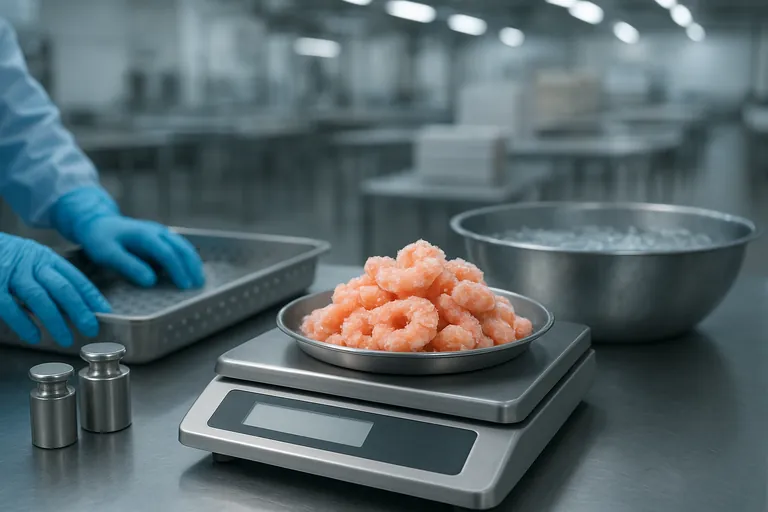
A step-by-step, practical playbook for Indonesian seafood processors to generate, assign, and place the FSMA 204 Traceability Lot Code on case and pallet labels and shipping documents. Includes code structure options, label examples, who assigns the code, and how to handle repacking or combining lots.
If you export seafood to the US, the question in 2026 is simple. Can you prove, fast, where each case came from and who touched it. We’ve helped customers go from zero to audit ready in 90 days by nailing one thing. The FSMA 204 traceability lot code. In this guide we show exactly how we build the code, where to print it, and what to send on shipping documents so your buyers trust you and the FDA is satisfied.
The three pillars of seafood FSMA 204 compliance
-
Assign the traceability lot code correctly. The TLC must be created by the entity that first packs the food or transforms it. For most Indonesian exporters, that is your processing plant when you portion, fillet, cook, bread, or freeze. If you only receive sealed export cases and ship them unchanged, you carry forward the existing TLC.
-
Put the TLC where buyers need it. On every case label and on pallet placards when a pallet is single lot. Mixed pallets should include a case list or a placard referencing the packing list with all TLCs. Also include the TLC on shipping documents. Many US importers now expect the TLC on the invoice or ASN and on the packing list.
-
Keep KDE links tight. The Food Traceability Rule requires Key Data Elements at Critical Tracking Events. You need to link your TLC to harvest or farm data, any transformation steps, and the ship-to and ship-from chain.
Practical takeaway. Decide who in your plant owns TLC assignment. Build a short SOP that forces the TLC onto case labels and shipping docs every time.
Week 1–2. Map your data and validate the flow
Here’s the thing. The code format matters less than your ability to link it to KDE quickly.
Do this first:
- List your FTL items. Shrimp, crustaceans, molluscan shellfish, and many finfish items are in scope. If you sell raw or cooked shrimp, assume coverage. We treat all Frozen Shrimp (Black Tiger, Vannamei & Wild Caught) as FTL in practice.
- Identify CTEs. Harvest or farm intake. Initial packing into cases. Transformation steps such as filleting, cooking, breading, glazing, or repacking. Shipping to freight forwarder or importer.
- Map KDE. For the TLC source, you must record the company and location that originated the TLC, contact details, and the date. For shipping, record shipper, receiver, date, product, quantity, and the TLC for each case.
- Validate roles. For wild-caught supply, the fishing vessel is exempt but the first receiver on land must keep harvest KDE. For imports, your US buyer will rely on you to originate or carry forward the TLC and provide KDE. Do not expect the US “first receiver” concept to apply to you. You are the initial packer or transformer in most export scenarios.
Quick check. Pull one recent shipment and ask. Can we show the farm or vessel info for every case TLC within 2 minutes. If not, fix the data map before you design labels.
Week 3–6. Build your TLC format and label MVP. Then pilot
We recommend you pick one format and standardize. In our experience, simple beats fancy. Three options that work well:
- Simple human readable. FAC-YYYYMMDD-BATCH. Example. IDJKT-20250112-B03. Easy to print with any labeler and easy to read on the floor.
- GS1 friendly. Use your GTIN and AI(10) for lot. Example on a case. GTIN 00890123456789. Lot 25A12B03. You can encode as GS1-128 or DataMatrix if your buyer scans. Not required by FDA, but buyers love it.
- Hybrid with transformation marker. FAC-YYYYMMDD-BATCH-TX. Where TX notes the step. F for fillet, C for cooked, B for breaded. Example. SRBLI-20241203-17-C. This helps when you run the same raw intake through different lines.
Rules of thumb.
- You can use your existing production or batch number as the FSMA 204 lot code if it is unique and consistently linked to KDE. Many of our customers do exactly this.
- Never reuse a TLC across different production dates or transformations.
- One code per homogeneous lot. If you combine or split, see the repacking section below.
Where to put the TLC on seafood case labels.
- Place it top right or centered under the product name in bold, human readable text. Include the literal phrase Traceability Lot Code.
- Repeat near the barcode if you use GS1 labels. If the pallet is single lot, mirror the TLC on the pallet placard.
Case label example for IQF fillet.
- Product. Grouper Fillet IQF. 8 kg.
- Species. Epinephelus spp.
- Origin. Indonesia.
- Traceability Lot Code. IDJKT-20250112-B03.
- Production date. 12 Jan 2025.
- Storage. Keep frozen. This mirrors how we label Grouper Fillet (IQF) export cases and it scales across lines.
Pallet label when single lot.
- Pallet ID. P-00087321.
- Traceability Lot Code. IDJKT-20250112-B03.
- Cases. 42. If mixed lots, add a placard that lists each TLC with case counts or reference the packing list that enumerates them.
Pilot shipment. Pick one buyer. Put the TLC on the case and on the packing list and invoice. Ask if they want TLCs in their ASN or EDI. Need help configuring your format or buyer templates. You can Contact us on whatsapp and we’ll review examples.
Week 7–12. Scale and optimize
- Train production and QA. We keep a one-page SOP at the label printer. If the cut changes or product is transformed, issue a new TLC.
- Automate document output. Make your packing list and invoice templates pull TLCs from your ERP. Add a column named Traceability Lot Code next to each line. When shipping mixed-lot pallets, include a case manifest attachment.
- Standardize your ship KDE. At shipping, you should capture shipper, receiver, ship date, product, quantity, and TLC per line. Keep it for 24 months after the last transaction.
- Run a 24-hour recall drill. Ask the team to return all KDE for one TLC within one business day. We target under 30 minutes.
Five mistakes that break seafood traceability
-
Missing TLC on the case. People assume the invoice is enough. It isn’t. Case-level visibility is what helps in a recall.
-
Reusing batch codes. We’ve seen plants reuse numbers monthly. You need uniqueness over time and across transformations.
-
New product. Old TLC. If you cook or bread shrimp, that is a transformation. Assign a new TLC and keep the source TLC linkage.
-
Mixed pallets with no manifest. The receiver cannot reconcile counts to TLCs and you lose days in a traceback. Put a simple list in the pouch.
-
Waiting on the importer. Buyers can guide you, but the rule names you as the TLC originator when you pack or transform. Own the code.
Shipping documents. What must appear
For each FTL line item you ship, include at minimum:
- Product description with pack format and species if applicable. Example. Vannamei Shrimp HLSO IQF 21/25.
- Quantity and unit of measure.
- Traceability Lot Code for each lot included. If multiple TLCs under one SKU, list each with quantities.
- Shipper name and location. Receiver name and location. Ship date. We place this on the commercial invoice and the packing list. Many buyers also want the TLCs in the ASN or advance email.
Repacking, combining, and transformations
- Simple relabel or inner-pack change without mixing lots. You can carry forward the same TLC. Record the action and keep the link to the TLC source.
- Combining multiple TLCs into one new lot. You must assign a new TLC for the output lot and maintain a record that maps the new TLC to all source TLCs and their quantities.
- Transformation such as filleting whole fish, cooking shrimp, or breading. Assign a new TLC at the transformation step. Keep the source TLCs in your records.
- Pallet vs case. Always put the TLC on the case. A pallet label can repeat a single TLC or reference a list for mixed pallets. Do not rely on pallet-only labels.
FAQs we get from Indonesian exporters
Do I need to print the FSMA 204 traceability lot code on the retail pack
No. The FDA Food Traceability Rule does not require the TLC on consumer retail packaging. We still see some private label buyers request it for their own recall programs. Case labels and shipping documents are the priority.
Who assigns the lot code for shrimp processed in Indonesia
The initial packer or any entity that transforms the product assigns the TLC. If you peel, devein, cook, bread, portion, or IQF-freeze shrimp in your facility, you assign it. If you only forward sealed cases from a supplier to the US buyer, you carry forward the supplier’s TLC.
Can our existing batch or production code satisfy the FSMA 204 traceability lot code
Usually yes. If your batch code is unique, applied to each case, and linked in your system to required KDE such as harvest or farm, transformation, and shipping details, you can designate it as your TLC.
What information must appear on shipping documents to meet FSMA 204 for seafood
Include the TLC for each lot shipped, product description, quantity and unit, shipper, receiver, and ship date. We add a line-level TLC column on invoices and packing lists. For mixed-lot pallets, provide an attachment listing TLC by case count.
How do we handle traceability lot codes when repacking or combining lots
Carry forward the same TLC for repacking if you do not mix different lots. Assign a new TLC if you combine lots or perform any transformation. Always maintain a record that links the new TLC to all source TLCs.
Is there a small business exemption for seafood under FSMA 204
There is no general small business exemption for manufacturers or processors of FTL seafood exporting to the US. There are limited exemptions in the rule for specific scenarios that rarely apply to Indonesian export processors. Plan to comply regardless of company size.
Does FSMA 204 apply to cooked or breaded shrimp products
Yes. Cooked, breaded, or otherwise processed shrimp remain subject to the rule. When you cook or bread, you are performing a transformation and must assign a new TLC and keep the linkage to the source lot.
Resources and next steps
- Pick one TLC format this week and freeze it in your SOP. Train the line. Print the TLC boldly on every case and on pallet placards when single lot.
- Add a TLC column to your invoice and packing list templates. Do a mock recall for one case within 24 hours.
- Pilot with a willing buyer on one SKU. If you need a quick review of your labels and documents, Call us and we’ll walk through a working example. If you are building a mixed portfolio, browsing our cuts like Grouper Fillet (IQF) or shrimp formats in View our products can help you standardize label fields across SKUs.
The reality is FSMA 204 rewards plants with clean, boring processes. A clear traceability lot code format. A visible case label. And shipping documents that match every time. Do that, and your 2026 US seafood labeling will feel refreshingly uneventful.