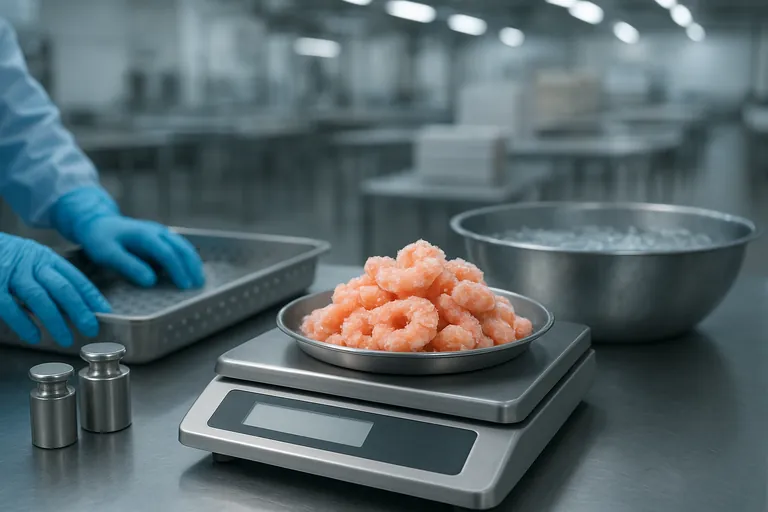
একটি ব্যবহারিক, ধাপে ধাপে ওয়ার্কশীট যা ২০২৬ সালে পাস্চারাইজড ব্লু সুইমিং ক্র্যাবের জন্য ইন্দোনেশিয়া FOB/CIF কোটকে প্রকৃত ল্যান্ডেড কস্ট প্রতি পাউন্ডে রূপান্তর করে। আমরা গ্রেড নর্মালাইজেশন, ক্যান-সাইজ গণনা, শুল্ক/ফি, রিফার সমুদ্রভাড়া, বীমা, পোর্ট ও ড্রেইজ, ব্রোকারেজ এবং ইন্ডল ডেলিভারি কভার করি—সাহায্যকারী উদাহরণ গণনাসহ যা আপনি কপি করে ব্যবহার করতে পারেন।
We shaved $10,247 off a single container’s landed cost in 90 days using the exact process below. That wasn’t a magic rate from a friend-of-a-friend. It was the result of making every quote truly apples to apples, then controlling the handful of line items that quietly move your delivered price by 30–70 cents per pound.
If you buy Indonesian pasteurized blue swimming crab in 2026, here’s the worksheet we actually use.
The 3 pillars of a reliable 2026 landed cost for pasteurized blue swimming crab
-
Normalize the product first. Convert every supplier quote to comparable $/lb by grade and net edible weight. If you skip this, the rest of the math doesn’t matter.
-
Model freight and fees as per‑pound adders. Ocean reefer from Indonesia to the U.S., marine insurance, port and drayage, brokerage, and inland delivery are predictable if you express them per pound against a realistic load plan.
-
Use the right customs basis. U.S. duties and fees are calculated on the customs value. For crab meat, that typically means the FOB value. Ocean freight and insurance aren’t dutiable for U.S. entries, but MPF/HMF and exams are. Check current rates with your broker.
Practical takeaway: Put these three on one page. You’ll know in 10 minutes whether a quoted FOB Jakarta crab price really beats an Indonesian crab CIF offer.
Week 1–2: Market research and validation (quote normalization toolkit)
How do I convert an FOB Indonesia quote for pasteurized blue swimming crab into my landed cost per pound?
Start with this normalization:
- Can size and net weight. Many suppliers quote “16 oz” or “454 g.” Those are essentially the same, but verify the spec’s net edible/drained weight. If a can is 16 oz net but 15 oz drained, you’re paying a 6.7% premium you might not realize.
- Grade mapping. Align to your price list: Jumbo Lump, Super Lump, Lump, Special, Claw, Claw Fingers. Ask for breakdown by grade if a supplier offers “combo” cartons. We’ve seen 2–4% swings just because “Super Lump” meant different particle size tolerances.
- Currency and terms. In 2026 most Indonesian offers are USD FOB or CIF. If you see IDR pricing, convert at today’s IDR/USD and add 1–2% buffer because suppliers adjust with exchange moves.
Now convert each line to a clean $/lb for the actual edible weight. If a case has 12 x 1 lb cans, you have 12 lb per case. If it’s 6 x 454 g, you have 6 lb per case. Simple, but people miss it when they’re comparing per‑case prices.
Which duties, fees, and adders should I include when importing pasteurized crab from Indonesia in 2026?
For U.S. deliveries, include:
- Duty. Use the correct HTS for prepared/preserved crab meat in airtight containers. Many entries have a low or zero general duty rate, but verify your exact HTS and any AD/CVD with a customs broker before you buy.
- MPF and HMF. The Merchandise Processing Fee (around 0.3464% of entered value with min/max caps) and Harbor Maintenance Fee (around 0.125% of value for ocean entries). Confirm current percentages and caps—these change.
- Ocean freight and surcharges. Reefer base rate, bunker, peak season, congestion. Quote Jakarta or Surabaya to your U.S. port.
- Marine cargo insurance. Often 0.25–0.50% of insured value for reefer commodity food. Insure CIF + 10% or as your policy requires.
- Origin and destination port costs. Origin THC, documentation; destination DDC/THC, wharfage, PierPass (if LA/LB), chassis, port appointments.
- Drayage to cold storage and inland truck to your DC.
- Customs broker fees for seafood. Typical ranges we see: ISF filing, $30–60; entry, $120–250; FDA Prior Notice is usually included. Exams or X‑ray holds are variable and can swing your per‑lb by 5–20 cents.
We include a 2–3% contingency bucket for inspections, storage, or minor demurrage. If you never need it, great. If you do, it won’t nuke your margin.
How do I normalize supplier quotes that use different grades and can sizes?
- Convert to $/lb by grade. Example: Supplier A offers Jumbo Lump at $17.80/lb in 12 x 1 lb cases. Supplier B offers “Jumbo/Super mix” at $16.90/lb. If your menu strictly needs Jumbo Lump, reduce the mixed quote to the Jumbo‑only equivalent or apply your GP impact for the mixed grade.
- Align can formats. A $98 case for 6 x 454 g equals $16.33/lb. A $185 case for 12 x 1 lb equals $15.42/lb. The 12‑count looks cheaper on a per‑case basis, but per‑pound it’s the opposite.
Quick check: Always calculate a weighted program price if you buy multiple grades. Price drift often hides in the grade mix, not the headline “Jumbo Lump vs Lump price.”
Week 3–6: Build the MVP calculator and test on a sample shipment
FOB Jakarta to landed price calculator for seafood
Use this skeleton for a U.S. delivery example. Replace the numbers with your live quotes.
Assumptions:
- Product: Pasteurized Jumbo Lump. Quote: FOB Jakarta at $17.80/lb.
- Load plan: 1,800 cases x 12 x 1 lb = 21,600 lb net.
- Ocean freight + surcharges: If your all‑in ocean/BAF/etc totals $8,200, then freight adder = $8,200 / 21,600 lb = $0.38/lb.
- Marine insurance: 0.35% of CIF value. CIF ≈ FOB value ($17.80 x 21,600 = $384,480) + ocean ($8,200) = $392,680. Insurance = $1,374. Per lb = $0.064.
- Duty: Example at 0%. Confirm your HTS.
- MPF/HMF: If MPF cap applies, say $614 per entry. HMF at 0.125% of $384,480 ≈ $481. Total $1,095. Per lb = $0.051.
- Destination port + drayage to cold store: Say $2,115 all‑in. Per lb = $0.098.
- Brokerage and FDA filing: $220. Per lb = $0.010.
- Inland to your DC: 400 miles LTL at $1,500. Per lb = $0.069.
Landed adder total ≈ $0.38 + $0.064 + $0.051 + $0.098 + $0.010 + $0.069 = $0.672/lb.
Delivered price ≈ $17.80 + $0.672 = $18.47/lb to your DC.
Use this as a template, not gospel. The point is the structure. Once you lock the structure, every quote drops cleanly into place.
How much does ocean freight add per pound to Indonesian pasteurized crab in 2026?
It depends on two drivers you control more than you think:
- Load factor. The same 40' reefer spread over 18,000 lb vs 24,000 lb changes the adder by a third.
- The all‑in rate. Even a $2,000 swing in base + surcharges moves your per‑lb by 8–12 cents at typical crab payloads.
If your 40' reefer total is between, say, $6,500 and $10,500 and you load 18,000–24,000 lb, you’re usually in the $0.27–$0.58/lb range. Run the math on your exact plan and keep a second scenario ready in case you must partial‑load.
Week 7–12: Scale and optimize
Is it better to buy Indonesian pasteurized crab FOB or CIF if I want the lowest landed cost?
We buy both, but here’s our rule of thumb:
- FOB Indonesia. Best when you control a forwarder who’s sharp on reefer schedules and you can consolidate predictable volumes. You see every fee and can often beat generic CIF offers.
- CIF named U.S. port. Good when you’re new, volume is lumpy, or your team can’t chase capacity. Ask the supplier for a transparent line‑by‑line so you can still benchmark per‑lb freight. Then compare CIF to your FOB + your forwarder’s rate on the same sailing.
- DDP. Maximum simplicity. You’ll pay a premium and you should still ask for the cost build to spot hidden surcharges.
What’s interesting is CIF sometimes wins during tight capacity windows because local origin teams can secure space you can’t. We’ve seen it.
Exchange rate and seasonality inputs for 2026 estimates
- IDR/USD impact. Even if your offer is in USD, suppliers pay raw material and labor in IDR. A 10% IDR move rarely translates 1:1 into FOB shifts, but we do see 2–4% swings in offers over a quarter when the rupiah runs. We price scenarios at today’s rate and ±5%.
- Seasonality. Indonesian blue swimming crab supply softens during certain monsoon periods and local holidays. We typically budget a 5–12% premium on raw material during tighter months and around Lunar New Year. If your program is fixed, negotiate a quarterly index rather than purely spot.
Two non‑obvious levers we use a lot
- Grade strategy. Many operators default to Jumbo, but a 70/30 Super Lump + Jumbo program can protect GP without guests noticing. We’ve cut 40–60 cents per pound this way.
- Case configuration. Standardize across suppliers at the same can count per case. Per‑case freight and handling is where nickel‑and‑dime fees hide.
Need help pressure‑testing your numbers? Send your current quote and target delivery zip. We’ll run it through our model and return a per‑lb breakdown you can use to negotiate. If that’s helpful, যোগাযোগ করুন whatsapp-এ.
The 5 biggest mistakes that kill crab margins
- Comparing per‑case pricing without confirming drained weight. The 15 oz drained vs 16 oz net problem is real.
- Ignoring MPF caps. On large entries, the cap matters. Use the cap if applicable; don’t over‑accrue.
- Under‑loading reefers. Partial loads make “cheap” ocean rates expensive per pound. Use LCL reefer or push order timing to fill.
- Not separating destination charges from ocean freight. DDC, chassis, PierPass, and port fees are not the same everywhere. Quote by port.
- No contingency for exams or delays. A single CET exam can wipe 10–20 cents per pound on small entries. Budget a reasonable buffer.
Resources and next steps
- Build a one‑page worksheet with columns for: SKU/grade, pack/weight, FOB or CIF price, ocean + insurance per lb, estimated duty/MPF/HMF, broker + FDA + ISF per lb, drayage + inland per lb, total landed per lb. Lock the formulas once and reuse.
- Ask your broker to confirm your HTS and send today’s MPF/HMF rates and any seafood‑specific flags. Keep that PDF with your worksheet.
- Get two forwarder quotes on the same sailing, same port pair. Express them as $/lb and save the email trail for audits.
If you’re developing a broader Indonesia program and want to benchmark crab alongside other items, you can also আমাদের পণ্যগুলো দেখুন to understand how we build multi‑SKU sourcing calendars. Different temperature chains need different plans, but the landed cost logic is identical.
The reality is landed cost isn’t a mystery. It’s a handful of inputs and clean math. Once your team runs this playbook two or three times, you’ll spot a good FOB Jakarta crab price or an Indonesian crab CIF offer at a glance—and you’ll know exactly where to push to win back the next 10 cents per pound.